SMB Capital's Trading Workflows and Tool Alternatives
Opening Momentum
Scalping
Mean Reversion
Relative-Strength Breakouts
Systematic Research
SMB Capital's traders teach several distinct playbooks, from opening momentum and intraday mean reversion to multi-day relative-strength breakouts and systematic strategy testing. Here is the stack each trader shows publicly, and the tools that can do the same jobs.
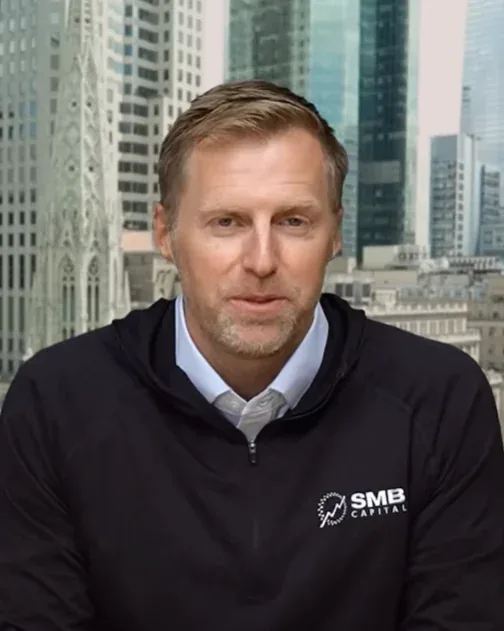
Official SMB Capital channel, joined YouTube June 26, 2008. An organizational channel with several desk traders and guests, not one trading record. Channel https://www.youtube.com/@smbcapital · official site https://smbtraining.com
Jeff Holden · mean reversion, Bella Fade, trade grading
Dave Mabe · systematic research with Claude Code; says he has traded systematically since 2005
Garrett, surname not verified · screen layout, 2022
Some lessons on this page come from SMB presenters who are not identified by name in the source video. We label those as presenter not identified.
Subscribers
767K subscribers · 2026
Public statement, not verified
A New York proprietary trading firm founded in 2005 by Mike Bellafiore and Steve Spencer (company statement, not independently verified).
Entity
organization
Channel joined 2008
X 128 / Y 044
SMB Capital by the Numbers
Subscribers
767K
Channel views
88.3M
Videos
2,561
On YouTube since
2008
Avg views per video
about 34,500
Stack range
$0 to $176/mo
Did you know?
SMB's Jeff Holden grades each setup from A+ to D before deciding how much of the day's risk it gets.
Avg views per video is total channel views divided by public video count, the channel average. Stack range runs from the Free Start bundle to the priciest bundle. All figures 2026.
What Is SMB Capital's Trading Style?
Market focus
U.S. stocks in play, taught by several named traders.
Holding period
Mostly intraday, with some multi-day relative-strength trades.
Preferred conditions
A catalyst, a clean level to trade against, room to resistance, and a market that supports the trade.
What Setups Does SMB Capital Teach?
Opening momentum (presenter not identified, 2026)
The stock opens above the previous close and the previous day's high, with a catalyst, room to resistance, and a supportive market.
The 2.5% to 5% figure in the video is the stop's distance on the stock price, not a percentage of the account. Account risk percentage is not publicly detailed. More sources: https://www.youtube.com/watch?v=CAAIzHsKsYM&t=400s · https://www.youtube.com/watch?v=CAAIzHsKsYM&t=641s
Entry
A two-minute candle closes above the premarket high with volume; a wick alone is not the trigger.
Exit
Trim near round numbers, resistance, or an ATR extension; the runner exits on the first two-minute close below the 9 EMA.
Risk
Stop below the breakout candle's low; a failed close back under the premarket high can invalidate it earlier.
Relative-strength breakout (presenter not identified, 2026)
A stock that holds up through several days of market weakness, near a 52-week or all-time high, with the 10 SMA above a rising 20 SMA.
Strength puts a stock on the watchlist; it is not a buy signal. A nearby event can disqualify the chart. The example management is not a universal rule. More sources: https://www.youtube.com/watch?v=l7F9yIf8CeE&t=520s · https://www.youtube.com/watch?v=l7F9yIf8CeE&t=766s
Entry
Wait for a confirmed break of resistance; the HPE example waits for the first daily close above $50, not the first tick.
Exit
Trails the five- or ten-day average and exits on a close below it.
Stretch, wall, snap mean reversion (Jeff Holden, 2026)
Price stretched away from VWAP or the 9 EMA into identifiable support or resistance.
A fixed account percentage and a universal ATR multiple are not publicly detailed. The video uses both stock and option examples. More sources: https://www.youtube.com/watch?v=KHtOexL3jtw&t=323s · https://www.youtube.com/watch?v=KHtOexL3jtw&t=1047s
Entry
Wait for evidence of reversal.
Exit
Target a move back toward VWAP, taking partials (thirds in the example).
These are portions of a daily risk budget set in advance, not portions of account equity. They describe an advanced desk framework, not a budget we suggest for readers. C grade source: https://www.youtube.com/watch?v=3Q-n_-xQfUQ&t=2534s
Risk
Big A is how much of the day's risk goes to a ticker; little A is the risk on one trade. Allocation by grade, as shares of a predefined daily stop: A+ 80%, A 30%, B 15%, C 5%, D 0%.
Premarket AI briefing · presenter not identified, 2026
A scheduled task reads research emails and writes the morning rundown. The demo shows an existing task set for 8:00 a.m. and proposes 8:30 a.m. for the new example; neither is an SMB-wide time.
Their pick on the left. Same job, different tool on the right. Prices sit side by side so you can do the math.
Scanner recipe
Stocks in Play Criteria
A single desk-wide price, float, or relative volume scan was not found in SMB's public videos. Below are the selection criteria their traders describe, each tied to the speaker.
01Core idea, stocks in play: a reason to move, unusual participation, and readable structure (presenter not identified).▶ 14:34
02Volume examples, explanatory and not fixed cutoffs (presenter not identified): about 30% of average daily volume traded in the first ten minutes; midday volume already above an average full day.▶ 14:34▶ 26:42
03Opening momentum filters (presenter not identified): opens above the previous close and the previous day's high, a catalyst, room to resistance, a supportive market. Skip names with an oversized breakout wick.▶ 2:42
04Relative-strength breakout filters (presenter not identified): holds up through several days of market weakness, near a 52-week or all-time high, roughly one ATR below the breakout level, 10 SMA above 20 SMA and both rising.▶ 3:42▶ 5:23
05Event check (presenter not identified): a nearby event can disqualify an otherwise good chart.▶ 12:46
06Watchlist columns, Garrett (2022): relative volume and distance from the opening print in his thinkorswim grid.▶ 12:21
The volume figures are teaching examples, not established SMB filter cutoffs. Market cap, float, and price thresholds are not publicly detailed. SMB Scalp Radar's full configuration is not public.▶ 14:34
Replaces. Real-time discovery plus strategy testing
What you give up. Different setup algorithms; no SMB training or live coaching; broker integration and auto trading need a supported account and configuration
What the AI actually does. Adds AI signals and backtesting on top of the real-time scanner
Trade Ideas Premium/Apex in full
Official site · Oct 2026
$254/mo or $2,136/yr ($178/mo equivalent)
Replaces. Real-time discovery plus strategy testing
What you give up. Different setup algorithms; no SMB training or live coaching; broker integration and auto trading need a supported account and configuration
What the AI actually does. Adds AI signals and backtesting on top of the real-time scanner
Keeping Scalp Radar makes sense if you want SMB's own setup detector together with its training and community. Software alternatives can scan and alert, but none of them includes a prop desk's training or coaching.
LAYER 02Catalysts and News
Their pick
LN
Live news linked to the selected symbol (vendor not public)
HISTORICAL 2022
Not public
Why they use it. Garrett links symbol selection to the news and tape view, so the reason a stock is moving sits next to the tape.
Jeff Holden, 2026. Rate the catalyst's magnitude and speed first, then grade the setup and the trade's confirmation. A strong catalyst grade alone does not grant entry. Source
Replaces. A manual first pass through newsletters and research emails, when the sources are accessible
What you give up. Does not replace the underlying research subscriptions or a live news wire; same subscription as the AI Assist layer, so it counts once
What the AI actually does. Reads your connected research emails and writes one dated, source-cited morning summary with a searchable archive
Claude Pro scheduled research task in full
Official site · Oct 2026
$20/mo or $200/yr
Replaces. A manual first pass through newsletters and research emails, when the sources are accessible
What you give up. Does not replace the underlying research subscriptions or a live news wire; same subscription as the AI Assist layer, so it counts once
What the AI actually does. Reads your connected research emails and writes one dated, source-cited morning summary with a searchable archive
Level 2 and time and sales beside setup-specific charts (platform and data vendor not public)
USED 2026HISTORICAL 2022
Not public
Sources: presenter not identified, 2026 · Jeff Holden, 2026 · Garrett's trading and tape screen, 2022. SMB's exact platform and data vendors are not public.
Why they use it. Depth and tape give execution context next to the two-minute, 9 EMA, and VWAP charts the playbooks use.
Replaces. Level 2 and time and sales with native charts
What you give up. Depth comes through your Schwab account only; account and data agreements apply, and professional status or certain exchanges can add fees
thinkorswim Level 2 in full
Official site · Oct 2026
$0 for eligible Schwab clients
Replaces. Level 2 and time and sales with native charts
What you give up. Depth comes through your Schwab account only; account and data agreements apply, and professional status or certain exchanges can add fees
Keep the desk's own review process if you have access to it. A journal app organizes the records; it does not replace a coach reviewing your decisions with you.
LAYER 06AI Assist
Their pick
Official site · Oct 2026
Claude Cowork + Gmail connector (premarket research briefing)
USED 2026
Claude Pro $20/mo or $200/yr
Cowork access on paid plans, subject to plan limits. Demonstration.
Source video: presenter not identified, 2026. Current Claude documentation says new cloud tasks can run while your computer is off. Tasks that need local files work differently. This differs from the April 2026 video.
Why they use it. Reads subscribed research emails and builds a dated briefing on macro, events, earnings, movers, and themes, with an HTML archive.
Claude Code with a dedicated backtest engine (AmiBroker, RealTest, or the internal Kite)
USED 2026
Claude Pro $20/mo or $200/yr; engine licenses in the sidebar below
Dave Mabe, 2026. This is Dave Mabe's workflow as a guest. It does not show that every SMB trader uses AmiBroker.
Why they use it. Claude Code edits strategy code, the engine computes the results, and the output is inspected, with version control and smoke tests before larger runs.
Claude already is their pick here. The AI drafts and organizes; a deterministic engine or journal must compute the numbers.
LAYER 07Gear
Swap
Prices are subject to change fast, like AI technology.
LAYER 08Gear
Their setup (dated)
Garrett's four logical screens: trading and tape, multiple timeframes, a watchlist chart grid, and a spare screen for current studies or market internals
Four logical screens, not verified monitor models. Exact PC, monitor, desk, and chair models are not public. A dated snapshot from their videos. You do not need this setup to use the strategy.
Start smaller
SMB did not give a beginner hardware list in the reviewed videos. These slots are FullStack Alpha's suggestion: the four logical screens can live as linked panels on fewer monitors.▶ 1:36
Stays manual. Grading the catalyst, judging structure, setting risk, and execution decisions
Different scanner signals from Scalp Radar; SMB training and coaching are not included.
Totals cover software and selected data only. Commissions, exchange fees, hardware, research subscriptions, and taxes are not included. TradesViz annual pricing is the current advertised offer. Prices checked 2026.
Find a tool like theirs
Not sure SMB Capital's exact stack fits you? These two finders cover the tools closest to this routine. Answer five questions and get three matches.
What Broker, Scanner, and Charts Does SMB Capital Use?
What broker does SMB Capital use?
+
In the public videos we reviewed, SMB Capital trades with Broker order entry (vendor not public) (used in 2026; Not public). At the open, the trader applies the playbook trigger, not just the gap, and records the trade and its invalidation.
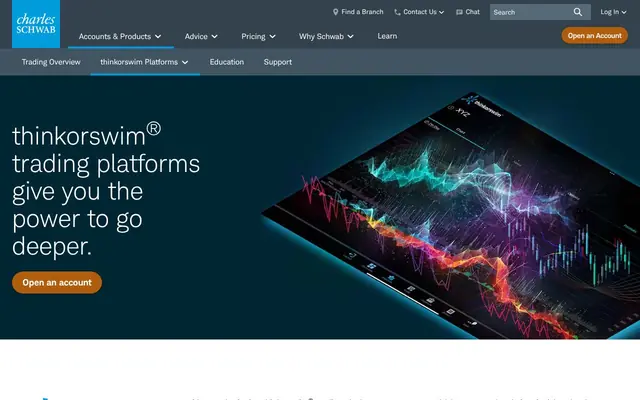
Same job, different tool: thinkorswim (Charles Schwab) at $0 platform for eligible Schwab clients.
What scanner does SMB Capital use?
+
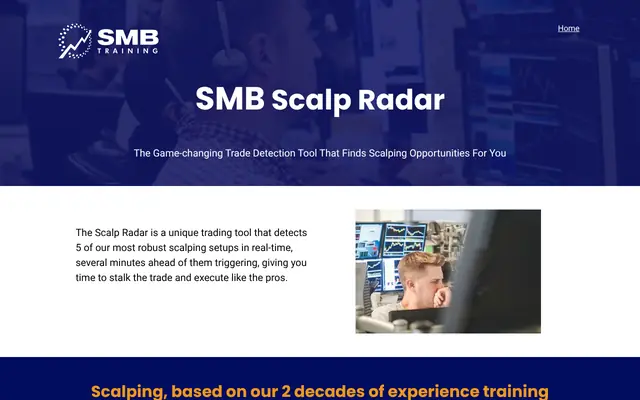
For scanning, SMB Capital uses SMB Scalp Radar (promoted in 2026; $6,000 displayed offer). SMB's detector for proprietary scalp candidates, marketed across five setup families. Same job, different tool: thinkorswim Stock Hacker scans and alerts at $0 for eligible Schwab clients.
How much does it cost to trade like SMB Capital?
+
The software stacks on this page run $0 to $176/mo. The cheapest, Free Start, is thinkorswim (charts, scans, alerts, execution) + SEC EDGAR and company IR pages + LibreOffice Calc DRC and playbook. Our pick, AI Prep, is Free Start + Claude Pro (email research digest, report archive, and written review). Commissions, exchange fees, and hardware are separate. Prices checked 2026.
Does SMB Capital use AI for trading?
+
Yes. SMB Capital uses Claude Cowork + Gmail connector (premarket research briefing) (used in 2026; Claude Pro $20/mo or $200/yr); Claude Code with a dedicated backtest engine (AmiBroker, RealTest, or the internal Kite) (used in 2026; Claude Pro $20/mo or $200/yr; engine licenses in the sidebar below).
Reads subscribed research emails and builds a dated briefing on macro, events, earnings, movers, and themes, with an HTML archive.
Which SMB Capital Videos Should You Watch First?
The Only Opening Momentum Strategy I'd Trade
19:58 · 2026
SMB Capital's opening momentum playbook runs on the two-minute chart: trim near resistance or an ATR extension, and exit the runner on the first two-minute close below the 9 EMA. Trade the trigger, not the gap, and read the 2.5% to 5% stop as price distance.
Revealing My Secret Relative Strength Breakout Strategy
17:33 · 2026
SMB Capital flags stocks with multi-day relative strength and waits for a breakout, with the example stop below the entry-day low and a trail on the five- or ten-day average. Strength earns a watchlist spot, not a buy, and a nearby event can disqualify the chart.
Lance Breitstein walks through his day: a walk and news at 8:00, earnings, IPOs, macro, and the watchlist around 8:30, then a grade of his own readiness near 9:00. After the close he trims highlight clips and collects charts into a daily report card.
How to Conduct a Professional Review of Your Trading
Brett Steenbarger, trader Max
44:50 · 2020
Brett Steenbarger grades each day on three separate scores, idea quality, execution, and self-management, then picks one process fix. Trader Max adds a monthly review of setup, symbol, time-of-day, and mental-state patterns that sets next month's goals.
Our Prop Trading Formula (Secret to Grading Your Trades)
Method attributed to Jeff Holden
44:36 · 2026
Jeff Holden grades the catalyst's size and speed first, then the setup and confirmation, and each grade gets a share of a preset daily stop, from 80% for A+ to zero for D. A great catalyst alone never earns an entry, and this is a pro desk budget.
I Built & Backtested Trading Strategies with Claude Code
Dave Mabe
48:16 · 2026
Dave Mabe, a guest who says he has traded systematically since 2005, uses Claude Code to edit strategy code while a backtest engine computes the results. He inspects each output and adds version control and smoke tests before any larger run.
How I Combine Support/Resistance and Liquidity for Sniper Entries
Jeff Holden
24:33 · 2026
Jeff Holden pairs support and resistance with liquidity, entering on evidence of reversal and placing the stop beyond the setup's structural failure point. The target is a move back to VWAP with partials in thirds, though no fixed account risk or ATR multiple is given.
How to find the most profitable trades (even with zero experience)
36:45 · 2026
SMB Capital lays out its Stocks in Play criteria and shows SMB Scalp Radar, its detector for scalp candidates marketed across five setup families. The volume figures are teaching examples, not fixed cutoffs, and market cap, float, and price thresholds are not spelled out.
Jeff Holden teaches fading a failed opening move with defined structure, managed with measured moves and partial exits. Either a price failure or a time clock invalidates the trade, though exact stop distance and position size are not spelled out.
How to Set Up Your Trading Screens (for scalping & swing trading)
Garrett
19:32 · 2022
Garrett splits his workspace into four logical screens: trading and tape, multiple timeframes, a watchlist chart grid, and a spare for studies or market internals. Keeping news next to the tape shows why a stock moves, and the four views can live as linked panels on fewer monitors.
I Automated My Pre-Market Research With AI (Here's How)
17:54 · 2026
SMB Capital demos a scheduled Claude task that reads research emails and writes a morning briefing on macro, events, earnings, movers, and themes, saved to an HTML archive. Scheduling rules have changed since the April 2026 video, so check current Claude docs before copying it.
What Order Should You Study SMB Capital's Process In?
1
Watch the foundation lesson
Start with "The Only Opening Momentum Strategy I'd Trade" before the advanced material. Open on YouTube
2
Write the setups down
Copy the 5 setup cards on this page into your own words: conditions, entry, exit, risk.
3
Build the Free Start stack
thinkorswim (charts, scans, alerts, execution) + SEC EDGAR and company IR pages + LibreOffice Calc DRC and playbook. Learn the process before you pay for speed. Load it in the Stack Builder
4
Log 20 trades or paper trades
Journal every one, including the bad ones. Your journal, not a video, decides what works for you.
5
Upgrade to AI Prep
Free Start + Claude Pro (email research digest, report archive, and written review). Add paid tools one layer at a time, starting with the job your journal says costs you most. Load it in the Stack Builder
A FullStack Alpha study order built from SMB Capital's public lessons. Process beats prediction: master one layer before you pay for the next.
FullStack Alpha has tested 200 AI stock tools. Be honest: how many of yours do the same job, and which one did you forget you signed up for?
One email a week fixes that: which tools are worth the money, what they cost right now, and how the traders on this site wire them into a routine. Five minutes to read. Zero noise.
✕Hot stock picks
✕Paid signal pitches
✕Fake countdown timers
✕Gurus selling courses
Inside every issue
5 MIN READ
01
The Verdict
One AI trading tool tested and scored. What it does well, what it costs, and the catch the sales page leaves out.
02
Price Watch
Price changes and live promos on the tools traders actually use, monthly and annual side by side, so you stop overpaying.
03
Workflow Teardown
One educator's routine taken apart: the scan, the chart, the tools, and the free swap for every paid one.
04
Scan of the Week
Exact scanner settings you can copy, pulled from the educator's own lesson with the timestamp.
Process beats prediction. This is the email that keeps your process honest.