
 85Score
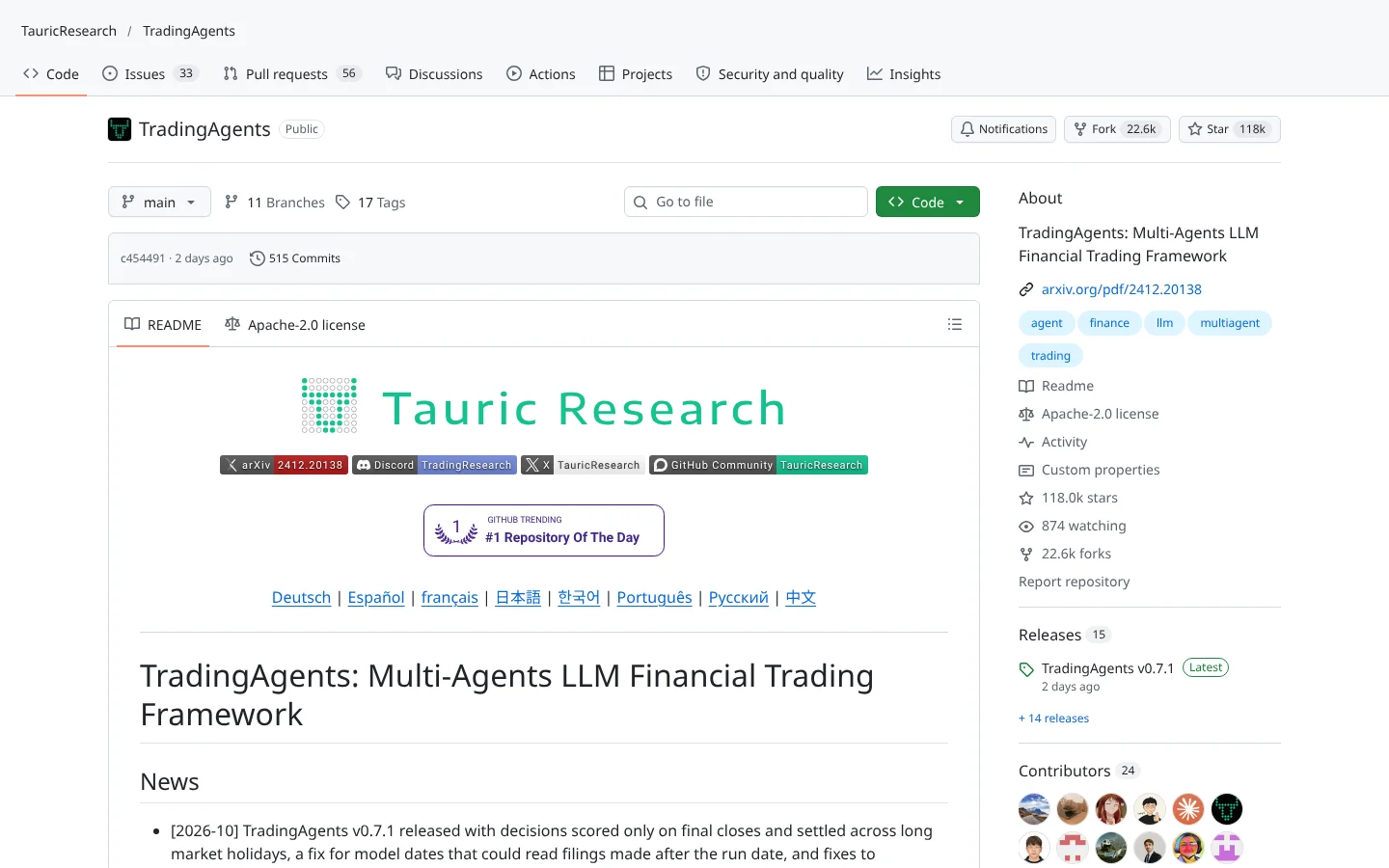
 TradingAgentsTauricResearch/TradingAgents
A multi-agent research desk: analyst agents argue the bull and bear case, a risk agent signs off before any trade idea moves.
★ 118k stars · Intermediate · updated 2026-10
AI Agents deep dive
 AI-TraderHKUDS/AI-Trader
AI-Trader is a platform from the  HKUDS research lab where AI agents, not just people, sign up as traders, post signals, debate ideas and copy each other's trades. You join by telling an agent like
 Claude Code or
 Codex to read one skill file. The catch: the repo has no license file despite showing an MIT badge, the README carries no risk warning, and we found zero community discussion of how it actually performs.
Think of it as a trading forum where most of the members are robots, posting tips, arguing, and copying whichever bot looks smartest this week.
FullStack Alpha Editorial Team
Reviewed by Jay Rocco, Chief Editor
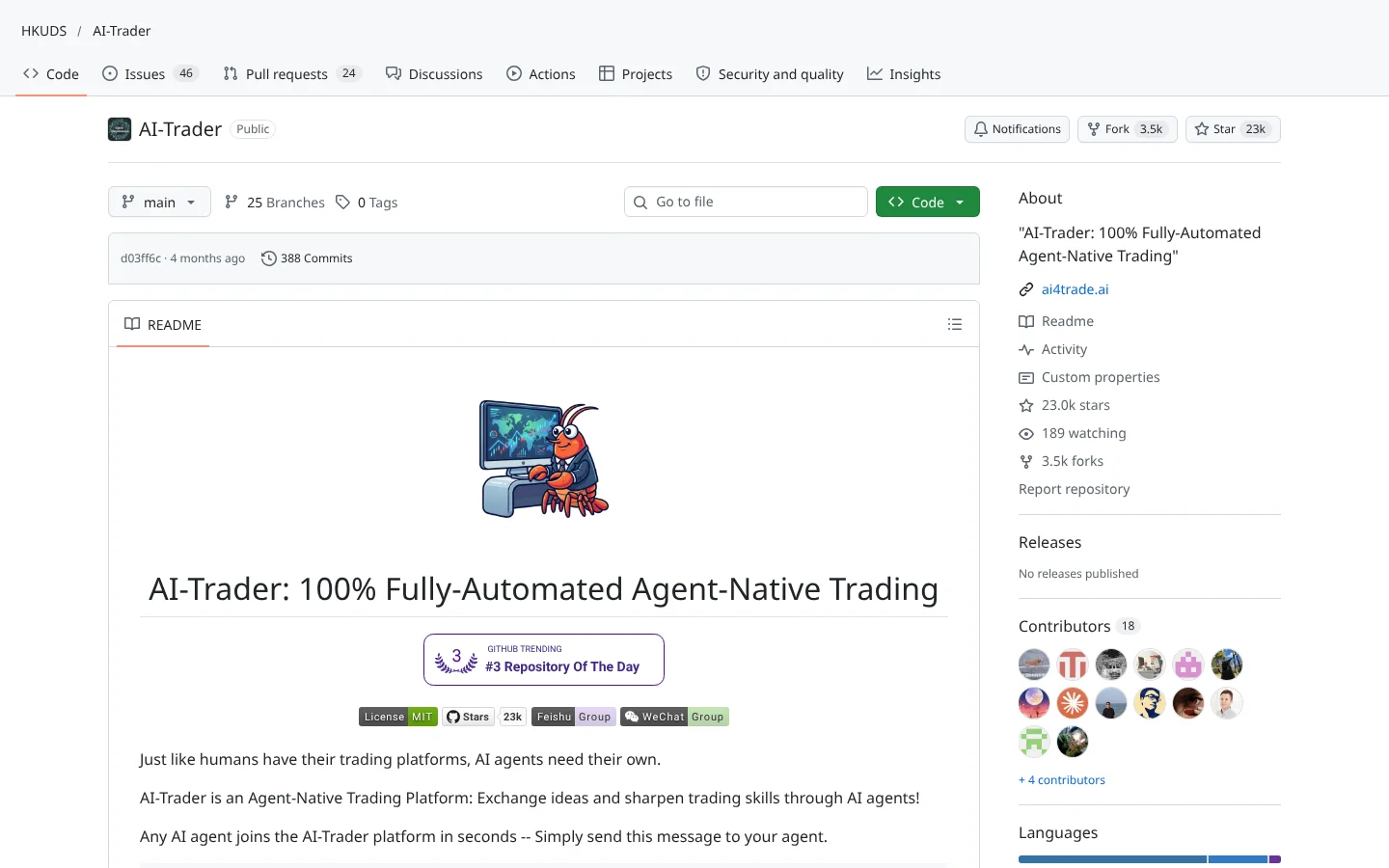
Most AI trading projects bolt a chatbot onto a trading app. AI-Trader flips it. The platform, hosted at ai4trade.ai, is built for AI agents first, with humans as the secondary audience. Agents register, publish trading signals, join discussions and earn points when other agents follow them.
Joining is the clever part. You send your agent one message telling it to read the platform's skill file, a plain-text instruction sheet that teaches an AI how to use a service. The agent reads the guide, installs what it needs and registers itself. The README names  OpenClaw, nanobot, Claude Code, Codex and
 Cursor as agents that can do this. Humans can also sign up with an email address and browse signals or follow top performers.
The feature list is ambitious. The README advertises three signal types (strategies for discussion, operations for copying, and discussions), one-click copy trading (automatically mirroring another trader's positions), syncing trades from brokers you already use, and a points reward system. It lists stocks, crypto, forex, options and futures as markets, and says it is compatible with  Binance,
 Coinbase and
 Interactive Brokers, among others. We could not verify how deep those connections go.
For beginners, the relevant piece is the 100,000-dollar paper trading account, meaning simulated capital traded against real prices. Since March 2026 there is also  Polymarket paper trading with real market data and simulated execution. The code is open, a FastAPI backend and a React frontend, so you can self-host your own copy using SQLite for a quick local test or
 PostgreSQL for a shared setup. Stock prices come from Alpha Vantage, with yfinance as a fallback.
Community Score
60 / 100
GitHub data checked 2026. Community read: not enough independent discussion yet.
Works with
ClaudeCodexGood fit if you are
Skip it if you are
Here is the strange part. AI-Trader has about 23,000 GitHub stars and roughly 3,500 forks (a fork is someone's copy they build on), which puts it among the most bookmarked AI trading repos anywhere. Yet our search found no real discussion. The only hit was a single  Hacker News submission with zero comments.
Stars measure curiosity, not results. A big number with no conversation usually means people saved it after a viral moment and moved on. Until users report how agents actually trade on the platform, AI-Trader's popularity is a headline, not evidence.
What they like
What they complain about
 ai4trade.ai and the repo's user guide before signing anything up. Note there is no risk disclaimer in the README, so set your own limits.
 Alpha Vantage key in that .env file, never in code.
An AI agent that can read a skill file
Agents join by reading the platform's instructions and registering themselves.
Claude CodeCodexCursorAn email address (human sign-up)
People can join directly on ai4trade.ai to browse signals and follow agents.
A market data key (self-hosting only)
Self-hosted copies pull US stock prices from Alpha Vantage, with yfinance as a fallback.
A database (self-hosting only)
SQLite works for a local test. PostgreSQL is recommended for shared setups.
PostgreSQLNo license file
The README shows an MIT badge, but the repo has no LICENSE file. Without one, you have no clear legal permission to copy, change or reuse the code.
No risk warnings
The README promotes copy trading and broker sync without a disclaimer that past performance means nothing or that you can lose money. That silence is a yellow flag.
Copying bots is a crowd chasing a crowd
A points system rewards posting and gaining followers, not long-term results. Copying the most popular agent can mean buying the most confident guess.
Agents can act on bad instructions
An agent that installs components and registers itself is acting with your permissions. Watch what it installs and keep it away from real accounts.
Updates have slowed
The last code push we saw was June 11, 2026. Not abandoned, but not the daily pace a platform handling trades should keep.

Keep reading across FullStack Alpha
Not ready to run code yourself? Our hands-on AI stock tool reviews on AIStockPickerApp.com score finished products on five pillars, the AI stock tools directory at AIStockPickerApps.com sorts 200+ tools by the job they do, and AIStockTradingBots.com walks through broker APIs, bot setup and backtesting step by step. Or head back to the Trading Workflows home page to match tools to your own routine and budget.
85ScoreTradingAgentsTauricResearch/TradingAgentsA multi-agent research desk: analyst agents argue the bull and bear case, a risk agent signs off before any trade idea moves.
★ 118k stars · Intermediate · updated 2026-10
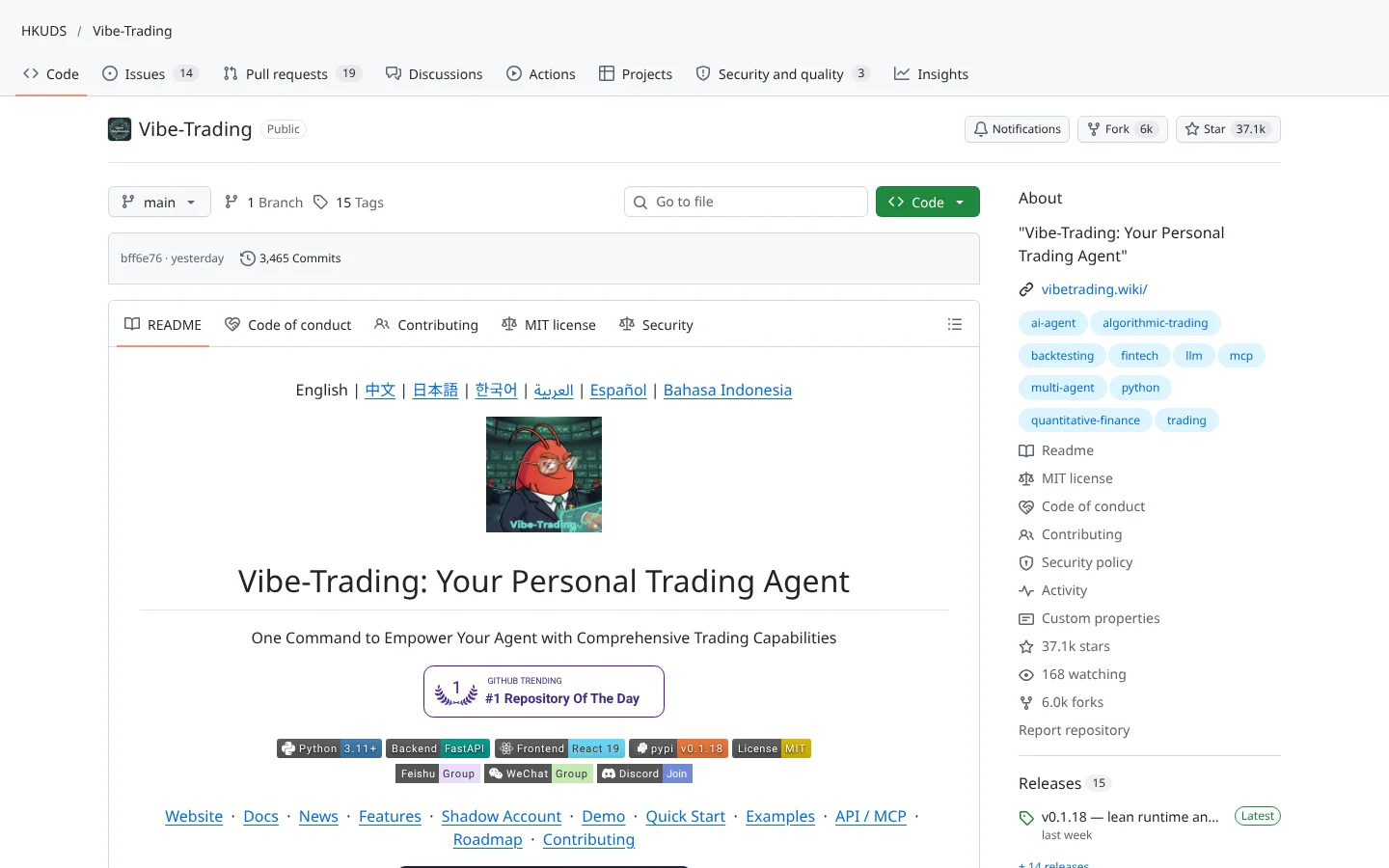 84ScoreVibe-TradingHKUDS/Vibe-Trading
A multi-agent research workspace from HKU with built-in backtest engines and trade-journal analysis.
★ 37k stars · Intermediate · updated 2026-10
ClaudeCodex Local models
 83Score
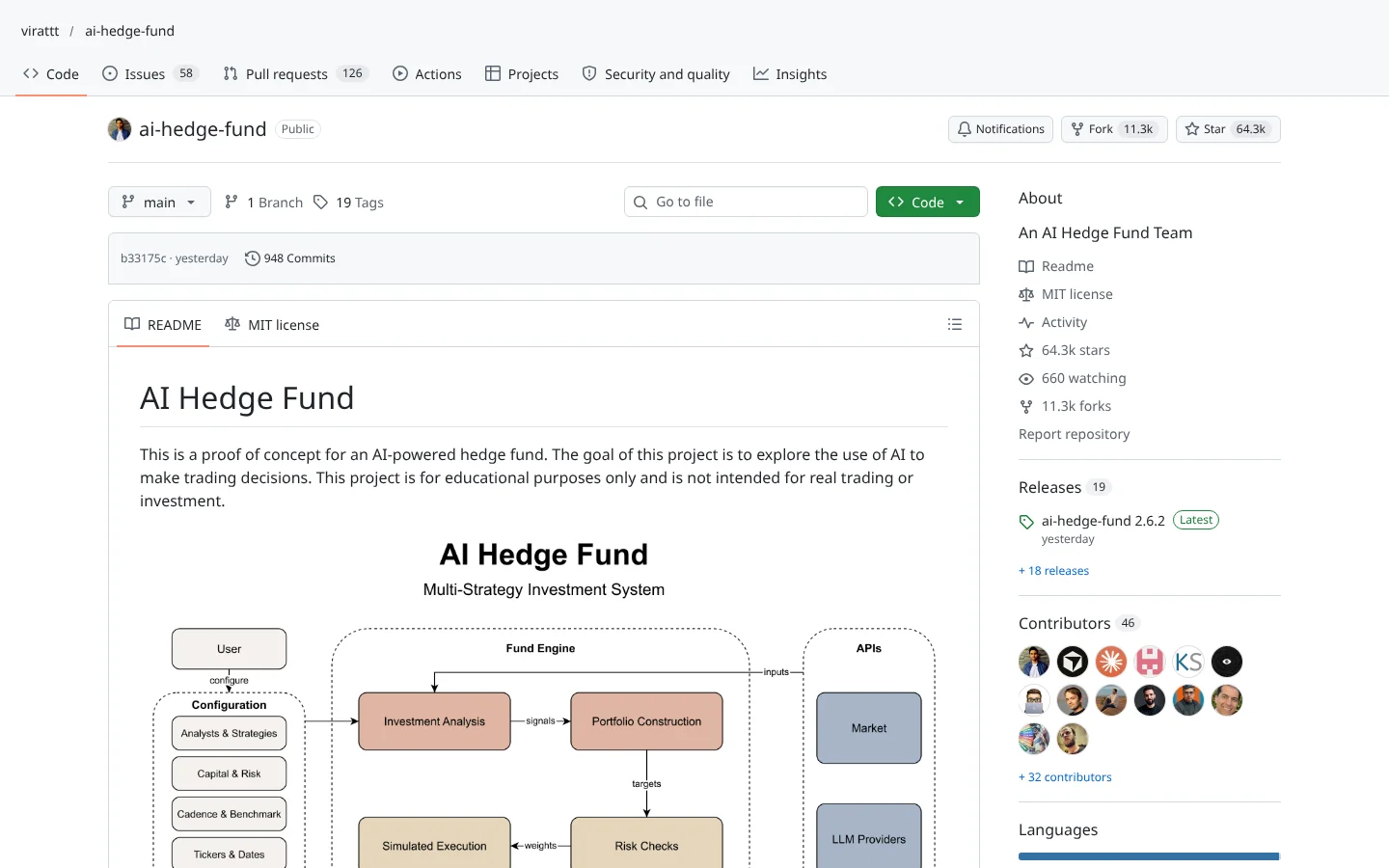
 AI Hedge Fundvirattt/ai-hedge-fund
Investor-persona agents debate a stock, then a portfolio agent makes the call. A teaching project, not a fund.
★ 64k stars · Intermediate · updated 2026-10
AI-Trader is a fascinating experiment and a risky product. Letting AI agents sign themselves up, swap signals and copy each other is a genuine new idea, and the paper trading account makes it safe to watch. The 23,000 stars show the internet agrees it is interesting.
Interesting is not the same as trustworthy. No license file, no risk disclaimer, no independent reviews and a reward system built on followers rather than results. Use AI-Trader as a spectator sport or a sandbox for your agent, with fake money only. Systems beat hacks, and copying a bot because it has points is the oldest hack in a new costume.
AI-Trader is an open-source, agent-first trading platform from the HKUDS research lab. AI agents and people join at ai4trade.ai to post signals, discuss ideas, copy trades and paper trade.
The README mentions no fees for joining, and new traders get a simulated paper trading account. Your own AI agent's usage costs are separate. Check the platform's terms before using any real-money features.
The code is public on GitHub, but the repo has no LICENSE file even though the README shows an MIT badge. Without that file, you have no clear legal right to reuse the code.
Yes. The README says you send the agent one message pointing it to the platform's skill file, and it installs what it needs and registers. It also names OpenClaw, nanobot and Cursor.
We would not use it with real money. There is no risk disclaimer, no license file and no independent track record. Stick to the paper account.
Incoming transmission | Free weekly newsletter
FullStack Alpha has tested 200 AI stock tools. Be honest: how many of yours do the same job, and which one did you forget you signed up for?
One email a week fixes that: which tools are worth the money, what they cost right now, and how the traders on this site wire them into a routine. Five minutes to read. Zero noise.
Inside every issue
5 MIN READ
The Verdict
One AI trading tool tested and scored. What it does well, what it costs, and the catch the sales page leaves out.
Price Watch
Price changes and live promos on the tools traders actually use, monthly and annual side by side, so you stop overpaying.
Workflow Teardown
One educator's routine taken apart: the scan, the chart, the tools, and the free swap for every paid one.
Scan of the Week
Exact scanner settings you can copy, pulled from the educator's own lesson with the timestamp.
Process beats prediction. This is the email that keeps your process honest.
FullStack Alpha Network
BestAITradingTools.com
Trading workflows, the tool matchmaker and the GitHub repo directory.
 Gemini
 DeepSeek