
 90Score
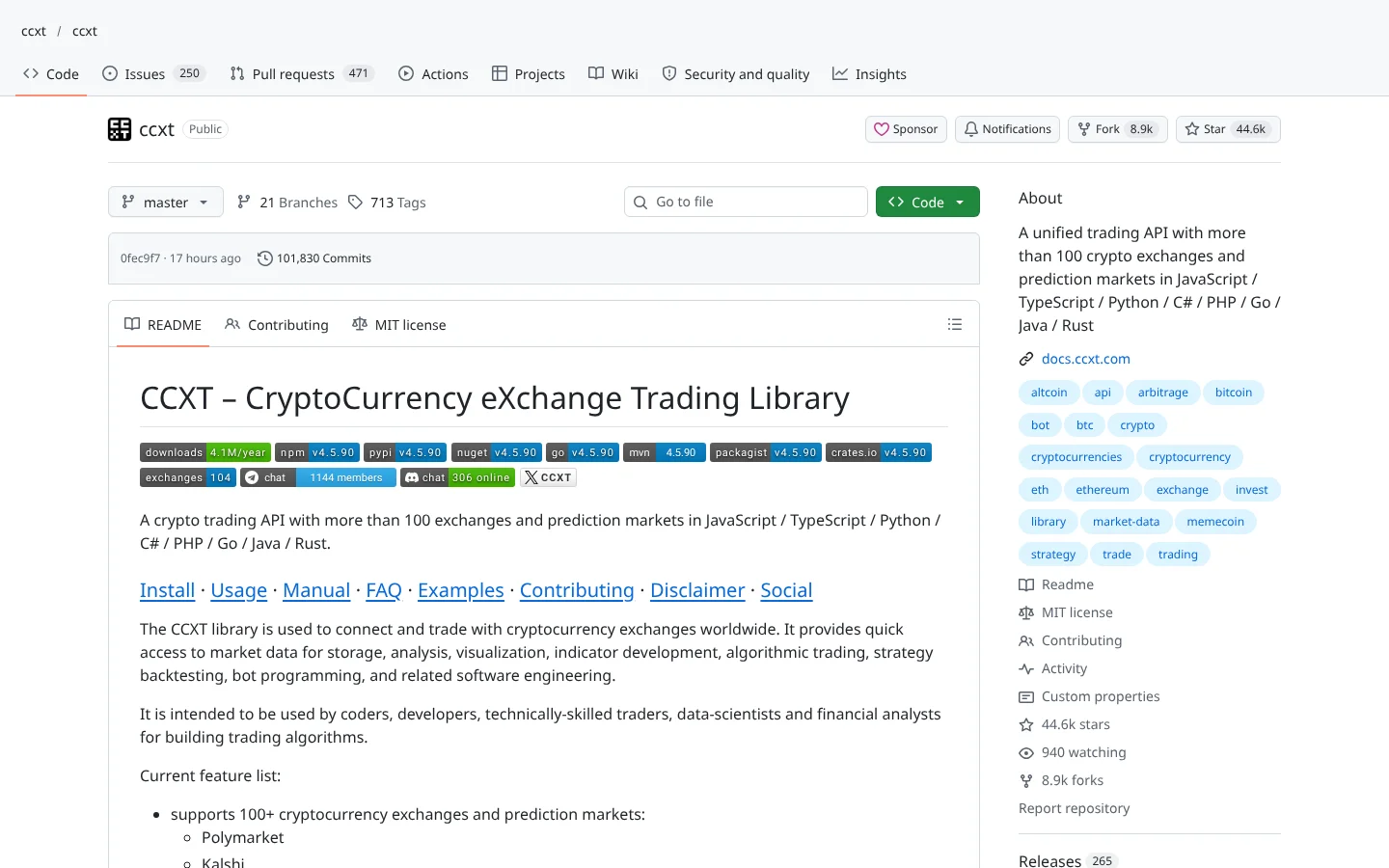
 CCXTccxt/ccxt
One library to talk to 100+ crypto exchanges. The plumbing under most crypto bots.
★ 45k stars · Intermediate · updated 2026-10

Research and Data deep dive
 edgartoolsdgunning/edgartools
edgartools is a free, open-source Python library that pulls SEC filings like 10-Ks, insider trades and 13F holdings and turns them into clean tables you can actually use. It is for stock researchers, analysts and builders who want company fundamentals without paying a data vendor, and it plugs into  Claude through an MCP server. The catch: some standardized financial tags are misclassified, it reads filings but never trades, and you still need judgment to use what it finds.
Think of it as a research assistant who reads every SEC filing for you and hands back a neat spreadsheet instead of a 200-page PDF.
A ten-K can run two hundred pages. edgartools turns it into a clean table in seconds, for free. Here's why traders love it.
edgartools is a free Python library that pulls SEC filings, like annual reports, insider trades and fund holdings. Think of a research assistant who reads every filing and hands you a spreadsheet instead of a PDF.
It's popular because it does one job extremely well.
Five things we like. One, it reads filings straight from the SEC. Two, clean financial statements. Three, no API key or signup. Four, a responsive, active maintainer. Five, a built-in plug so Claude can query filings in plain English.
It works with SEC EDGAR and Claude, and needs only Python.
Reviews are positive. Hacker News users call it one of the best SEC parsers around.
Pair it with a screener and you can check insider buying or debt levels before you ever place a trade.
Two cautions. Some standardized financial tags are misclassified, and fixes are still rolling out, so double-check key numbers. And it reads filings, it never trades. You still need judgment.
Best for stock researchers who want fundamentals without paying a data vendor. Scroll down for setup steps and alternatives.
This is education, not financial advice. Your market edge starts with the right tool. Stay alpha.
FullStack Alpha Editorial Team
Reviewed by Jay Rocco, Chief Editor
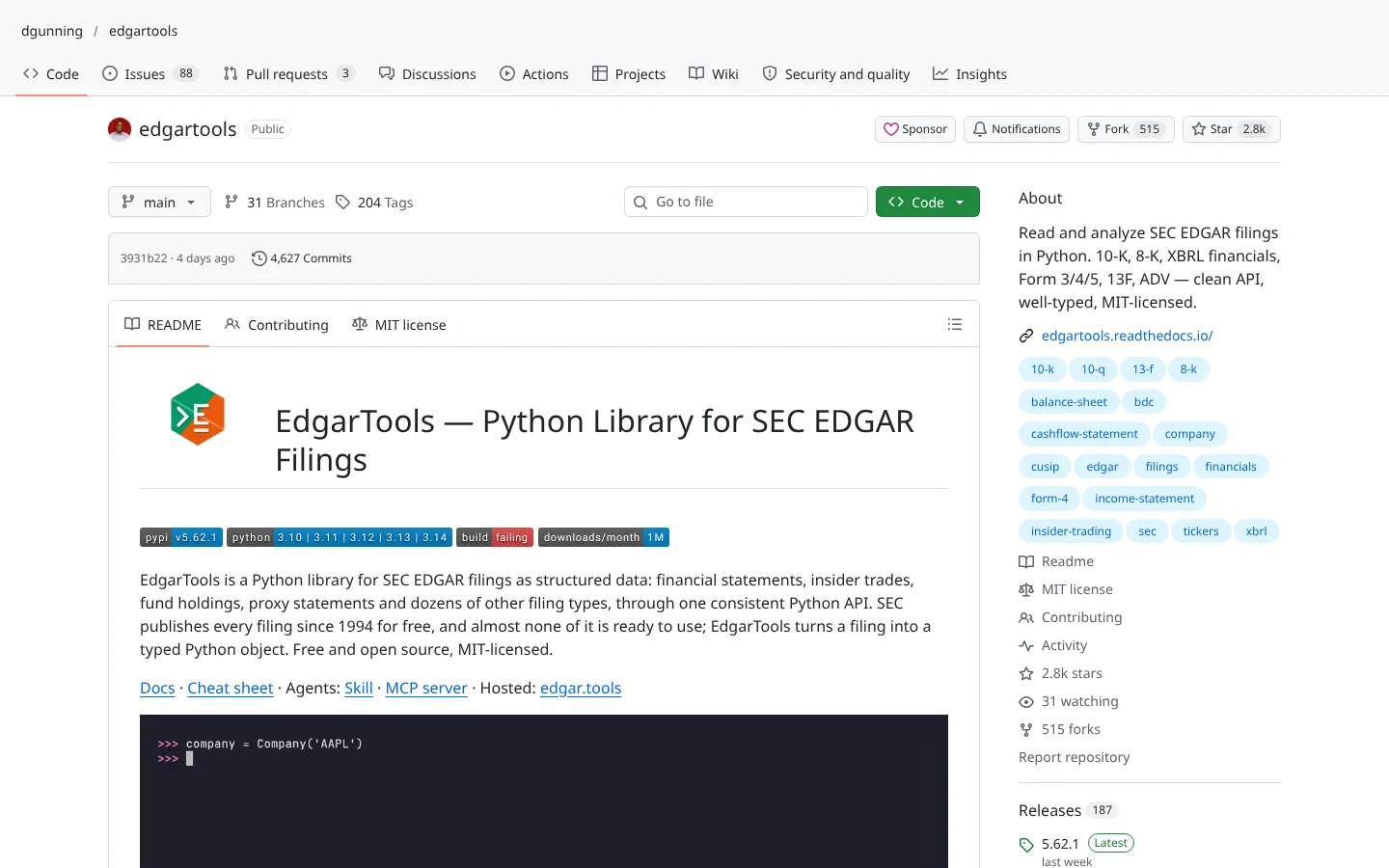
edgartools is a repo (a project's folder of code on  GitHub) maintained by Dwight Gunning, with about 2,800 stars and an MIT license. It reads SEC EDGAR, the government database where every US public company files its reports, and turns those filings into structured Python objects you can convert into tables. No API key, no signup, no paid tier for the library itself.
The coverage is broad. It handles 10-K annual reports, 10-Q quarterly reports, 8-K event filings, 13F fund holdings, Forms 3, 4 and 5 insider trades, proxy statements, S-1 IPO filings, Schedule 13D and 13G ownership stakes, Form D private raises and fund reports. One line like Company("AAPL").get_financials() returns an income statement, balance sheet and cash flow statement built from XBRL, the tagged data format companies use to file their numbers.
It also speaks AI. Installing the AI extras adds an MCP server, a plug that lets an AI assistant like Claude read data or use an app, so you can ask Claude Desktop questions about a company's filings in plain English. It can also install an SEC analysis skill for Claude Code and produce clean text for AI research pipelines. Compared with scraping EDGAR by hand, this is the difference between panning for gold and buying it refined. Why does that matter for a retail investor? Because the people with the cleanest data usually win the research race, and until recently clean SEC data cost real money.
Community Score
85 / 100
GitHub data checked 2026. Community read: positive.
Works with
Good fit if you are
Skip it if you are
Sentiment is clearly positive. On  Hacker News and r/quant, users describe it as the best Python tool for SEC EDGAR data, praising clean XBRL financials, the lack of any API key, and a maintainer who ships fixes often. The most upvoted kind of comment reads like relief from people who used to scrape EDGAR by hand.
The main complaint is narrow. Some users found misclassified XBRL tags in the standardized financial statements, so a line item can land in the wrong bucket. The maintainer has said fixes are rolling out, and his responsiveness is part of why the tool is trusted. The lesson still stands: spot-check numbers against the original filing before you build a thesis on them.
“this library (even in active development) is blowing every other SEC tool I've found out the of the water”
tomrod, Hacker News, 2025What they like
What they complain about
Python
It is a Python library; a basic install is all it takes.
A name and email for SEC requests
The SEC requires every automated request to identify who is asking.
 SEC EDGAR
An AI assistant (optional)
The MCP server lets Claude Desktop query filings in plain English; the skill works with Claude Code.
The uv tool (optional)
The README's MCP setup launches the server through uv.
Misclassified financial tags
Users found some standardized XBRL tags in the wrong category. One wrong line item can skew a ratio, so verify key numbers against the filing.
Data is not advice
Insider buys, 13F holdings and earnings data are facts, not signals. A 13F is filed weeks after the quarter ends, so it shows old positions. Copying a famous fund's 13F means buying what they owned, not what they own.
AI can misread filings
When Claude answers questions through the MCP server, it can still summarize wrongly. Ask for the exact filing and figure, and check it.
SEC access rules
Skipping the identity setting or hammering EDGAR can get your requests blocked. Follow the setup and keep downloads reasonable.

Keep reading across FullStack Alpha
Not ready to run code yourself? Our hands-on AI stock tool reviews on AIStockPickerApp.com score finished products on five pillars, the AI stock tools directory at AIStockPickerApps.com sorts 200+ tools by the job they do, and AIStockTradingBots.com walks through broker APIs, bot setup and backtesting step by step. Or head back to the Trading Workflows home page to match tools to your own routine and budget.
90ScoreCCXTccxt/ccxtOne library to talk to 100+ crypto exchanges. The plumbing under most crypto bots.
★ 45k stars · Intermediate · updated 2026-10
 85Score
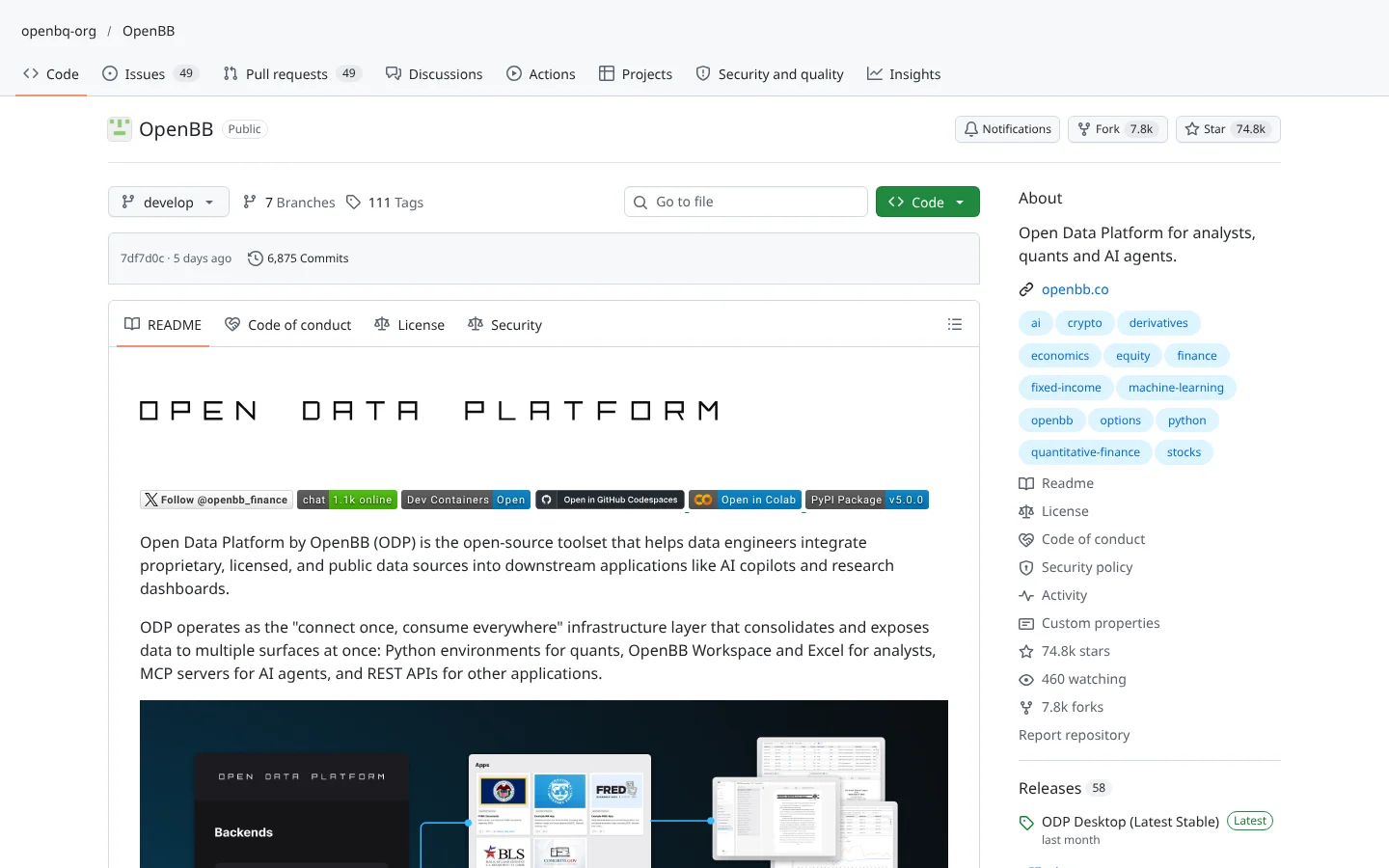
 OpenBBOpenBB-finance/OpenBB
The free, open-source answer to the Bloomberg Terminal: one Python toolkit over 100+ data providers.
★ 75k stars · Beginner · updated 2026-10
 67Score
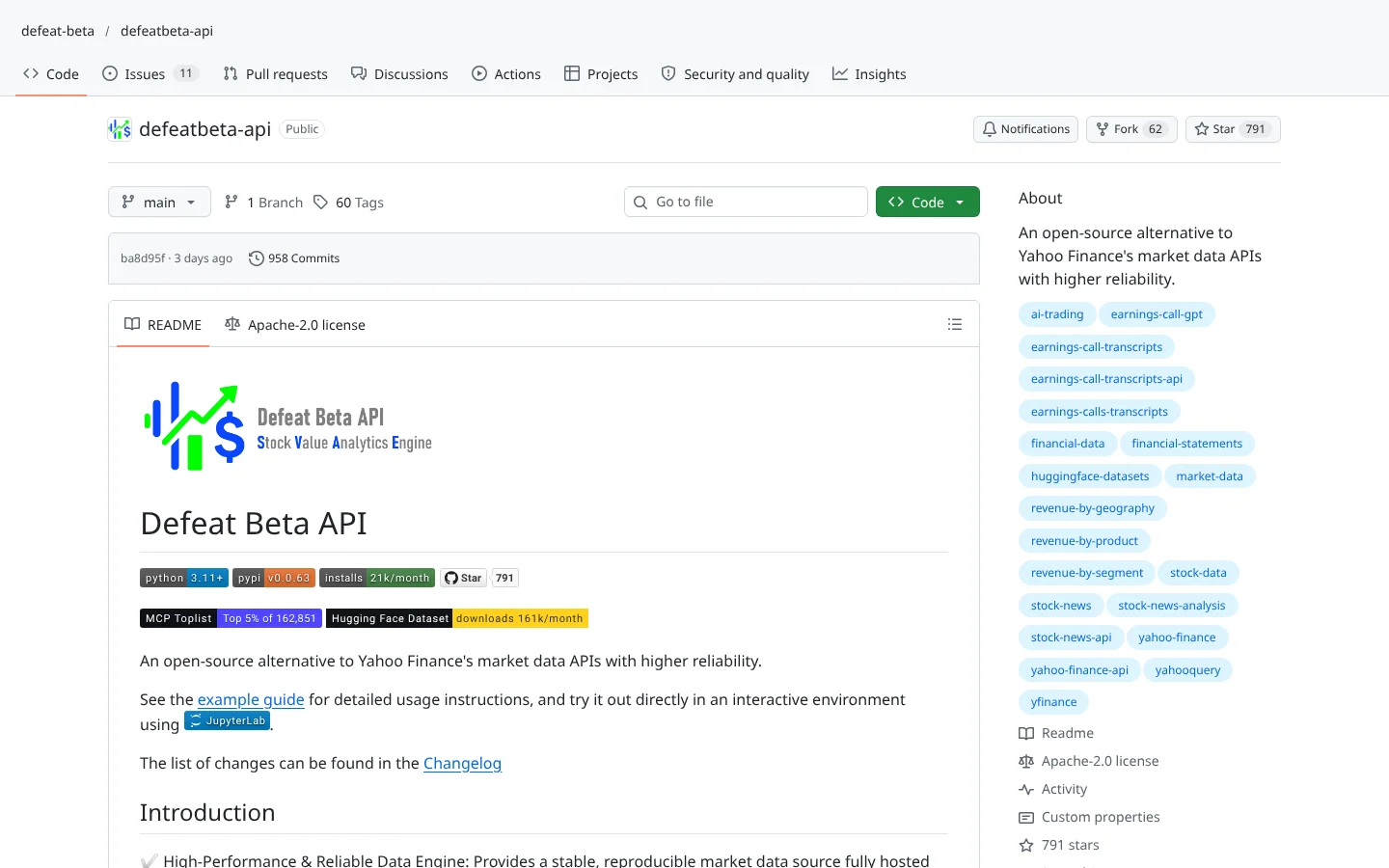
 DefeatBeta APIdefeat-beta/defeatbeta-api
An open-source alternative to Yahoo Finance data with its own MCP server.
★ 791 stars · Beginner · updated 2026-10
edgartools is the rare free tool that does one job extremely well. Our Community Score of 85 reflects excellent maintenance, an MIT license and clearly positive sentiment, held back only by a smaller user base than giant trading frameworks. For anyone doing fundamental research in Python, it should be the first install.
The MCP server is the sleeper feature. Pairing edgartools with Claude turns hundreds of pages of filings into a conversation, which is a real upgrade for retail investors who never read a 10-K. Just treat the output like an analyst's first draft: fast, useful and worth checking before money moves. The system that works is simple. Pull the data, check the source filing, write down your thesis, then decide.
It is a free, open-source Python library for reading SEC EDGAR filings as structured data. It covers 10-K, 10-Q, 8-K, 13F, insider Form 4 filings and more, and returns financial statements as tables.
Yes. It is MIT licensed, and the README says there is no key, no signup and no rate-limit tier for the library. SEC EDGAR data itself is free public information.
Yes. It includes an MCP server you add to Claude Desktop, so you can ask Claude questions about company filings. It can also install an SEC analysis skill for Claude Code.
Yes. It parses Forms 3, 4 and 5, which report insider holdings and trades. Insider buys are useful context, not a buy signal by themselves. Clusters of buying by several executives tend to say more than one routine purchase.
It reads official SEC filings, so the source is authoritative. Some standardized XBRL tags have been misclassified, though the maintainer says fixes are rolling out, so spot-check important figures.
Incoming transmission | Free weekly newsletter
FullStack Alpha has tested 200 AI stock tools. Be honest: how many of yours do the same job, and which one did you forget you signed up for?
One email a week fixes that: which tools are worth the money, what they cost right now, and how the traders on this site wire them into a routine. Five minutes to read. Zero noise.
Inside every issue
5 MIN READ
The Verdict
One AI trading tool tested and scored. What it does well, what it costs, and the catch the sales page leaves out.
Price Watch
Price changes and live promos on the tools traders actually use, monthly and annual side by side, so you stop overpaying.
Workflow Teardown
One educator's routine taken apart: the scan, the chart, the tools, and the free swap for every paid one.
Scan of the Week
Exact scanner settings you can copy, pulled from the educator's own lesson with the timestamp.
Process beats prediction. This is the email that keeps your process honest.
FullStack Alpha Network
BestAITradingTools.com
Trading workflows, the tool matchmaker and the GitHub repo directory.
 ChatGPT