Quick Answer
Flex. SMB Capital's November 14 video lays out a legitimate prop trading strategy called pyramiding, where you add to a winning position with progressively smaller risk so your total open risk actually falls as the trade works. The hook is the inversion: most retail traders add to losers (averaging down) and call it discipline, while prop desks add to winners and tighten stops until a three-entry position risks less than the first entry did.
No returns are promised, no magic indicator is sold, and the math on screen holds up. The catch is execution, not theory.
What Does SMB Capital Actually Claim?
SMB Capital claims that adding to winners, sized correctly, lets a trader hold a bigger position while risking less money than they did on entry one. The video runs 23 minutes, 46 seconds, was uploaded November 14, 2026, and had 212,891 views and 3,970 likes by November 18.
The video opens with a confession most intermediate traders will recognize. You buy, it drops, you buy more because it's cheaper, your average improves, and you tell yourself that's patience. The host's verdict at (0:40-ish): "It's adding to a loser and calling it a strategy." Over a career, that habit eats capital.
Then comes the flip. What if the trade goes your way and the second entry looks obvious? How do you add and end up risking less?
The receipts shown on screen
The whiteboard work is where this earns credibility. A few of the moments:
| Timestamp | What's shown | Why it matters |
|---|---|---|
| 1:34 | The oversizing mistake | Names the exact failure: wrong size on entry 1, then a bigger add |
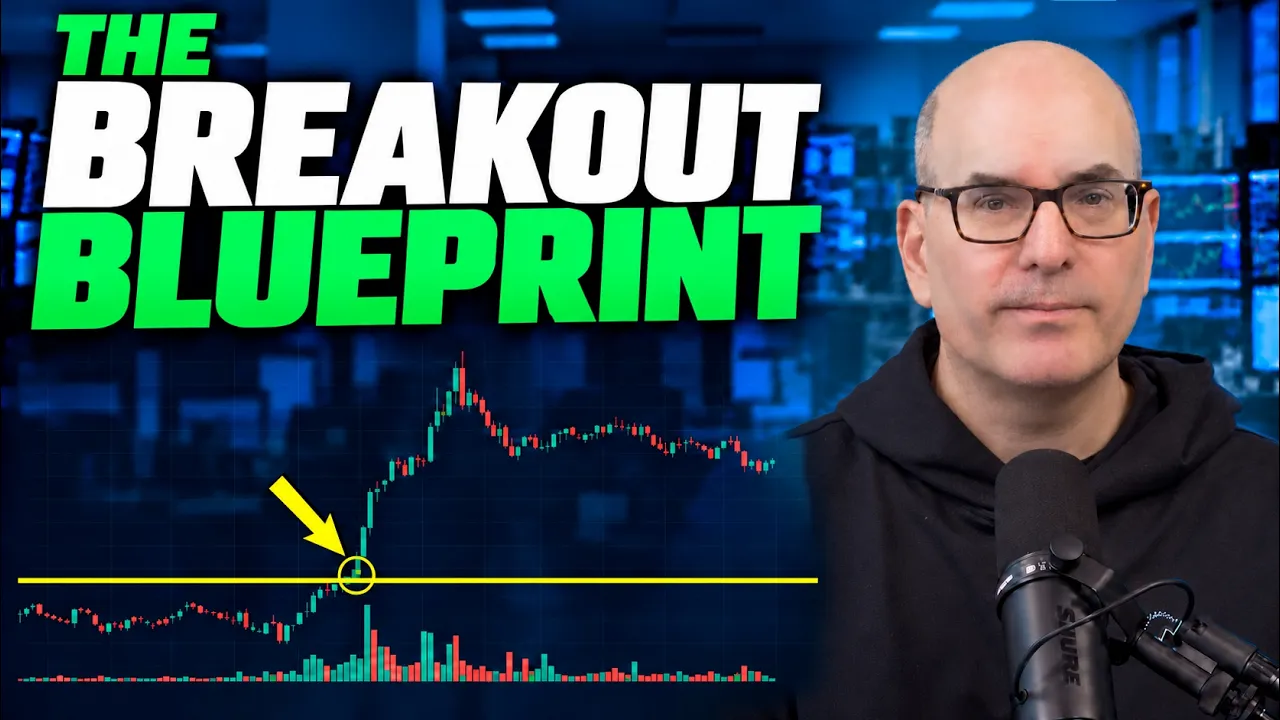
| 3:38 | Breakout entry at 1R, stop below range low | Defines the risk unit before any add |
| 5:11 | Position at 1.75R with falling risk | The core claim, drawn out |
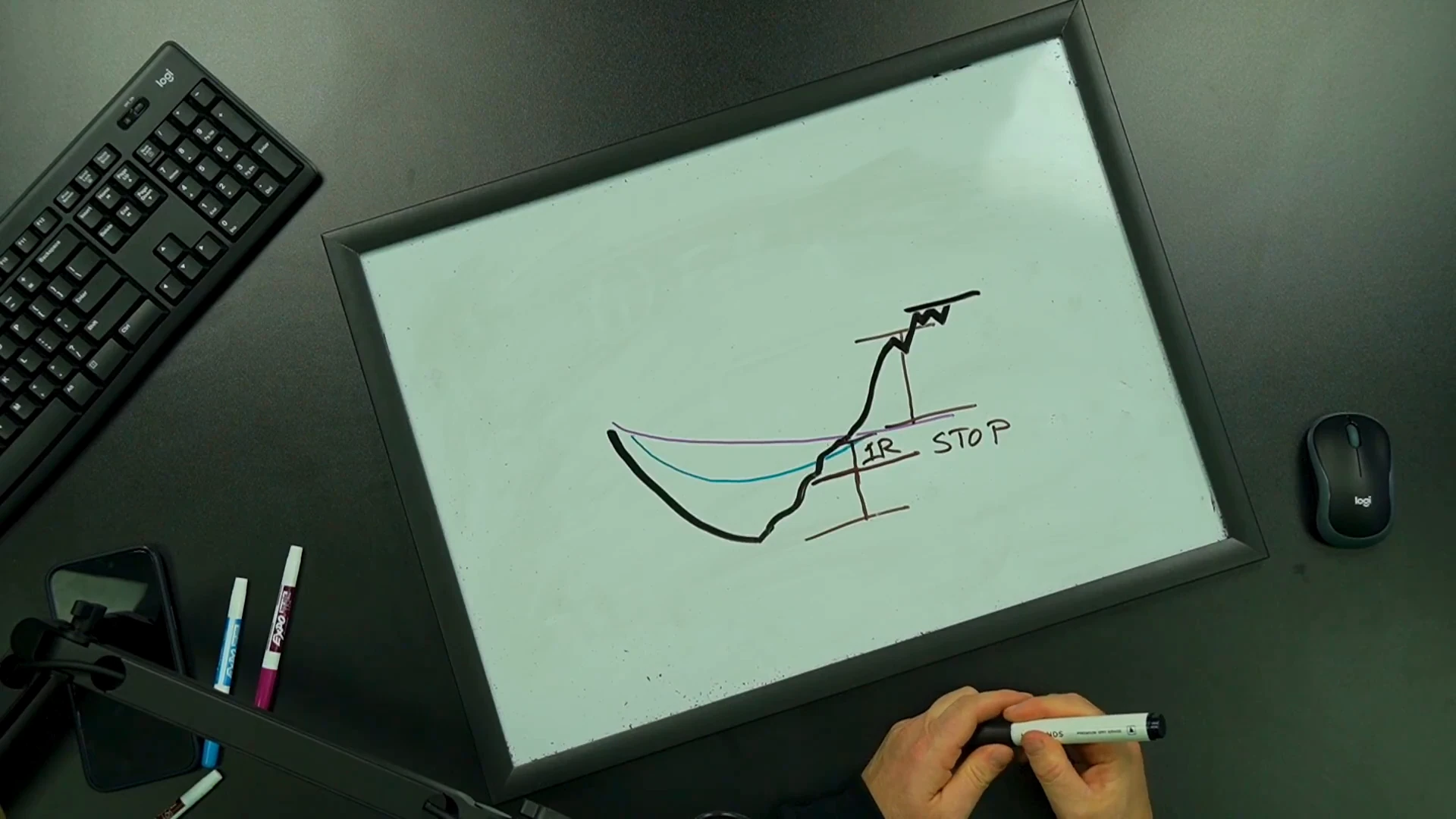
| 9:26 | Whiteboard: entry with a 1R stop | The baseline every add is measured against |
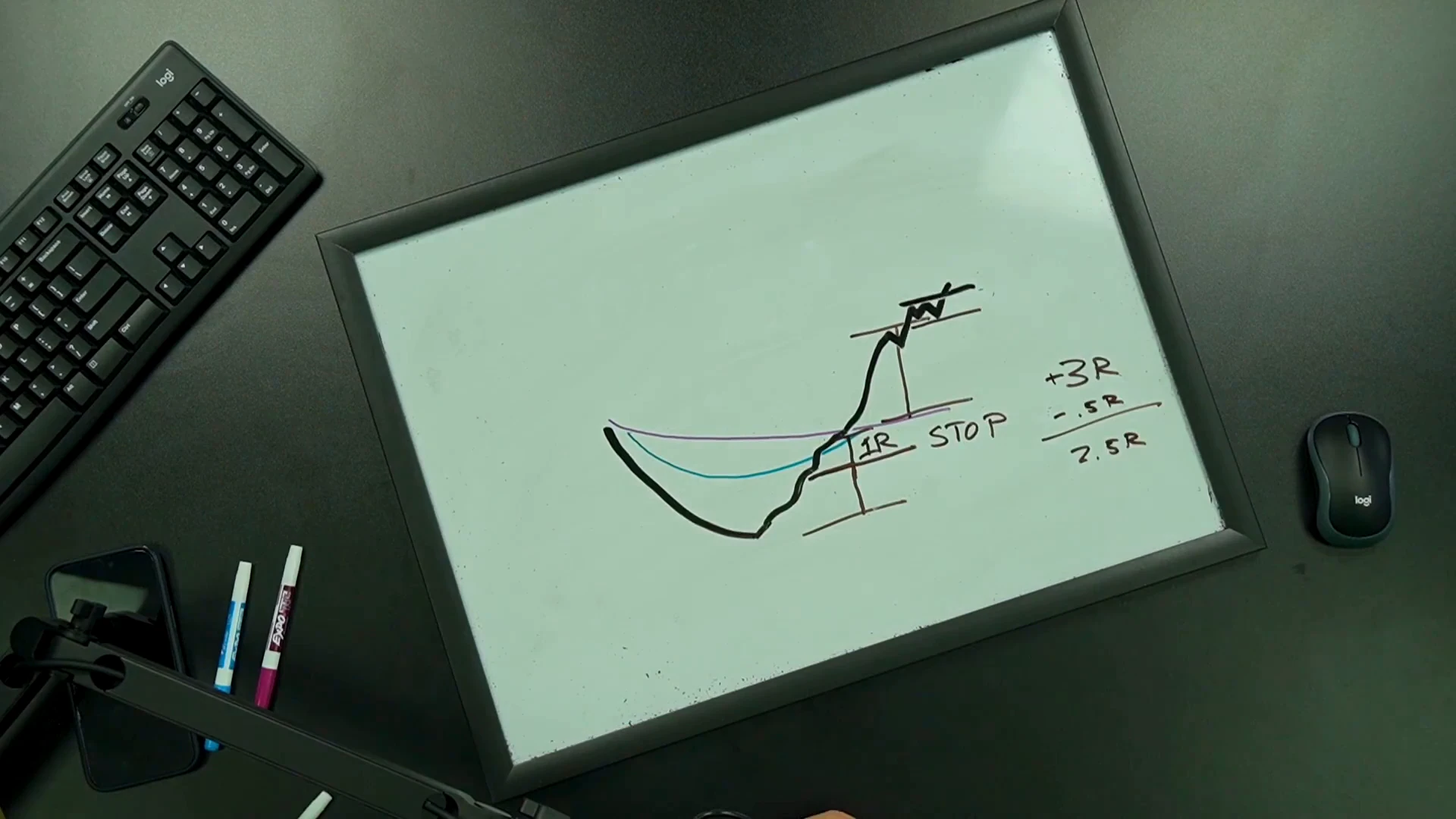
| 11:28 | Whiteboard: +3R, a -0.5R add, 2.5R floor | Shows the worst case after the add |
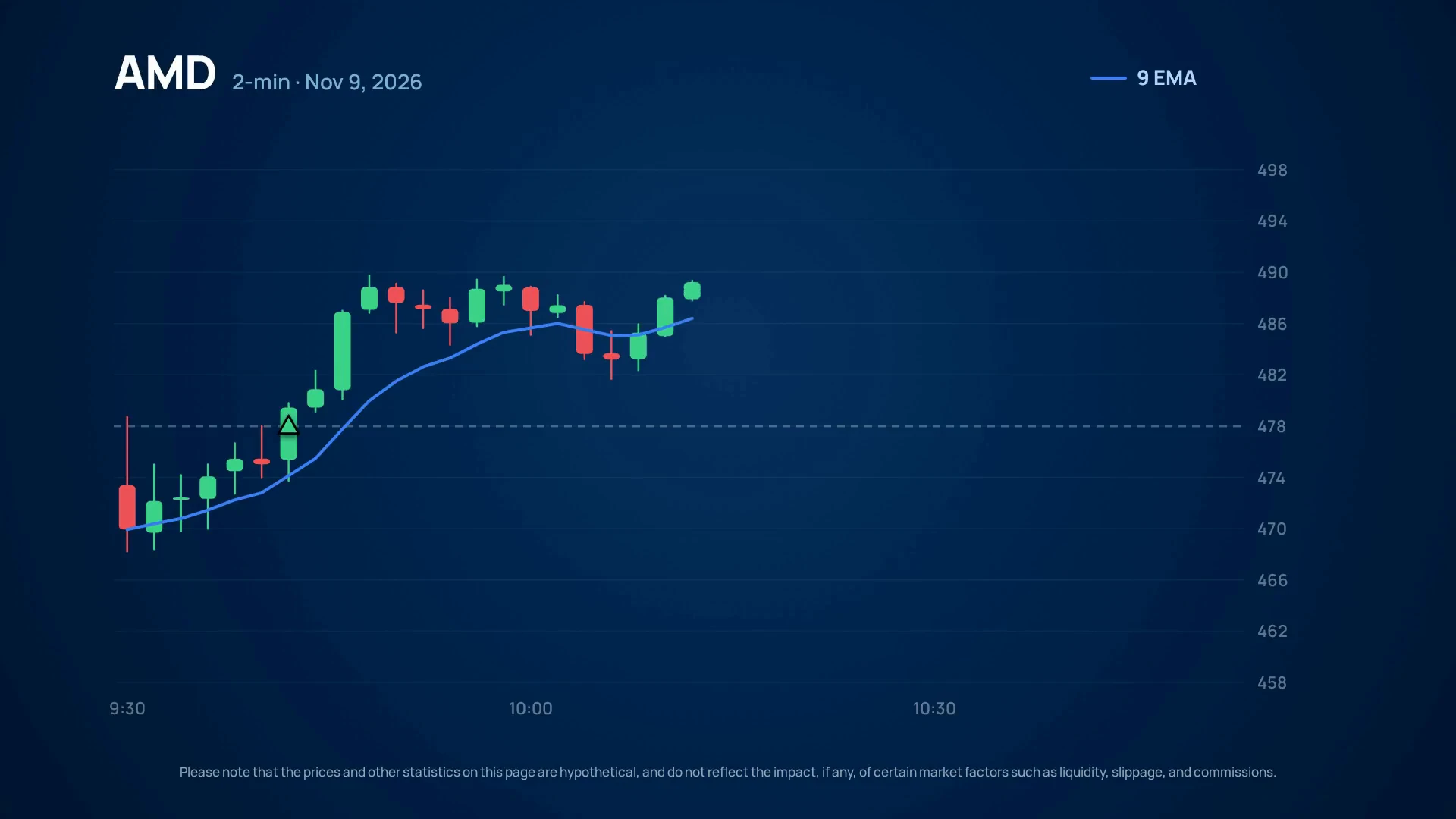
| 12:48 | Opening range break above 478, stop 468 | Full share-count math |
| 22:41 | Rule card: don't fall in love with the add | The behavioral guardrail |
One more line worth keeping, from (5:11): "The risk is falling the entire time. That's the whole trick."
Watch the original here: The Prop Trading Technique that Will Make You Dangerously Good.
How Does This Prop Trading Strategy Work?
The prop trading strategy works in three moves: size entry one properly, add only on a fresh valid setup, and raise your stop so the combined position's open risk shrinks with every add. Favorable price movement alone is never a reason to add.
The confession: averaging down feels smart
Averaging down (buying more of a losing position to lower your average cost) feels like conviction. It's a Martingale bet wearing a suit. You're increasing exposure precisely when the market is telling you that you're wrong, and your stop keeps sliding further away in dollar terms.
Pyramiding is the mirror image. You add only after the market pays you first.
How most traders get pyramiding wrong
At (1:34) the host names the failure: traders undersize the first entry, then oversize the add because they're already up money. That's P&L talking, not structure. The add becomes a brand new full-size trade bolted onto an existing one, and the combined stop is now a disaster.
If your add is bigger than your first entry, you're not pyramiding. You're doubling down with extra steps.
Entry 1: one R on the range breakout
R is your risk unit, the maximum dollars you'll lose on the idea. Say 1R equals $1,000. Price breaks out of a tight consolidation, you buy, and your stop goes below the low of the range. That distance determines share count, not the other way around. Get this wrong and nothing downstream saves you. Our breakdown of the position sizing mistake that wipes out most new traders covers the arithmetic in detail.
Adding while total risk falls
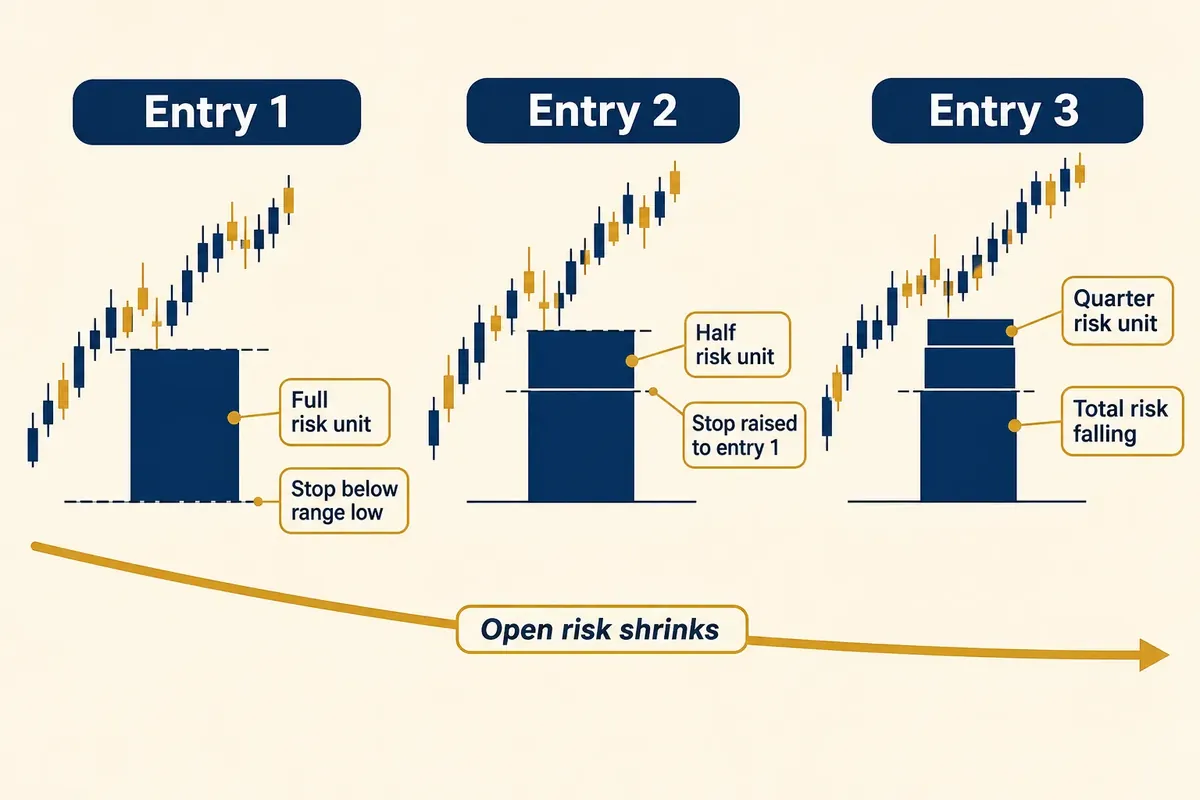
Here's the mechanic. Trade moves in your favor. You add half a risk unit and simultaneously move the original stop up to your entry price or to a new structural low. Your position is now larger, maybe 1.5R or 1.75R of exposure, but the distance from current price to your combined stop is smaller than it was at the open.
By entry three, you can hold your biggest position of the trade while risking less than you did on entry one. Bigger size, smaller risk. That's the asymmetry prop desks are paid to build.
The 'fashionably late' entry
At (7:18) the video walks a second setup: price sells off, puts in a clear low, then grinds higher. Two reference lines matter, VWAP (volume weighted average price, the day's average transaction price) and the 9 EMA (a fast moving average). When the 9 EMA curls up toward VWAP, that's the trigger window. The animated chart at (13:55) shows the cross developing in real time.
You're not catching a falling knife. You're waiting for the turn to prove itself, then buying with a tight stop under the pivot.
The target rule
The fashionably late trade carries its own exit rule: one full measured move (the height of the prior range projected from the breakout point). At (8:25) the host explains that if price gets near target and stalls, you don't just dump it. You might take an offsides scalp in the direction of the trade at a good location, then move your entire stop up to your original target. The exit rules do the work so you don't have to improvise under pressure.

Adding with half a risk unit
At (10:36) the sizing rule gets explicit: the add risks half a unit, not a full one. Entry above the highs, stop below the consolidation, and 0.5R of dollars behind it. Stack another add later at 0.25R if the structure keeps offering clean levels. The sequence halves each time.
Decision rule: add only if the add would pass as a standalone trade you'd take with no position on. If you wouldn't enter fresh there, you don't get to add there.
Why traders go on tilt when they're up 3R
At (11:43) the host identifies what actually breaks people. You're up 3R. You risk 3R on the add. The trade reverses and every dollar of profit evaporates. That's not a money problem, that's a confidence problem, and it's where revenge trading starts. Giving back a fully earned winner stings more than a clean stop-out ever will.
Risk a portion. Stay in a state where a failed add leaves you green.
Worked example: opening range break above 478
From (12:48). The opening range high is 478, the stop is 468, so risk is 10 points. With 1R set at $1,000, that's 100 shares. Clean.
Price runs, then builds a tight consolidation. The add setup forms with an entry around 493 and a stop at 489, four points of risk. Full risk unit on the add would be 250 shares. Don't. Risk half, so roughly 125 shares.
Now move the original stop from 468 up to 489. Run the math at (15:28): if price flushes back to 489, the first 100 shares are up 11 points, the add loses its four, and the trade still closes green. The position doubled, the worst case improved. The short-side example at (17:05) with 500 shares at two points of risk, then a 250-share add at 0.5R, works the same way in reverse.
⭐ Top 5 Features We Love
Five things this prop trading strategy gets right, each tied to something shown on screen.
1. It defines risk before it defines profit. Every entry starts with a stop and a share count derived from that stop (3:38, 12:48). No targets are discussed until the downside is nailed down.
2. The halving rule is simple enough to follow under stress. 1R, then 0.5R, then 0.25R. You don't need a spreadsheet mid-session. Simple rules survive adrenaline; clever ones don't.
3. Stops move with the adds, not after. The add and the stop adjustment happen together (15:28). That pairing is what makes total risk fall instead of stack.
4. It names the psychology, not just the math. The 3R tilt warning at (11:43) and the rule card at (22:41) treat ego as a real variable. Giving back a big winner is a known trigger for revenge trading and overtrading.
5. Each add must earn its place on structure. The framework is catalyst, setup, trade. Open P&L is not a setup. That filter is the difference between pyramiding and gambling, and it pairs well with any process for finding a trading edge before you risk a dollar.
⚠️ Things to Look Out For
The method is sound. The environment around it is where people get hurt.
- Commissions and slippage multiply. Three entries plus scalps plus exits means more fills. On a $5,000 account, four round trips a day can quietly outrun a modest edge.
- Adds need liquidity. Pyramiding into a low float name on a choppy tape gets you filled badly on the way in and worse on the way out. The technique assumes you can exit size quickly.
- No track record is shown. The video presents whiteboard math and illustrative charts, not an audited P&L. Treat the numbers as teaching examples, not results.
- Funded-account rules can block it. Prop firm rule changes have been frequent. One industry monitor logged 13 published rule changes across firms in November 2026, seven unfavorable and six favorable. Tighter drawdown rules and payout conditions can make a three-entry pyramid bump a daily loss limit faster than you'd think. Read how prop firms actually make money before assuming the house wants you scaling.
- Who this is not for: anyone who hasn't defined 1R in dollars, anyone still averaging down weekly, and anyone trading a strategy with no documented win rate. Pyramiding amplifies whatever edge you already have. If the edge is negative, it amplifies that too.
How Do You Practice This Prop Trading Strategy Without Blowing Up?
Practice the adds before you practice the profits. Pyramiding is a mechanical skill, and like any mechanical skill it breaks under pressure if you've never drilled it.
Here's a three-stage drill for this prop trading strategy:
Stage 1: Replay only (two weeks)
Pull up opening range breakouts on a replay tool. Take the first entry at one R, then practice placing the add at half a risk unit only after price moves your way. Write down the total open risk after each add. If it went up, you did it wrong.
Stage 2: Paper with full rules (two to four weeks)
Run the full sequence live on paper: entry, the "fashionably late" add, the target rule and the stop moves. Log every trade with total risk at each step.
Stage 3: Live with one add only
Go live with the initial entry and a single add. Skip the third entry until your log shows you move stops correctly every time.
The point of the drill is simple. A prop trading strategy built on adding to winners only works if your total risk falls as the trade works. Most retail traders reverse that by instinct, so the instinct has to be retrained before the money is real.
The numbers to track
- Total open risk after each add (should fall or stay flat)
- Average R on trades with adds versus without
- How often you added to a loser by mistake
If that last number isn't zero, you're not running this prop trading strategy yet. You're averaging down with extra steps.
Flex or Cap? Our Verdict
Flex. This prop trading strategy survives all four of our checks, with one caveat.
| Test | Result |
|---|---|
| Receipts shown | Yes. Whiteboard math, share counts, two full worked examples with timestamps |
| What can be verified | The arithmetic verifies independently. The claimed outcomes do not, because no audited record is shown |
| Risk disclosed | Yes, and prominently. Tilt, oversizing and the giving-back-profit failure mode are all named |
| Repeatable by retail | Yes, with a funded or margin account and a defined setup. The PDT minimum ended June 4, 2026, so small accounts can run intraday adds |
The caveat: this is trade management, not an entry signal. Hand it to someone with no tested setup and it does nothing. Hand it to a trader with a documented breakout or VWAP continuation edge and it changes the shape of their equity curve by improving payoff asymmetry.
Verdict: Flex. No buzz, no promises, real math. Rare on trading YouTube.
What You Should Know Before You Try It
Six practical points before you add a single share.
- Paper trade it first, for 20 trades minimum. Log the add, the stop move, and the result. If you can't execute the stop adjustment on paper, you definitely won't with money on the line. A trading journal template makes the review honest.
- Write 1R in dollars and tape it to your monitor. Most traders risk a share count, not a dollar amount. That's backwards. Pick a figure you can lose 10 times in a row without flinching.
- Cap your total adds at two. Four-level pyramids look elegant on a whiteboard and fall apart in a real session. Start with one add at 0.5R.
- Price in costs. Count commissions, spread, and data fees against your 1R. If three entries cost 8% of your risk unit, the edge needs to clear that first.
- Check your account rules. Funded-account drawdown limits, news-trading restrictions and payout thresholds change often. Direct retail brokerage accounts have fewer constraints since the Pattern Day Trader framework was eliminated, effective June 4, 2026, with phase-in allowed through October 2027. See how to day trade without $25K for the current landscape.
- Verify the setups yourself. Mark up 30 opening range breaks and 30 VWAP reclaims on your own charts before you trust the trigger. A stock screener built for finding these setups speeds up the sample building.
Become consistently profitable first, then become large. Systems over hacks.
Keep reading on FullStack Alpha: our AI stock tool reviews, how traders automate rules like these, day trading tools compared side by side, and more Flex or Cap breakdowns.
Frequently Asked Questions
What is the best strategy for prop trading?
There isn't one. The best prop trading strategy is the one you can execute identically 100 times with defined risk. Most prop desks run a small number of repeatable setups, like opening range breakouts or VWAP continuations, combined with strict position sizing and scaling rules.
Is it possible to make $1000 a day day trading?
It's possible with a large enough account and a proven edge, but it's not a reasonable target for most retail traders. To average $1,000 a day with a 1R of $1,000, you'd need to net one full risk unit daily, which is an extremely high bar. Chasing a daily dollar target is one of the fastest routes to overtrading.
What is the 3-5-7 rule in trading?
A common risk guideline: risk no more than 3% on a single trade, keep total exposure across correlated positions under 5%, and cap overall portfolio risk around 7%. It's a rough framework, not a regulation, and many prop traders run tighter numbers than that.
Do prop traders actually make money?
Some do. Profitability concentrates in a small group with tested processes and strict risk control, while most participants, especially in evaluation-based funded programs, do not clear consistent payouts. Firm economics often depend on evaluation fees as much as trader profits.
How much money do day traders with $10,000 accounts make per day on average?
There's no reliable average, and anyone quoting one is guessing. A realistic framing: a trader risking 1% per trade on $10,000 risks $100 per position, so a strong day might net a few hundred dollars and a bad one loses the same. Most small accounts lose money over time.
Is prop trading risky?
Yes. Leverage, intraday speed and drawdown limits all compress the time you have to be wrong. Evaluation fees are a real sunk cost, and firm rules can change mid-account. Risk management isn't an accessory here, it's the product.
How much do traders at SMB Capital make?
SMB Capital doesn't publish trader compensation, and no verified figures exist publicly. Pay at proprietary desks is typically a profit split, so earnings range from nothing to substantial depending on the trader's results and the firm's split structure. Treat any specific number you see online as unverified.
Can you use this prop trading strategy in a funded account challenge?
Yes, and it fits the rules better than most, because pyramiding keeps total risk falling as a trade works. Check your firm's maximum position size and daily loss limit first, since adds can hit a size cap even when the risk is shrinking. That's the main adjustment for this prop trading strategy in a challenge.
What's the difference between pyramiding and averaging down?
Pyramiding adds to a winner with smaller risk and a tighter stop. Averaging down adds to a loser and increases total risk. The prop trading strategy in this video depends entirely on the first and treats the second as the mistake that ends careers.
The Call
Pyramiding isn't a secret. It's just the opposite of what feels natural when you're sitting in a green position with a twitchy finger. Size entry one correctly, add half, move the stop, repeat smaller. The trade grows while the risk shrinks.
Your next step is boring on purpose: open your last 20 trades, find every one where you added, and check whether the add was based on structure or on the fact that you were already up. That audit tells you whether you're running a prop trading strategy or just a feeling.
One technique, examined in depth here. There are 200+ AI stock tools and scanners catalogued in the FullStack Alpha directory, filterable by category, price and what they actually do.
Browse the directory → aistockpickerapps.com
Your market edge starts with the right tool. Stay alpha.