Quick Answer
The five short selling strategies in Lance Breitstein's October 31, 2026 video are real, well-known setups used by professional traders, and the mechanics he explains are accurate. The receipts behind the "$100 million in verified profits" headline, though, are not public. Call it a mostly-flex with a missing audit trail.
Here's what makes this one worth your time anyway: most shorting content tells you what to short. This one spends more energy on how you get destroyed doing it. A $3 stock that genuinely deserves to trade at $1 can print $10 on the way there, and your account won't survive to collect.
What Does TheOneLanceB Actually Claim?
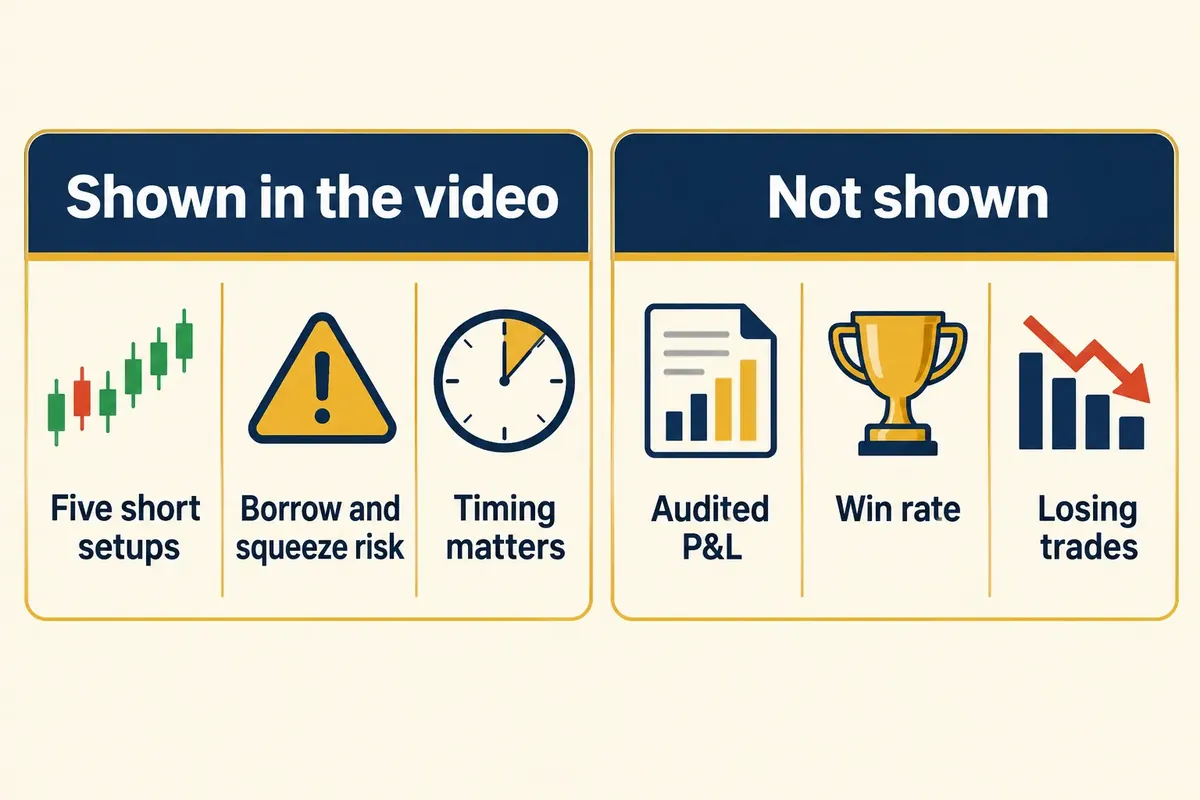
The video opens with a number: 16 years of trading and more than $100 million in verified career profits. Breitstein, formerly of the proprietary trading firm Trillium, says one of these five short selling strategies produced his single biggest short.
That $100 million figure appears on his own website too. What doesn't appear anywhere public: the auditor's name, account statements, the time period, risk-adjusted returns, or whether the figure covers personal trading, firm trading, or both combined. For a number that large, "verified" is doing a lot of unsupported work.
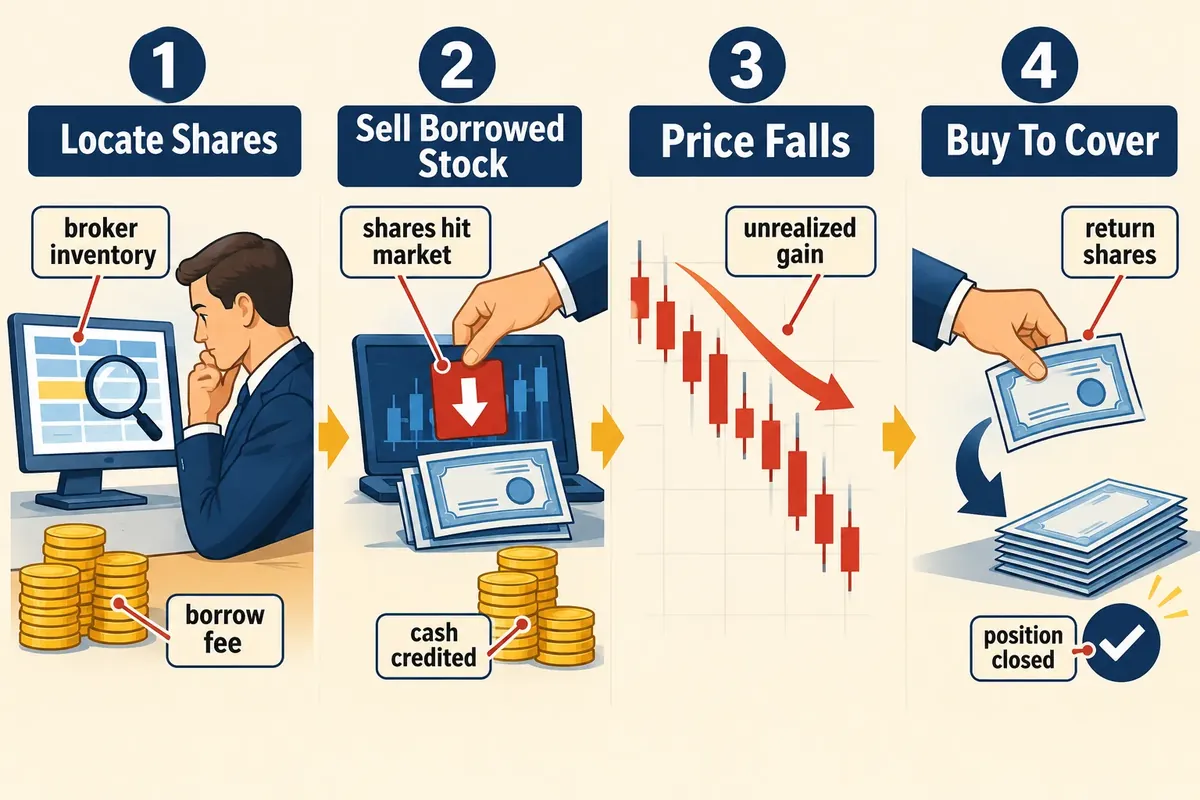
The actual educational content is stronger than the headline. He spends the first 75 seconds explaining the mechanics in plain English: your broker locates shares, you borrow and sell them, and later you buy them back, which traders call covering. Short 100 shares at $50 and cover at $40, you keep the difference. Simple arithmetic, infinite ways to get hurt.
At (11:16) he lands the real thesis: "Never confuse this stock should go down with an actual trading setup." That one line is worth more than most paid courses.
Speaking of which. Breitstein's site markets a trading course with roughly 230 videos in the Advanced tier and 295 in the Elite tier, priced at $3,497 and $5,497 annually, with a $12,000 package that includes one-on-one mentorship. The video is free. The funnel it feeds is not. That doesn't make the content wrong, it just means you should know where the road ends.
Watch the original here: 5 Short Selling Trading Strategies That Made Me Millions.
What Are the 5 Short Selling Strategies He Uses?
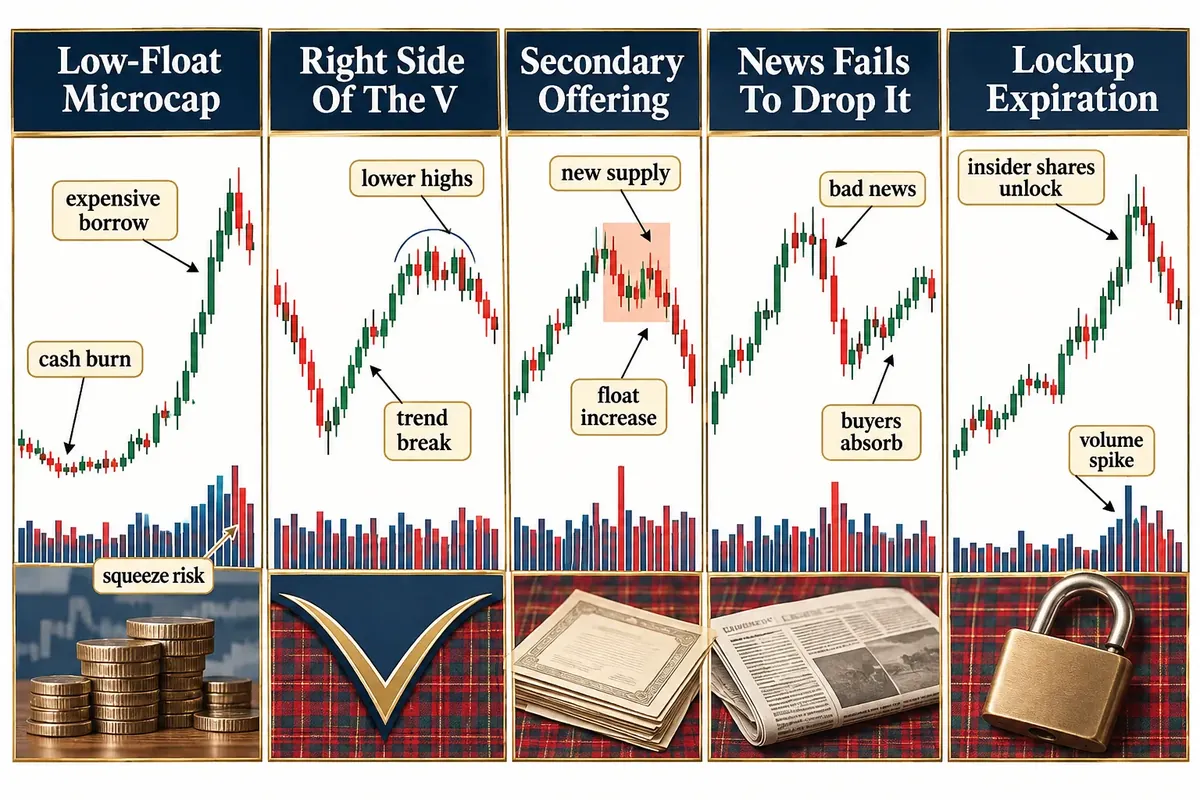
Five setups, in the order he presents them. Each one is a different way of answering the same question: where is supply about to overwhelm demand, and how do I know quickly if I'm wrong?
1. Low-quality microcaps (and the borrow and squeeze risk that comes with them)
Around (2:03) he calls microcaps the oldest hunting ground for short sellers, and he's right. The specific target is low-quality companies that burn cash and keep issuing stock to stay alive. The pattern repeats like a bad sitcom: raise money, burn it, promote a new story, raise again.
A microcap short looks easy on paper. The business is weak, the dilution is relentless, the math doesn't work. Then reality shows up with a baseball bat.
These names carry three stacked problems. Low float, meaning very few shares actually trade freely, so small buying pressure moves price violently. Expensive borrows, meaning the annualized fee your broker charges to lend you shares can run into triple-digit percentages on hard-to-borrow names. And huge short interest, which is fuel for a short squeeze, where shorts forced to buy back push price even higher.
His own warning at (3:06) is the part people skip: a $3 stock that deserves to trade at $1 can hit $10 first. Being correct and being solvent are separate achievements.
Gap risk is the other killer. These stocks halt, then reopen 80% higher on a press release about a partnership with a company nobody has heard of. Your stop loss, the pre-set price where you exit to cap the damage, doesn't protect you through a gap. It fills wherever the market reopens.
Traders who short these successfully don't short strength. They wait for the move to break, then short the failure. Same discipline, smaller ambition.
2. The right side of the V
This is the framework he describes as a turning point in his own trading, and it's the most transferable idea in the video.
Picture a parabolic run as the left side of a V turned upside down. Price accelerates, everyone piles in, volume explodes. Shorting into that left side is catching a falling knife in reverse. You're fighting a trend that's still accelerating, and the trend doesn't care about your thesis.
The right side is different. Price has already broken its euphoric uptrend. Lower highs are forming. Rallies are getting weaker. At (4:39) he describes it as waiting for evidence that the trend had changed, which let him define risk better instead of repeatedly fighting momentum.
He points to a short this year after a stock broke a euphoric uptrend caused by a locked-up float. The mechanic matters more than the ticker: when very few shares are available to trade, price can detach from any reasonable valuation. When that squeeze pressure releases, the air comes out fast.
The practical version for a retail account: don't short the first red day. Wait for a failed bounce, a lower high, and a clearly defined level above you that says the thesis is dead. That level is your stop. No level, no trade. This is the same thinking behind finding a trading edge before you risk a single dollar, define the invalidation first, the entry second.
3. Offerings and new supply
Starting around (5:41), he moves to secondary offerings. A company sells new shares into the market, which increases supply. More supply at the same demand means lower price. Econ 101 with a ticker attached.
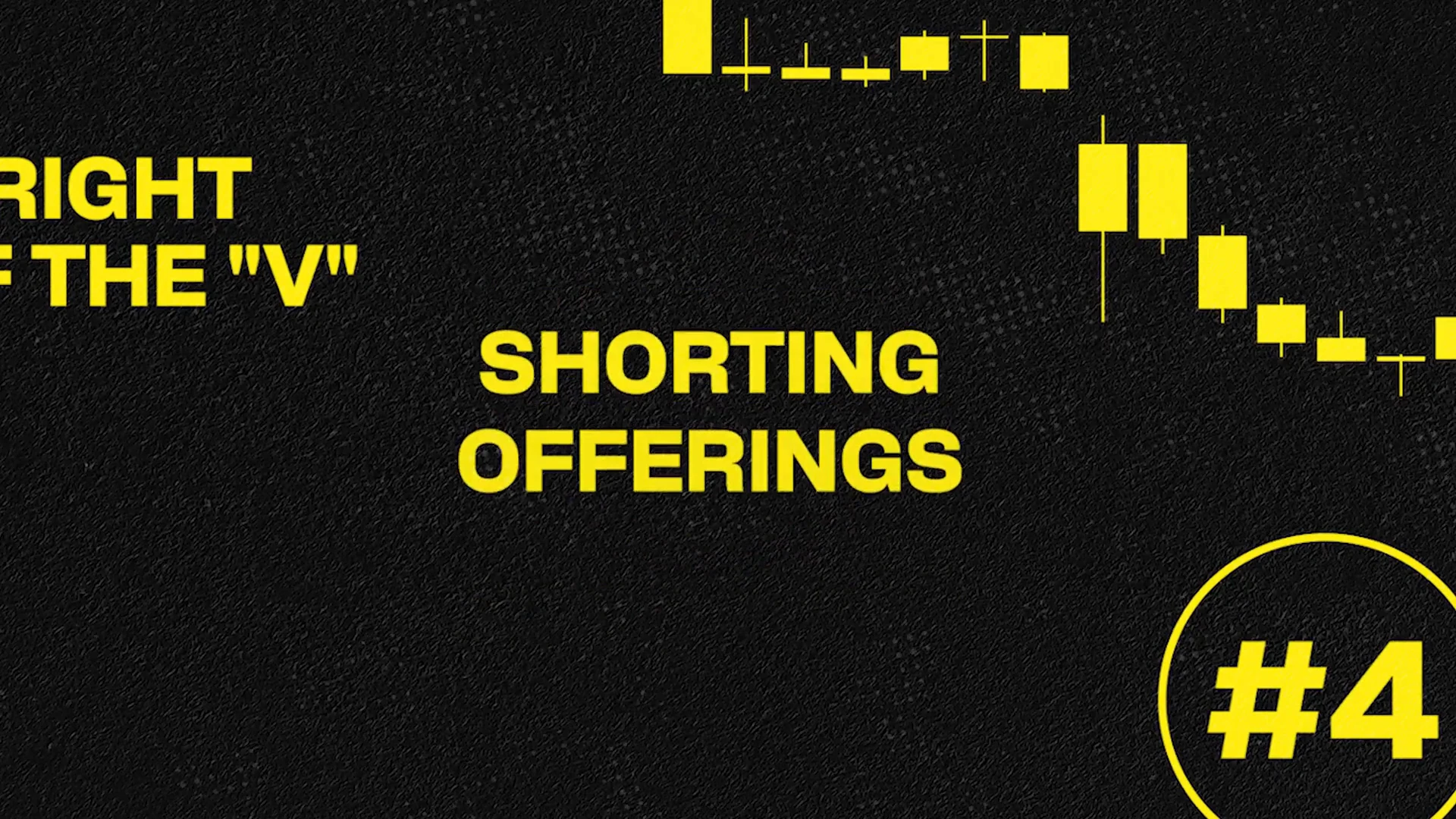
His example is clean. A speculative company has 20 million shares outstanding. The stock runs from $5 to $15. Management, being rational, sees a gift and raises capital at the elevated price.
The size relative to the existing float is what matters. A 2 million share offering into a 20 million share float is a 10% supply increase dumped in overnight. That's a different event from the same raise in a company with 500 million shares out.
This setup is most common in microcaps and cash-burning speculative names, which circles back to strategy one. The companies that need money most are the ones whose stock just ran for no durable reason.
Three questions do most of the work. How big is the offering against the float? What price is the deal being done at, and is it at a discount to the current market? And who's underwriting it, because an offering structure with warrants attached behaves differently from a clean raise.
What you're not doing is shorting every offering headline. You're shorting the ones where the supply is large, the price is weak, and the buyers show up tired.
4. When bearish news can't push a stock lower
This one is the inverse of the usual lesson, and it's the most sophisticated idea in the set.
At (6:42) he makes a point most traders never internalize: if supposedly bearish news can't push a stock lower, he doesn't want to sit there shorting it because a textbook told him dilution is automatically bearish. He's looking for a combination of structure and reaction.
Reading the tape means watching how price actually responds to information, not how it should respond. Bad news hits, the stock dips for ten minutes, then grinds back to flat on heavy volume. That tells you buyers are absorbing everything sellers can throw. The bearish setup just died, and anyone still short is the one providing liquidity to those buyers.
The flip side is where the trade lives. When a stock repeatedly tries to recover from a down move and each attempt is weaker than the last, that's information. Around (7:42) he describes structuring a short around the failed bounce, with a clean level for the stop.
Failed bounce, lower high, defined risk. That's a setup. "This company is garbage" is an opinion.
This also saves you from one of the most expensive habits in trading: adding to a losing short because you're convinced the market is wrong. The market is allowed to be wrong longer than your margin account is allowed to exist. Position sizing is the only real defense, and most people get it backwards, which is exactly the position sizing mistake that wipes out new traders.
5. IPO lockup expirations (one study of 3,200+ lockups found volume up about 40% in expiration week)
An IPO lockup is a contractual period, usually 90 to 180 days after a company goes public, during which insiders and early investors can't sell. When it expires, a wave of previously frozen shares becomes eligible to hit the market.
At (8:43) he cites research examining more than 3,200 IPO lockup agreements. Average trading volume rose roughly 40% during expiration week, with a cumulative abnormal return of about -1.8%. He's careful about it, and so should you be: that's a modest average effect, not a signal to short every expiration on the calendar.
Think about what -1.8% actually means. It's a statistical tilt, not a trade. Plenty of individual lockups produced positive returns inside that average. What the study gives you is a logical reason to put the date on your watchlist, nothing more.
He names Beyond Meat (BYND) as an example worth studying. The variables he screens for are the useful part:
How much has the stock appreciated since the IPO? An insider sitting on a 500% gain has entirely different incentives from one whose shares are underwater. Paper gains create sellers. Paper losses create holders.
What percentage of the existing float is becoming available? Ten million newly eligible shares into a stock that trades 500,000 shares a day is a supply problem that takes weeks to clear. The same ten million into a liquid large cap is noise.
And is the short side already crowded? A lockup expiration everyone has circled on a calendar is a setup with no edge left in it, and a squeeze waiting for a reason. Tracking events like this is where a decent swing trading stock screener saves you hours of manual calendar work.
Timing: being right too early is expensive
Around (10:46) he lands the sentence that ties all five short selling strategies together: being fundamentally correct can be extremely expensive when your timing is wrong.
The list of ways a good thesis becomes a bad trade is short and brutal. A terrible company can squeeze 300% or more. An overextended stock can get more overextended. An offering can get fully absorbed and the stock closes green. A crowded lockup short becomes the squeeze itself.
So what do you actually do with that? You stop trying to pick the top and start trading the confirmation. You accept a worse entry in exchange for a defined stop. You give up some upside to make sure there's an account left in six months.
The checklist below is the pre-trade filter. Run every short through it before you click.
⭐ Top 5 Features We Love
He teaches the mechanics before the setups. The first 75 seconds explain borrowing, selling, and covering in language a beginner can follow. Most shorting videos assume you already know and lose half the audience in the first minute.
The risk warnings are louder than the pitch. At (3:06) he explicitly says a correct thesis can ruin you before it pays. A guru funnel doesn't open with "you might be absolutely ruined."
The right side of the V is a genuinely usable framework. It converts a vague instinct ("this looks too high") into a rule with a defined stop. That's the difference between an opinion and a process.
The lockup section cites actual research with modest numbers. A 40% volume increase and a -1.8% cumulative abnormal return across 3,200+ agreements. He frames it as a reason to study the setup, not a guaranteed trade. Honest framing of a weak-ish edge is rarer than it should be.
Strategy four argues against his own setups. Telling viewers to abandon a bearish thesis when the tape refuses to confirm it is the opposite of selling certainty. That earns real credibility.
⚠️ Things to Look Out For
The $100 million is unverified in any public sense. No auditor, no statements, no time period, no breakdown between personal and firm capital. He traded at Trillium, a proprietary firm, which means at least some of that figure may be firm P&L, not a retail account you could replicate.
No entry rules, no sample sizes, no win rates. Five concepts, zero backtests. There is no published data showing how often any of these setups work or what the average risk-reward actually is. Concepts without statistics are education, not an edge.
Borrow costs are mentioned but not quantified. Hard-to-borrow microcaps can cost 50% to over 300% annualized. Hold a short for three weeks at 200% and the fee alone eats a meaningful chunk of your thesis. Check the rate before you click, every time.
Shorting a cash-burning microcap is not a beginner trade. Halts, gap-ups, forced buy-ins when your broker recalls the shares, and squeezes that run 300%. Your downside is theoretically unlimited. Long positions can only go to zero.
The free video feeds a $3,497 to $12,000 course. Nothing illegal about that, and the free content stands on its own. But understand the economics: the most reliably profitable part of trading education is the education.
Who this isn't for: anyone with a sub-$5,000 account, anyone who hasn't kept a written trading journal for at least three months, and anyone who gets emotional watching a position go against them. Shorting punishes revenge trading harder than anything else in the market.
What Should You Know Before Trying Short Selling Strategies?
Know the costs that long traders never see. Short selling strategies carry fees and risks that can turn a correct idea into a losing trade.
- Borrow availability: you need shares to borrow. Hard-to-borrow names can be unavailable right when the setup appears.
- Borrow fees: some small caps charge high annual borrow rates. Holding for days adds up.
- Unlimited upside risk: a long can only fall to zero. A short has no ceiling, which is why squeezes hurt so much.
- Margin account required: shorting needs margin, and your broker can force you out if the account drops.
- Dividends: if the stock pays one while you're short, you owe it.
Breitstein's five short selling strategies all work around these limits. Offerings and lockup expirations add supply on a known date. The right side of the V waits for the failed bounce. Each one picks a moment when the odds lean toward sellers instead of shorting just because a stock looks expensive.
Being right too early is still being wrong with short selling strategies. Wait for the trigger, size small, and set the stop before the entry.
Flex or Cap? Our Verdict
Four questions, honest answers.
Receipts shown? Weak. The video shows no account statements, no trade logs, no audited track record. The $100 million is a claim repeated on his own site.
What can be verified? The mechanics, yes, all accurate. The lockup research matches published academic findings on expiration-week volume and abnormal returns. His background at Trillium is public. The profit figure is not independently checkable.
Risk disclosed? Strong. Squeeze risk, gap risk, illiquidity, expensive borrow, and crowded shorts all get named explicitly. He repeatedly tells viewers that being right too early is a losing trade. This section alone lifts the verdict.
Can a regular retail trader repeat it? Partially. Strategies two, three and five are workable in a normal brokerage account with discipline and small size. Strategy one, shorting low-float microcaps, requires borrow access and risk tolerance most retail accounts shouldn't have.
Verdict: Flex, with receipts pending. The short selling strategies taught are legitimate, the risk framing is better than 90% of trading content on YouTube, and the educational value is real. The seven-figure headline is unsupported. Take the framework, ignore the number.
What You Should Know Before You Try It
Paper trade it first, for at least 30 trades. Shorting feels different from going long. Unlimited theoretical downside changes how you behave under stress, and you need to find that out with fake money.
Size for the squeeze, not the thesis. Risk 0.5% to 1% of your account per short position, maximum. A 300% squeeze on a 2% position hurts. On a 10% position it ends you.
Check the borrow fee before every entry. Your broker shows it. Hard-to-borrow names can run triple digits annualized and get recalled without warning, forcing you to cover at the worst possible moment.
Know the rules. Regulation SHO governs short sales in the US, including the alternative uptick rule that restricts shorting a stock down more than 10% in a day. The SEC proposed Rule 13f-2 and Form SHO to require monthly short-position reporting from large managers, and FINRA has proposed moving short-interest reporting from twice-monthly to weekly. More transparency is coming. Read the primary sources at SEC.gov rather than a Discord summary.
Shorts generate short-term capital gains, always. No long-term treatment, regardless of holding period. And any dividends paid while you're short come out of your pocket.
Verify the data, don't vibe it. Float, short interest, offering size and lockup dates are all in SEC filings. If you'd rather not read every 10-K yourself, AI stock research tools that parse filings can cut the grunt work. Just don't let a tool make the decision.
Keep reading on FullStack Alpha: our AI stock tool reviews, how traders automate rules like these, day trading tools compared side by side, and more Flex or Cap breakdowns.
Frequently Asked Questions
How do short sellers make a stock go down?
Mostly, they don't. Short sellers add selling pressure, which can accelerate a decline, but they can't manufacture one in a liquid stock. Price falls because supply exceeds demand. Short sellers are a symptom far more often than a cause. In thin, low-float microcaps, concentrated shorting can genuinely move price, which is part of why regulators watch that corner closely.
Can I make $100 a day with day trading?
Possible, not probable, and not consistent for most people. On a $10,000 account, $100 a day is a 1% daily return, which compounds to numbers no professional sustains. Roughly 70% of day traders lose money. A more honest goal: build a documented process, measure your results over 100 trades, then talk about dollar targets.
Does SEBI ban short selling?
No. India's Securities and Exchange Board permits short selling for both retail and institutional investors, with disclosure requirements and a prohibition on naked short selling. Rules differ by market, so verify locally before trading foreign shares.
Does Warren Buffett do short selling?
Rarely, and he's publicly discouraged it. Buffett has said he and Charlie Munger identified many obvious shorts over the decades and made essentially no money on them, because the timing risk is brutal. His objection is mathematical: your upside is capped at 100% and your downside isn't capped at all.
Who is the most famous short seller?
Jim Chanos is probably the best-known, largely for shorting Enron before its 2001 collapse. Michael Burry earned wider fame for his bet against subprime mortgages ahead of 2008. On the activist research side, Carson Block of Muddy Waters has built a reputation publishing short theses on companies he alleges are misrepresenting their financials.
What are the 10 most shorted stocks right now?
That list changes constantly and anything published here would be stale within days. FINRA publishes short-interest data (currently twice monthly, with a proposal pending to move to weekly), and most brokers display short interest as a percentage of float on the quote page. Check a live source before trading on it.
How much money has Lance Breitstein made?
He claims more than $100 million in verified career profits across 16 years, a figure stated on his own website and repeated in the video. No auditor, account statements, or time-period breakdown has been made public, and he previously traded at the proprietary firm Trillium, so it's unclear how much reflects personal capital. Treat it as his claim.
Which short selling strategies are best for beginners?
None are truly beginner-friendly, but shorting failed bounces on large, liquid stocks carries less squeeze risk than shorting microcaps. Learn short selling strategies on paper first, since borrow costs and squeezes punish mistakes fast.
Do short selling strategies work in a bull market?
They can, but the odds shift against general bearish bets when most stocks are rising. Short selling strategies that target specific events, like offerings or lockup expirations, depend less on the overall market direction.
The One Thing To Take Away
Short selling strategies aren't a bearish opinion with a ticker attached. It's a supply-and-demand trade with a borrow cost, a squeeze risk, and a hard deadline your thesis doesn't know about.
So before your next short, write down one number: the exact price at which you're wrong. If you can't name it, you don't have a setup, you have a hunch wearing a suit. Your market edge starts with the right tool. Stay alpha.
Want the tools and systems behind trades like these, tested rather than overblown? The FullStack Alpha directory catalogues 200+ AI stock tools by category, price and what they actually do.
Browse the directory → aistockpickerapps.com