 Charles Schwab
 Robinhood
Quick Answer
High frequency day trading, done by a human with hotkeys instead of a server in a Secaucus data center, makes money the same boring way every other strategy does: a small positive edge repeated until the math shows up. The trader featured on Humbled Trader claims roughly a 50% win rate, $10 to $20 average per trade, and 500 to 1,500 trades a day. That's not magic. That's arithmetic with a brutal cost line attached. Our call: credible method, unverified receipts, and almost nobody watching should try it next Monday.
Here's the part that gets skipped in the comments section. A 50% win rate tells you nothing on its own. Flipping a coin wins 50% of the time and still loses money once you pay the spread 1,000 times. The edge lives entirely in the size of the average winner versus the average loser, minus everything the market and your broker shave off the top.
What Does Humbled Trader Actually Claim?
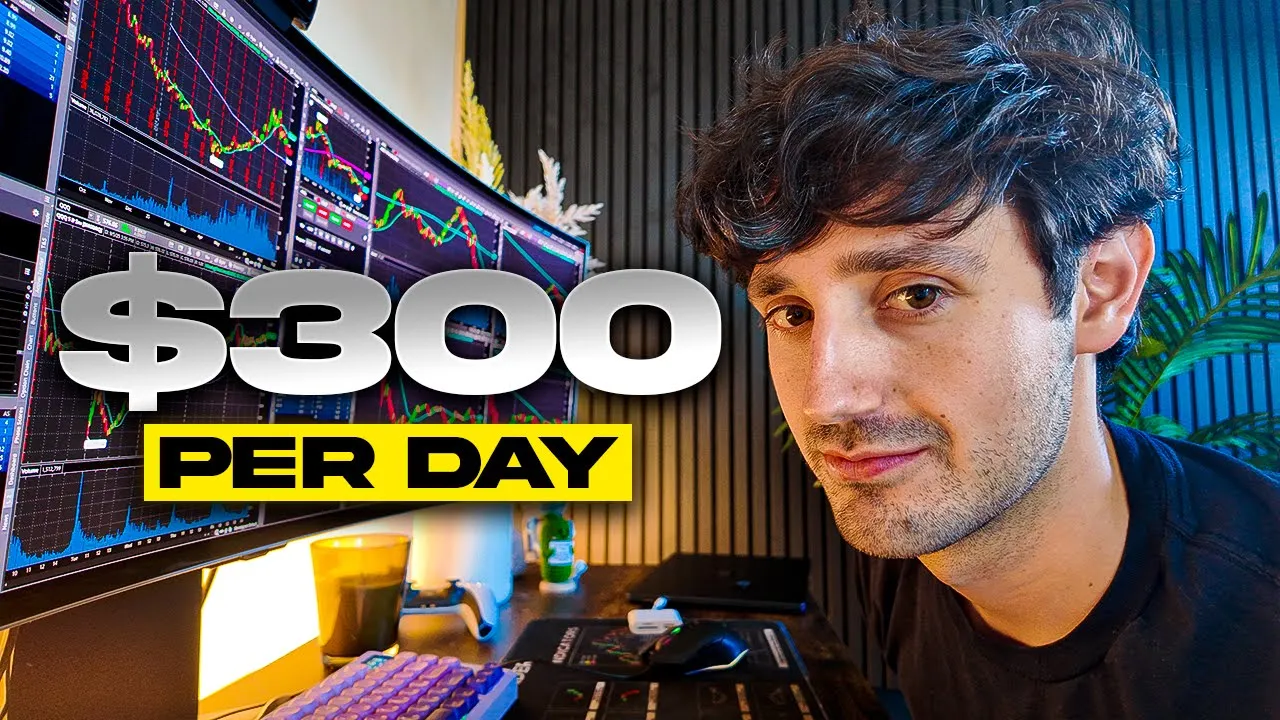
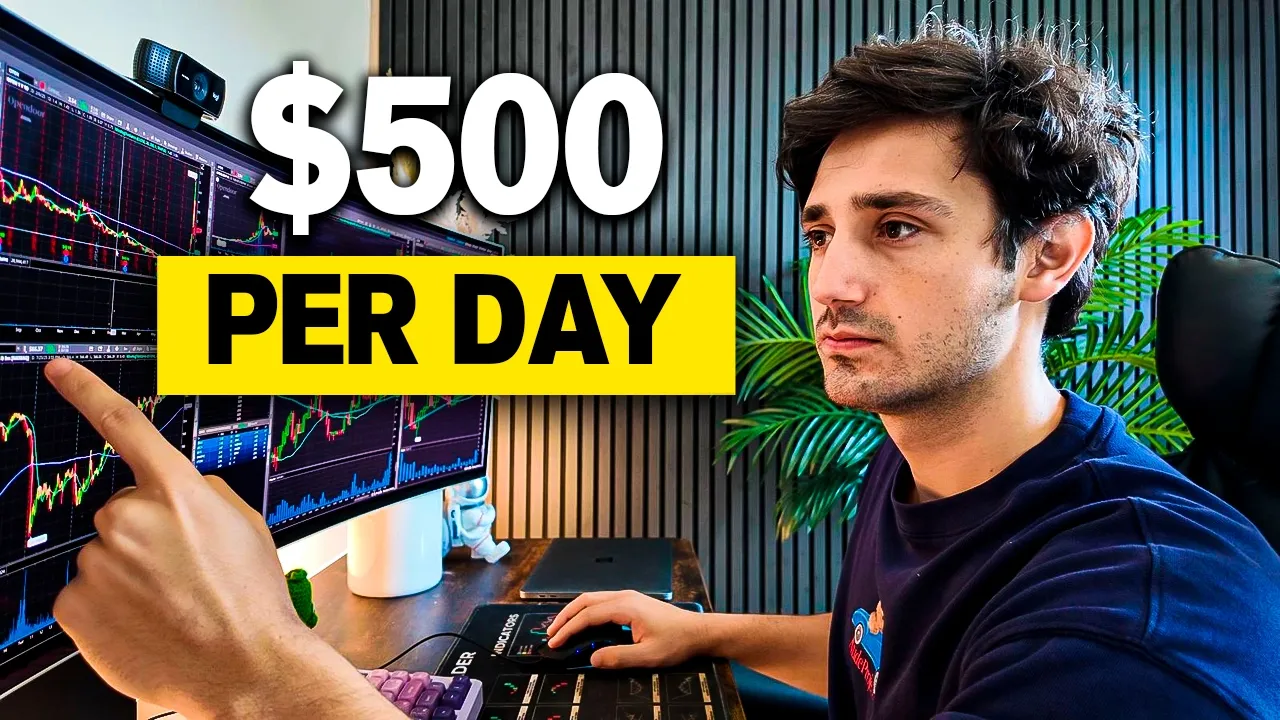
The video is an interview, published October 31, 2026, running about 54 minutes. The guest, who trades as Relentless Trader, claims roughly $700,000 in all-time trading profits and a daily trade count between 500 and 1,500. None of it is audited. It's a conversation, not a brokerage statement.
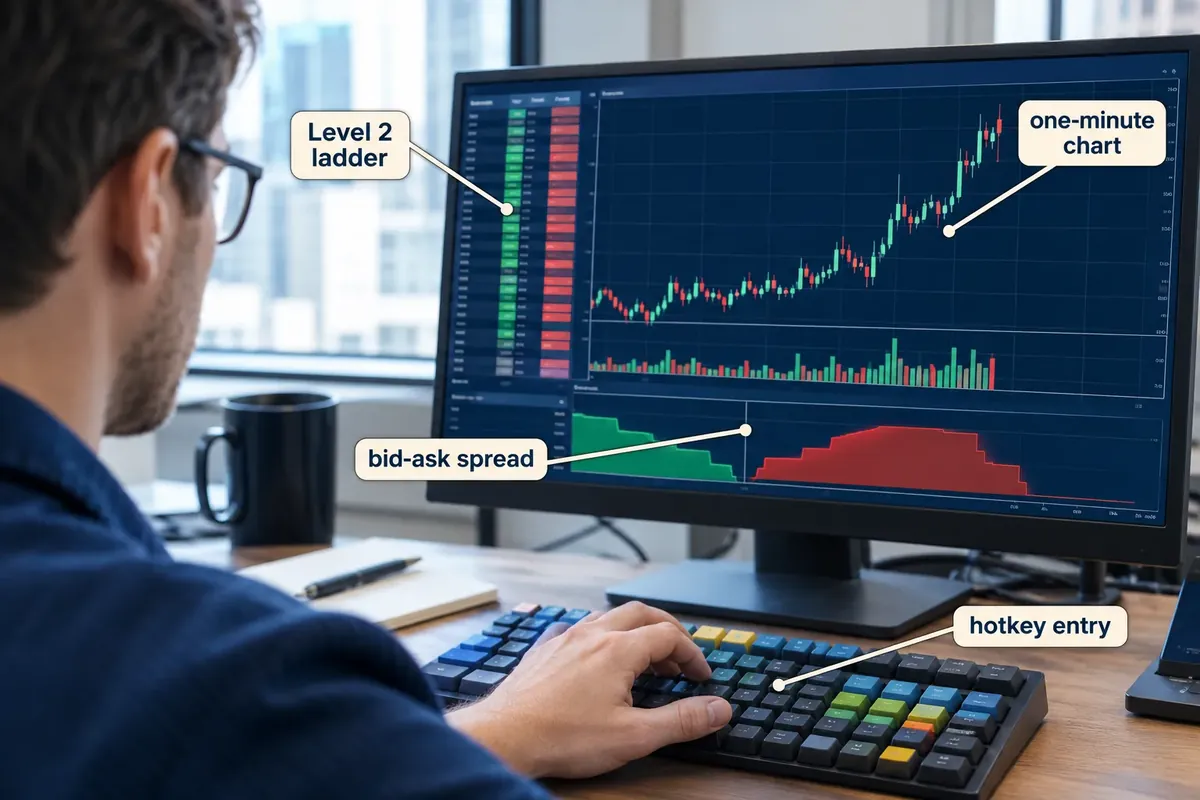
What's actually on screen, and where:
| Claim | Timestamp | Verified? |
|---|---|---|
| About $700,000 in all-time profits | (5:49) | No. Stated in interview, no statements shown |
| Started with $27,500, partly credit card cash | (0:00) | No. Self-reported |
| About 50% win rate, 2:1 risk-reward target | (14:01) | No. Self-reported |
| ~$10 to $20 average per winning trade | (16:52) | No. Self-reported |
| Trades low float small caps with news and volume | (20:54), (23:13) | Consistent with the strategy described |
The origin story is the part that'll stick with you. A sibling with a $16,000 credit limit pulled it as cash and handed it over, expecting it to vanish. In the trader's words: "He thought I was going to lose it all, right?" (0:00). That's leverage on leverage on a beginner. Play stupid games.
He also describes a near-blowup about seven years ago after breaking every rule he'd written. The host frames it as watching himself make mistake after mistake and being unable to stop (1:46). Every trader who's revenge traded a red morning knows that exact out-of-body feeling.
Watch the original: He takes 1000 Trades a Day on Humbled Trader.
One more flag worth raising. This isn't a one-off for the channel. A September 30, 2026 episode featured a different hyper-scalper describing hundreds of trades a day, one-second charts and tape reading. Humbled Trader is running an editorial theme on ultra-short-term trading right now. Theme coverage isn't evidence of edge, it's evidence of programming.
How Does High Frequency Day Trading Make Money for One Person?
Expectancy. That's the whole answer. High frequency day trading for an individual works when average win times win rate beats average loss times loss rate, after costs, repeated hundreds of times a day. The frequency doesn't create the edge, it just multiplies whatever edge already exists, in both directions.
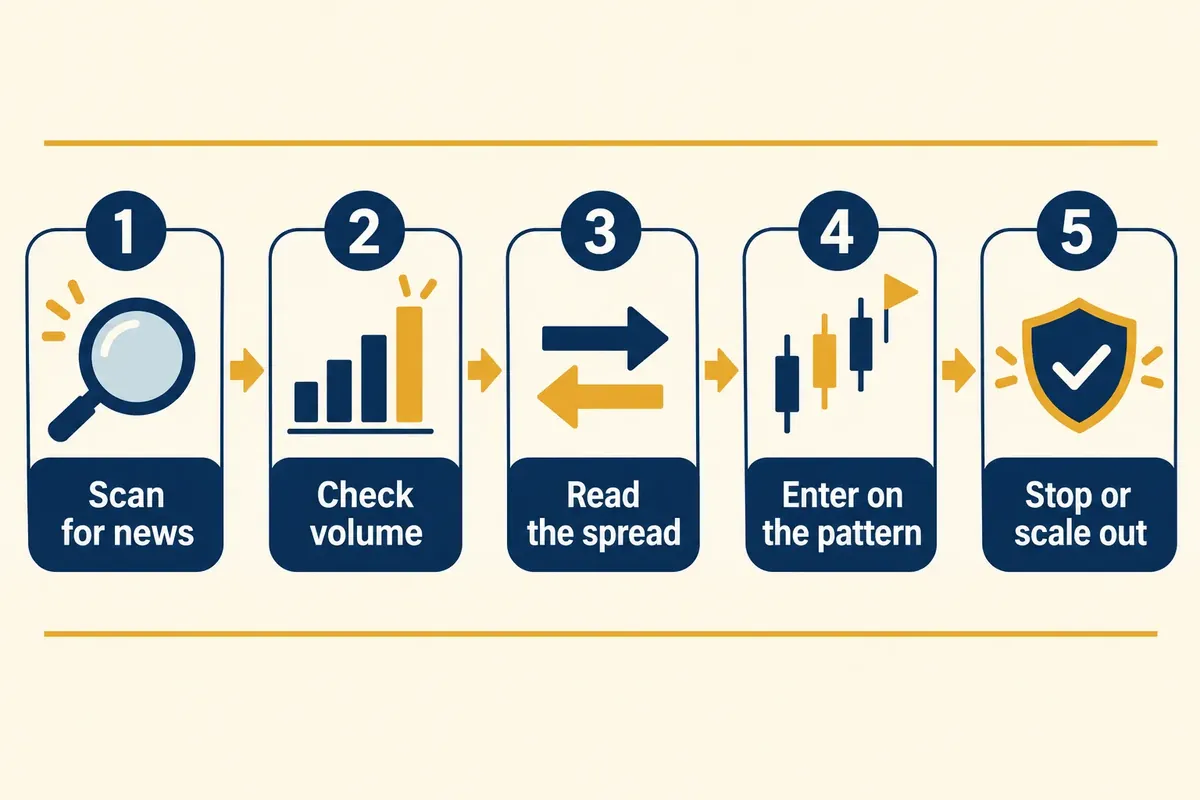
The claim: about $700,000 in all-time profits
He puts his all-time number around $700,000 (5:49) and describes the lifestyle change in plain terms: not checking the receipt at the grocery store. That's a human detail, not a flex, and it's one of the more believable moments in the interview. But all-time profit across years tells you nothing about consistency, drawdown, or how much of it came from one hot quarter in a hot market.
The day he almost blew up his account
Seven years back, he broke every rule at once. The host describes it as an out-of-the-body experience (1:46). This is the most useful 30 seconds in the video, and it's not the money. Hyper-scalping without ironclad rules isn't a strategy, it's a slot machine with a keyboard. His whole process today is reverse-engineered from that one disaster.
How he started: an older sibling and one video
An entrepreneurial older brother showed him a clip of someone claiming $10,000 in a day (7:32). Neither of them knew what the stock market was. That's the funnel for most retail traders in 2026, and it's worth naming: the hook is always someone else's best day, never their median one.
The setup: a $5 stock and a few cents at a time
He describes reading a chart on a $5 stock and projecting a move to $5.50 (11:42). Not $50. Fifty cents. He's harvesting cents, not multiples. The setup is a clean pattern with an obvious entry, a stop placed near support (where buyers have previously stepped in), and a profit target he decides before clicking (15:46).
If you don't know your exit before your entry, you're not scalping. You're improvising, and improvising turns into averaging down.
Win rate and risk-reward: about 50% winners
He says 50% win rate with a 2:1 risk-reward minimum: risk 10 cents to make 20 (14:01). Risk-reward just means what you're willing to lose versus what you're trying to make. At 50/50 with 2:1, the gross math is positive. Thin, but positive.
The math: 500 trades a day at $10 to $20 each
By his account, averaging $20 to $30 per winner across 500 trades can end a day around $1,000 net of the losers (16:52). Run that honestly and you see the fragility. Your net is a rounding error on your gross. Shave two cents off every fill through slippage and the whole thing inverts.
Why share structure matters
He focuses on companies with roughly 1 million to 10 million shares outstanding (20:54). Low float means few shares available to trade, so modest buying pressure moves price hard. He screens for news first, then volume, then spread. Stocks with news and volume but a wide bid-ask spread get skipped (23:13), because the spread is a tax you pay on every single entry and exit.
Run your own version below. Change the fee assumption and watch the net column do something unpleasant.
⭐ Top 5 Features We Love
Strip away the profit number and there are five habits here worth stealing, whether you take four trades a day or four hundred.
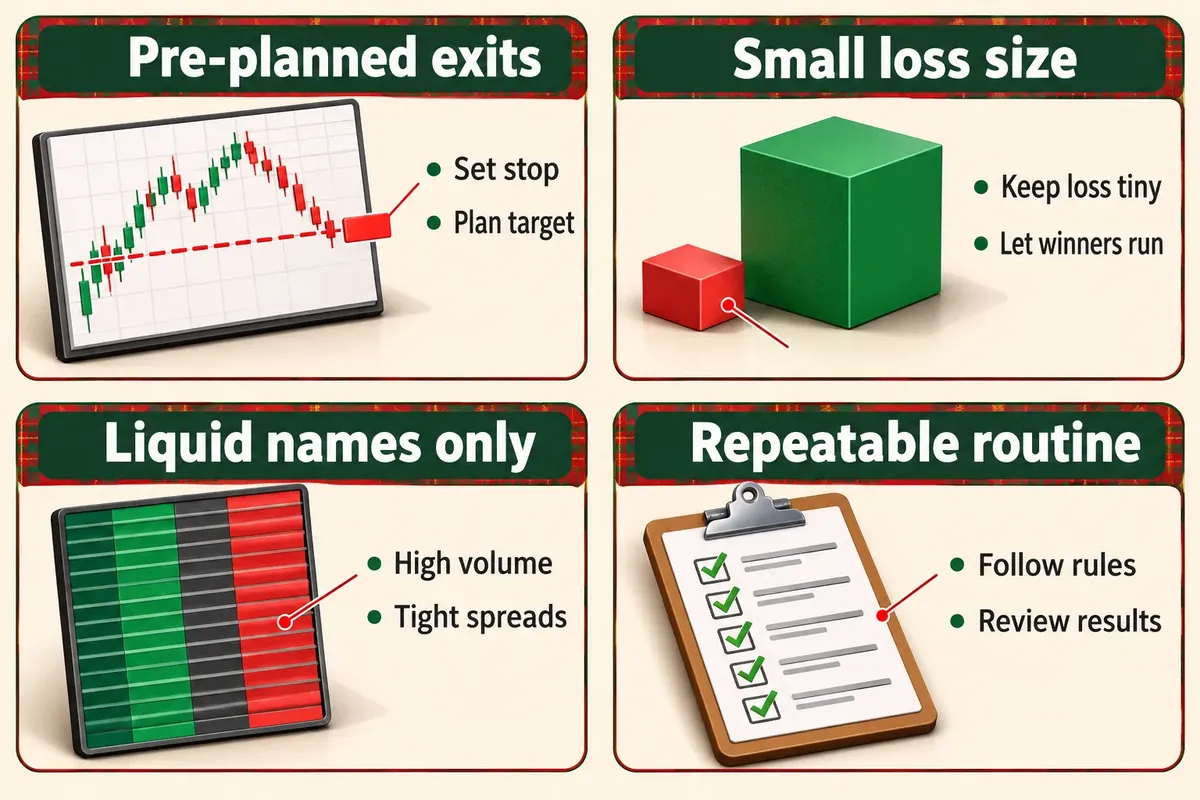
1. The exit is decided before the entry. He states the profit target and the maximum loss before clicking buy (15:46). That single rule removes the improvisation that kills small accounts: adding to losers, averaging down, hoping. Write both numbers on paper before the trade or don't take it.
2. The loss is capped at a size he can absorb 500 times. Risking 10 cents to make 20 is only workable if 10 cents is genuinely small against the account. That's position sizing doing the heavy lifting, not prediction. Discipline beats prediction.
3. He screens spreads, not just movers. News first, volume second, spread third (23:13). Most beginners stop at "it's up 40%." Skipping wide-spread names is one of the few genuinely professional filters in the interview, because on 1,000 trades the spread is the single biggest cost you control.
4. He admits he leaves money on the table. He describes exiting a penny stock for about 10 cents and watching it run another 15, with no regret, because his indicators never told him to hold (26:41). Letting winners run matters, but knowing which system you're running matters more. A scalper who starts swinging is just a scalper with no rules.
5. He names market conditions as a variable. In a tape where everything is ripping, he'll chase entries. In a choppy tape, he won't (27:47), and he explicitly warns against chasing unless you're disciplined. Adjusting aggression to conditions is what separates a process from a script.
If you want the tooling side of this, our breakdown of Trade Ideas Holly AI and where it falls short covers what scanners realistically surface for intraday traders, and TrendSpider vs Trade Ideas compares the two most common choices.
⚠️ Things to Look Out For
Here's where the interview stops being useful as a blueprint. Five specific problems, in order of how likely they are to hurt you.
No receipts. Nothing in the video is audited. No brokerage statements, no third-party verification of the $700,000 or the win rate. Trading media runs on self-reported numbers, and self-reported numbers are the weakest evidence that exists. Treat every figure as a claim.
Costs scale with turnover, and they're not just commissions. FINRA's own day-trading risk disclosure uses an old example of $16 per transaction and 29 trades a day, where a trader would need roughly $111,360 in annual profit just to break even on commissions. Pricing has changed. The principle hasn't. At 1,000 trades a day your real cost stack is spread, exchange and regulatory fees, slippage, short-borrow charges and missed fills. Commissions are often the smallest piece.
The base rates are grim. Chague, De-Losso and Giovannetti studied everyone who started day trading Brazilian equity futures between 2013 and 2015. Among those who persisted more than 300 days, 97% lost money. Just 1.1% earned more than the Brazilian minimum wage. That's not a reason to never trade. It's a reason to stop assuming the person on screen is the typical outcome.
This is not institutional HFT. The SEC describes high-frequency trading as a subset of algorithmic trading built on colocated servers, direct exchange feeds, automated order handling and enormous message rates. A human on hotkeys with Level 2 and EMAs is a manual scalper, full stop. Calling it HFT inflates the technology and hides the fact that your edge is reaction speed against machines that don't blink.
The rules changed, and that cuts both ways. FINRA Regulatory Notice 26-10, published April 20, 2026, took effect June 4, 2026. It scrapped the pattern day trader designation, the four-trades-in-five-days test, and the $25,000 minimum equity requirement, replacing them with intraday exposure monitoring. Firms may phase the change in through October 20, 2027, so your broker may still be on the old framework. Intraday margin deficits must be met promptly, and repeat failures can trigger restrictions of up to 90 days.
Translation: the capital gate is gone, the risk isn't. If you're working with a smaller account, read our guide on how to day trade without $25K before you touch intraday margin.
Who this is not for: anyone without a written rule set, anyone who can't sit flat for a full session, anyone trading borrowed money, and anyone who still thinks win rate is the number that matters.
Is High Frequency Day Trading the Same as HFT Firms?
No, and the difference matters. When a person says high frequency day trading, they usually mean a human taking hundreds of trades a day with hotkeys. When the SEC talks about high-frequency trading, it means firms with colocated servers, direct exchange feeds and automated orders measured in microseconds.
| Human high frequency day trading | HFT firms | |
|---|---|---|
| Speed | Seconds | Microseconds |
| Orders | Hundreds to about 1,500 a day | Millions |
| Edge | Reading the tape, quick exits | Speed, rebates, market making |
| Main cost | Commissions and spreads | Technology and data |
The trader in this video competes in a game where the fastest players aren't human. That's why his edge comes from picking the right $5 stocks and getting out fast, not from beating machines on speed. High frequency day trading at a human pace works only when the cost per trade stays small next to the $10 to $20 average he claims.
Run your own numbers before trying it. At 500 trades a day, even a dollar of extra cost per trade is $500 a day gone.
Flex or Cap? Our Verdict
Scored on four questions, because "did he seem legit" isn't a standard.
| Question | Verdict |
|---|---|
| Receipts shown on screen | Weak. Profit figures are spoken, not documented |
| What can be verified | The method only. Low float scalping, 2:1 risk-reward and spread screening are real, standard techniques |
| Risk disclosed | Partial. He names the near-blowup and warns against chasing, but the credit card origin story is told as color, not as a warning |
| Repeatable by a regular retail trader | Low. 500+ manual executions a day needs hotkeys, a direct-access broker, screen time most people don't have, and a tolerance for being wrong half the time |
Our call: Need More Receipts.
Not a cap. The high frequency day trading model he describes is mathematically coherent and matches how real scalpers operate. But the headline number carries zero verification, the near-blowup is softened into a redemption beat, and the interview format rewards a clean story over a messy equity curve. That wasn't on anyone's bingo card, except it was, because every trading interview works this way.
The method is worth studying. The profit claim is worth ignoring until someone posts statements.
What You Should Know Before You Try It
Six things to handle before your first scalp, in order.
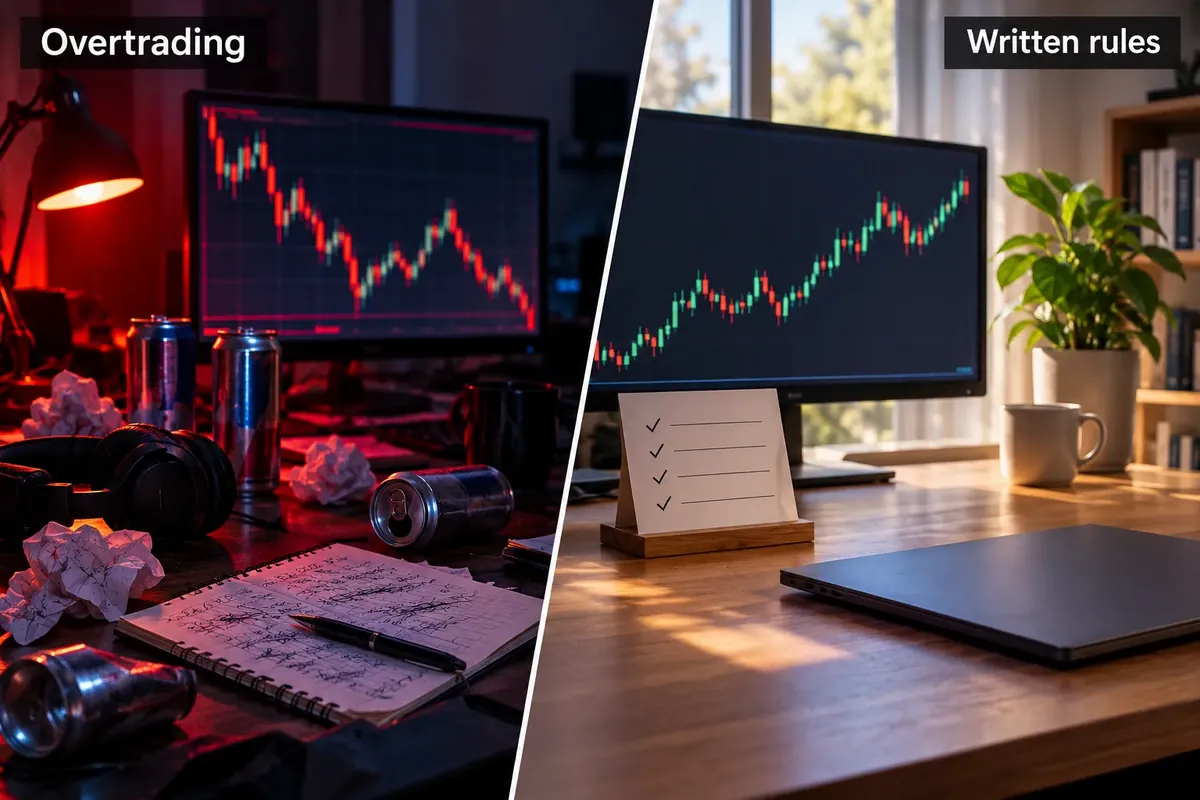
Paper trade it first, and track the costs manually. Simulators fill you at prices you'd never get. Add a cost assumption per trade, half the spread plus fees, and see if the edge survives. If it doesn't survive on paper, it won't survive live.
Write your rules down before the open. Entry condition, stop placement, profit target, maximum trades, daily loss limit. One page. If you can't articulate your edge in a sentence, you don't have one yet.
Size so that 20 losses in a row is survivable, not fatal. At a 50% win rate, a 10-loss streak will happen. Position sizing is the only thing standing between a bad morning and a closed account.
Know your broker's actual rules post-June 2026. The PDT designation and the $25,000 floor are gone under FINRA's new intraday margin framework, but house requirements, liquidation policies, short locates and market-access controls all still apply. Firms may phase in through October 2027, so ask yours directly where it stands.
Plan for taxes before you need to. Hundreds of short-term trades generate short-term capital gains, taxed as ordinary income, plus a wash-sale record-keeping problem that will eat your weekend. Use a trade journal that handles it. TradesViz is one option built for high trade counts.
Verify everything at the primary source. FINRA.org for the margin rules, SEC.gov for how regulators actually define algorithmic and high-frequency trading. Not a YouTube comment, not a Discord.
And if you're tempted to automate your way around the screen time, read do AI trading bots actually make money first. Short version: the bot doesn't fix a strategy that had no edge.
Keep reading on FullStack Alpha: our Charles Schwab review, how traders automate rules like these, day trading tools compared side by side, and more Flex or Cap breakdowns.
Frequently Asked Questions
Is day trading high-frequency trading?
No. Day trading means closing positions the same day. High-frequency trading, as the SEC describes it, is a subset of algorithmic trading using colocated servers, direct market data feeds and automated order generation at very high message rates. A human clicking hotkeys 500 times a day is a manual scalper, even if the trade count looks similar.
Is HFT trading illegal?
No. High-frequency trading is legal and a large share of US equity volume. Specific abusive practices built on top of it, like spoofing (entering orders you never intend to fill), are illegal and prosecuted. The speed isn't the crime. The manipulation is.
Can you make $1000 a day with day trading?
It's possible and it's rare. The trader in the Humbled Trader interview claims roughly that figure from 500 trades at $20 to $30 per winner, net of losses. The research cuts the other way: in the Brazilian futures study, 97% of people who day traded for more than 300 days lost money. Treat $1,000 a day as an outlier outcome, not a plan.
Is it true that 97% of day traders lose money?
That specific figure comes from Chague, De-Losso and Giovannetti's study of Brazilian equity futures day traders who started between 2013 and 2015. Among those who persisted beyond 300 days, 97% lost money and only 1.1% earned more than minimum wage. It's one market and one instrument, so don't treat it as a universal law, but it's the most cited hard number available and it's not flattering.
How much do day traders with $100,000 accounts make per day?
There's no credible average, and anyone quoting one is guessing. Results depend on strategy, costs, market conditions and discipline, and most accounts lose. A more useful framing: decide what daily loss you can absorb, then build a process that survives it. Profit targets without loss limits are wishes.
How did one trader make $2.4 million in 28 minutes?
That kind of headline almost always traces to a single leveraged bet, often options, on a surprise catalyst, and it gets amplified precisely because it's unrepeatable. For every one of those stories there are thousands of identical bets that expired worthless and never made a thumbnail. Survivorship bias is the most expensive bias in trading media.
Can a beginner do high frequency day trading?
It's one of the hardest styles to start with. High frequency day trading needs fast execution, low commissions and years of tape-reading practice. The trader in this video nearly blew up his account before it worked.
How much does high frequency day trading cost in fees?
It depends on the broker, but costs scale with trade count. At 500 trades a day, small per-trade fees turn into hundreds of dollars a day, which is why high frequency day trading traders negotiate per-share pricing.
The Takeaway
The interview is worth watching for the process, not the payout. Pre-planned exits, capped losses, spread screening and a written rule set are the parts that transfer. The $700,000 isn't a target, it's an unverified anecdote with good lighting.
Do this today: open your last 30 trades, calculate your average winner and average loser, and multiply by your actual win rate. If the number is negative, more trades will only make it more negative, faster. Frequency amplifies whatever you already have. Make sure there's something there worth amplifying first.
Your market edge starts with the right tool. Stay alpha.
One video, examined closely. There are 200+ AI stock tools, scanners and brokers catalogued in the FullStack Alpha directory, filterable by category, price and what they actually do.
Browse the directory → aistockpickerapps.com