 Interactive Brokers
 Robinhood
Quick Answer
It's a flex, with an asterisk. The 200-trades-a-day scalping stocks strategy described on Humbled Trader is real, internally consistent, and almost certainly profitable for the person running it... and almost certainly a wealth-transfer machine for the retail trader who copies it after one YouTube video. The guest, Marcelo, isn't selling a secret. He's describing a job: ten monitors, five-cent targets, and a reflex for cutting losses that most people spend years failing to build.
The hook? He says the hard part isn't finding the trade. It's that he physically can't trade bigger without moving the stock himself.
What Does Humbled Trader Actually Claim?
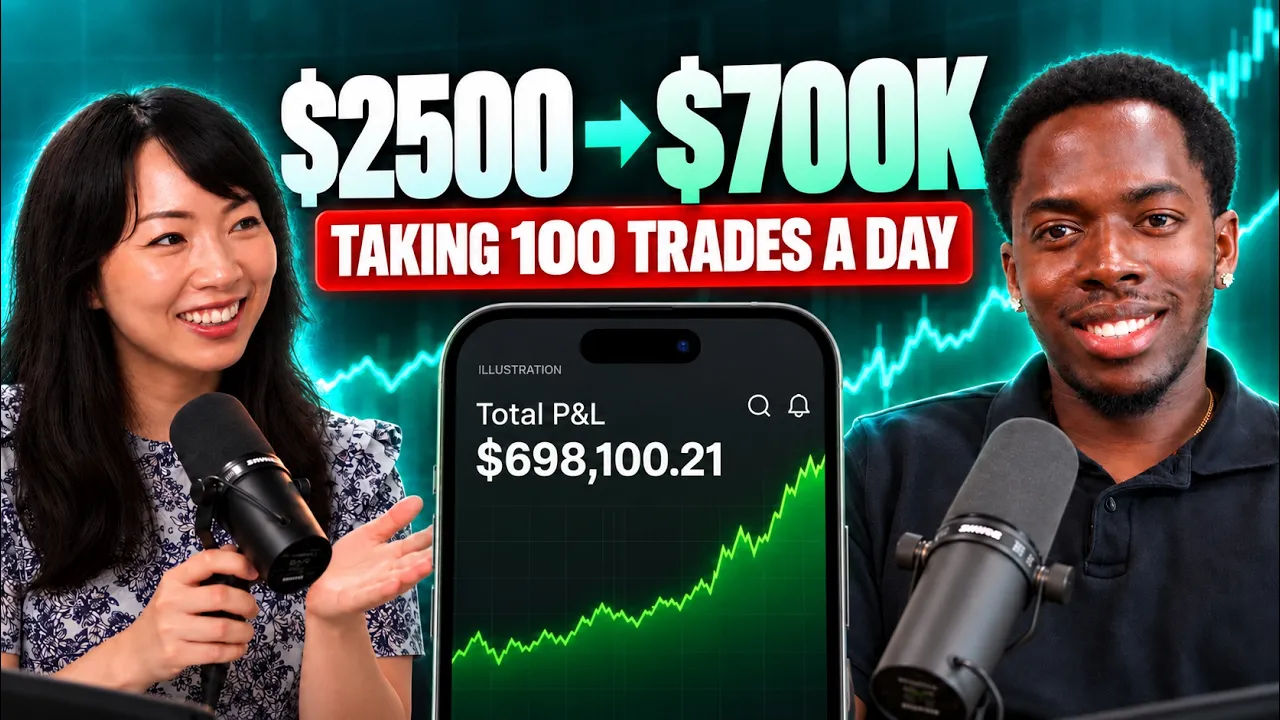
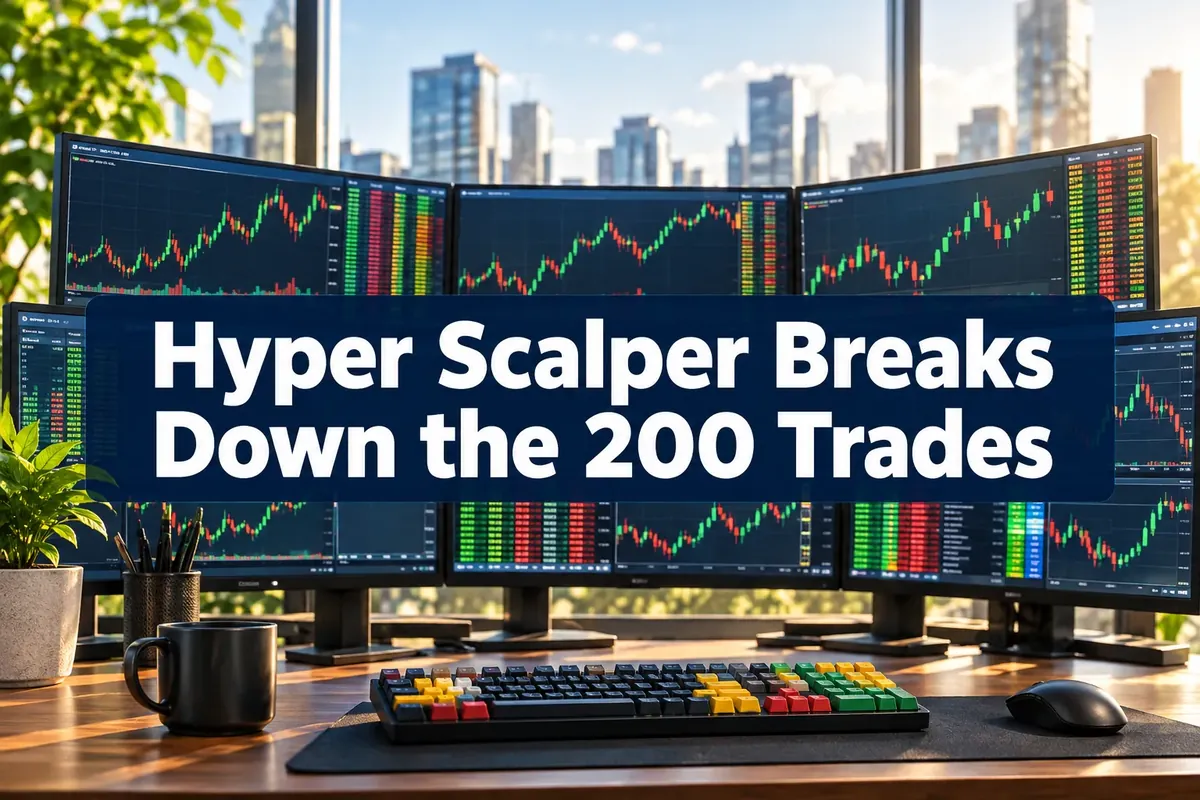
The claim is volume, not magic. In the September 30, 2026 episode "Hyper Scalper Breaks Down the 200 Trades a Day Strategy," Humbled Trader (Shay Huang) interviews Marcelo, who describes roughly 1,000 trades a week, or about 200 a day, hunting five-cent moves in small-cap stocks.
What's actually on screen versus what's asserted matters here, so let's separate them.
What's shown or stated in the video:
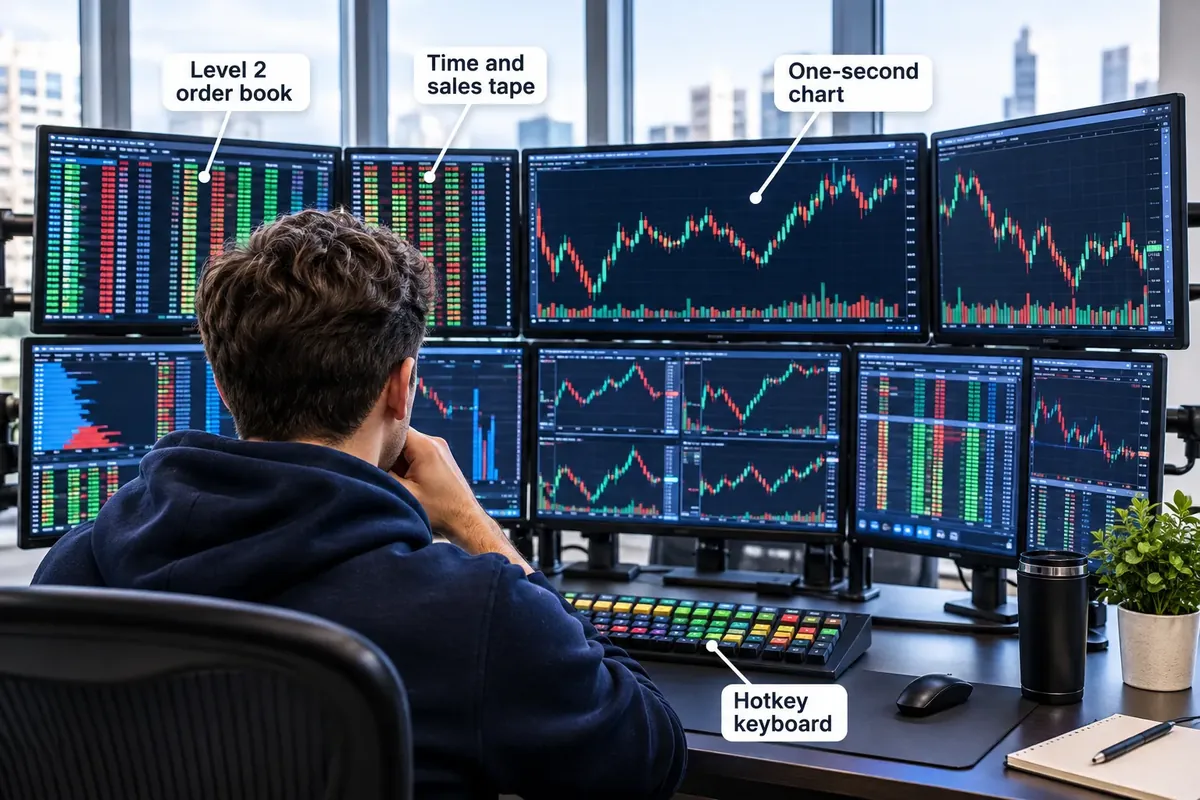
- The ten-monitor setup, explained as a volume problem, not a flex: finding a five-cent opportunity is easier than finding a multi-dollar mover, so he needs more tickers in view.
- The definition of hyper scalping itself around (11:51), where he frames the whole method as being "hyper about cutting a loss."
- A stop measured in dimes. Asked how much he risks per trade, the answer at (16:31) is ten cents.
- A ceiling on size. Around (18:33) he explains that above roughly 10,000 shares he becomes the five-cent move he's trying to catch.
- A stated preference for the long side of setups other traders refuse to short: low-float biotechs under about $5.
What isn't shown: no audited track record, no regulated performance record, no third-party verified P&L. The episode carries a paid-promotion disclosure and affiliate links, and Humbled Trader states plainly that the content is educational.
The video had roughly 453,000 views and 3,400 likes as of mid-November 2026. That measures reach, not results. Watch it yourself: Hyper Scalper Breaks Down the 200 Trades a Day Strategy.
Reach is not a receipt. Half a million views proves the story is interesting, not that the strategy is repeatable.
How Does the 200 Trades a Day Scalping Stocks Strategy Work?
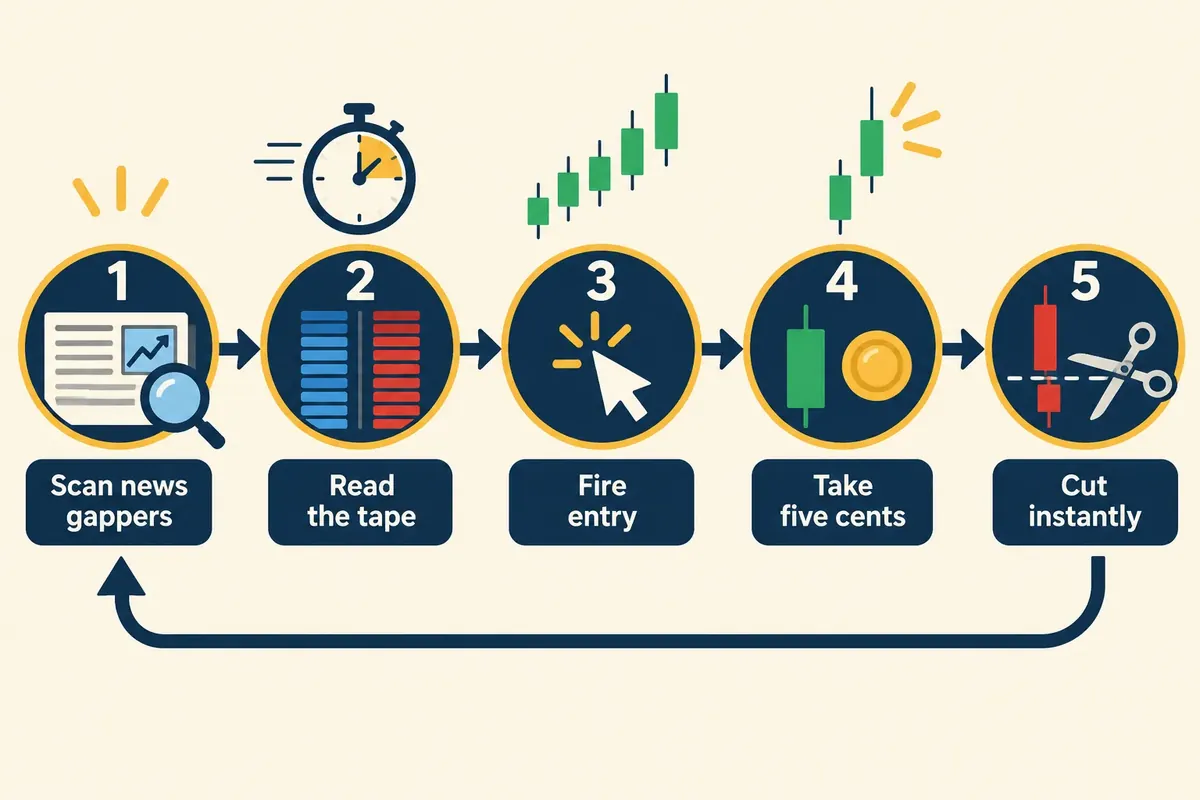
The mechanics are simple to describe and brutal to execute: buy a liquid, news-driven small cap, take five cents, and cut the position the second it isn't working. Everything else in this scalping stocks strategy exists to support those two moves.
Who the hyper scalper is: ten monitors and a full-time career
The ten screens aren't a brag, they're a consequence. When your edge is worth five cents, you need dozens of chances a day, which means watching dozens of names. He's blunt in the opening that this is a full-time career that takes years to master "if ever" (0:30). People who show up chasing fast money don't make it.
Why he says most people should not try this
Because the skill being sold isn't pattern recognition, it's reaction speed under live money. Reading Level 2 (the order book showing resting buy and sell orders at each price) and time and sales (the printed record of every executed trade, also called the tape) at speed is closer to a sport than a study subject. One-second charts, hotkeys, partial exits, instant re-entries. A beginner with five-minute candles and three indicators is playing a different game entirely.
Hyper scalping, defined: buy, and cut instantly if it isn't working
He describes it as fishing for the right entry. Buy. Not green immediately? Out. Try again. That's why 200 trades happens... most of those "trades" are failed probes, not conviction positions. The profit comes from the small share of probes that stick.
Most traders have this backwards: they hold losers to be right and sell winners to feel safe. Hyper scalping inverts both reflexes.
The 5-cent target and the 10-cent stop
Five cents up, roughly ten cents of risk, per the video. On paper that's negative risk-reward, which should horrify anyone taught the 2:1 gospel. It only works if the hit rate is high enough and the execution is fast enough that the real average loss lands well under the stated stop. Miss on either and the math eats you alive.
Why size can't scale, so frequency does
This is the most honest moment in the episode. Above about 10,000 shares in a thin small cap, his own order creates the five-cent move he's hunting. So he can't simply 10x the risk to turn $1,000 days into $10,000 days. The only lever left is more trades. That's a real constraint, and it's also why this strategy quietly caps out... a fact no guru funnel would ever volunteer.
Rules he borrows, like what he would never short (low float biotechs under about $5)
He references Steven Dux's published list of names he'd never short: low float (few shares available to trade), biotech, priced under roughly $5. Marcelo's take is sharp... that exact exclusion list is his A-plus long setup. If the professional short sellers won't touch it, there's less supply pressing the stock down.
Short squeeze danger
He's not interested in a stock up 10%. No short sellers are in it yet, so there's no fuel. He wants something up 30%-plus on breaking news, micro float, where shorts are leaning in and can be forced to cover. He also avoids names already extended beyond roughly 200%, where shorts turn aggressive and the ride back down gets violent. A short squeeze happens when sellers must buy back shares, pushing price higher and triggering more buying. One sentence on crypto, since it comes up: he notes that small caps announcing Bitcoin treasury buys produce the kind of headline-driven runs he trades.
What 200 trades a day costs in commissions and fees
Here's where most imitators die. At $0.004 per share and 1,000 shares, that's $4 in, $4 out. Do 200 round trips a day and you've paid roughly $1,600 in commissions before SEC, FINRA TAF, ECN and routing fees. Catching five cents on 1,000 shares pays $50 gross. Your gross edge has to clear eight dollars of friction per trade before you've made a dollar. Run the numbers for your own setup below.
⭐ Top 5 Features We Love
Five things this method genuinely gets right, each traceable to the episode or to verifiable rules.
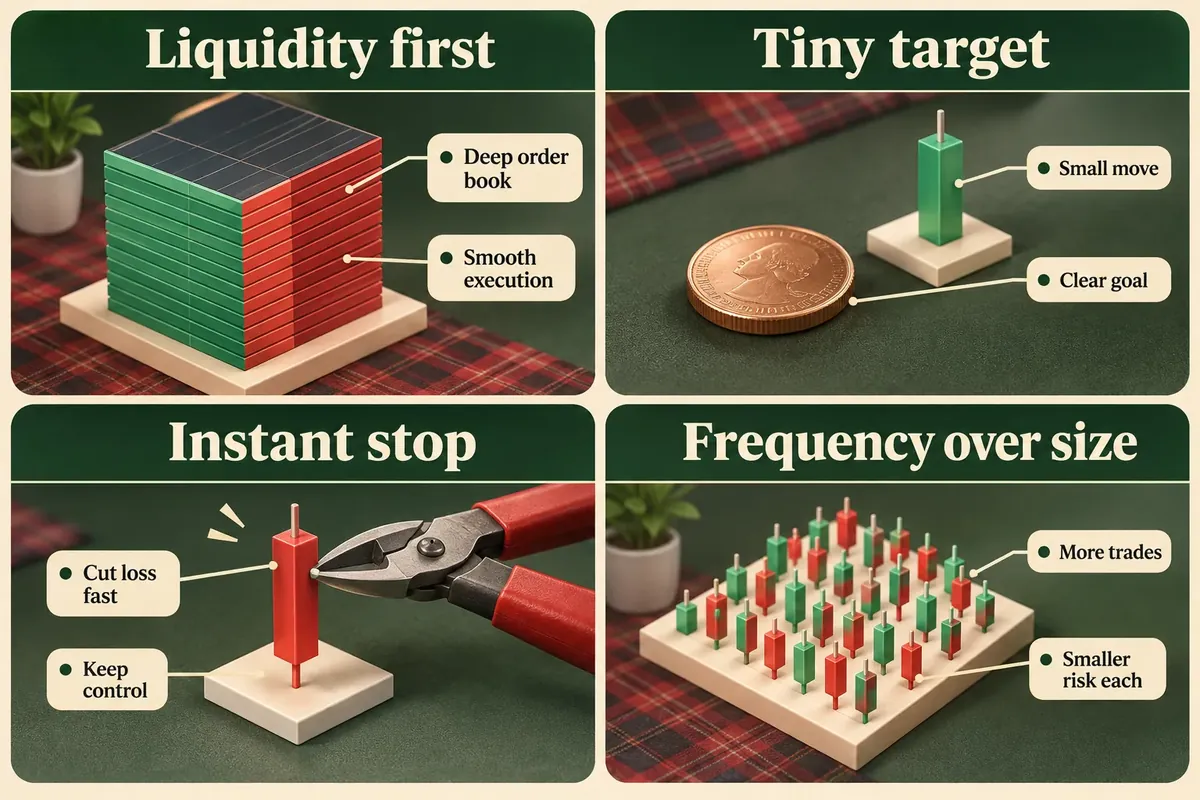
The loss-cutting reflex is the whole product. At (11:51) he frames hyper scalping as being hyper about cutting losses. That's the opposite of what kills most accounts. Strip the speed away and you're left with a habit worth copying at any timeframe.
He names his own ceiling. Admitting he can't scale past roughly 10,000 shares without moving the stock is the kind of limitation sellers hide. Honest constraints are a credibility signal.
The setup filter is specific, not vibes. Micro float, up 30%-plus, breaking news, not already extended past roughly 200%. You can write that on an index card and check it in ten seconds. If you want help building that checklist, our breakdown of what Trade Ideas Holly AI gets right and where it falls short covers scanner-based filtering.
He inverts someone else's risk list into an edge. Taking a respected short seller's "never touch" list and treating it as a long watchlist is actual thinking, not a repackaged indicator.
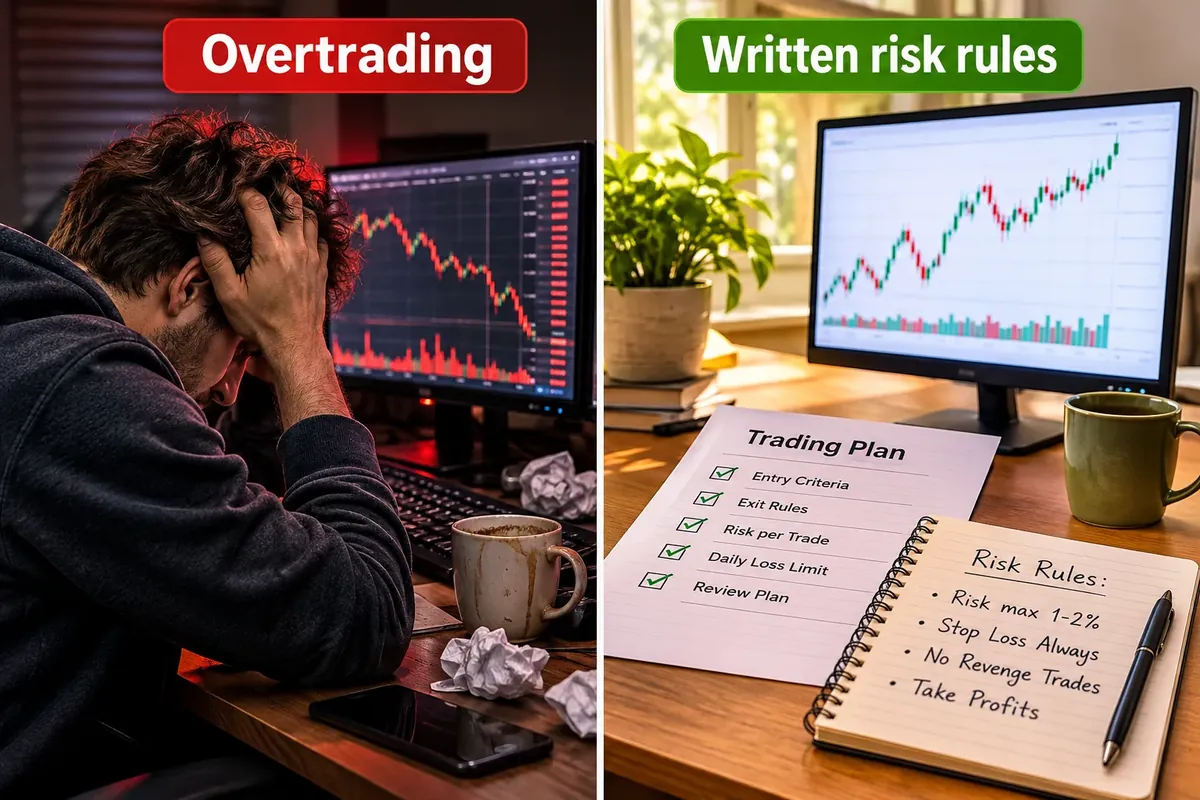
Position sizing responds to live conditions. He scales up only when liquidity feels good and the price action confirms, and rolls prior profits into the next trade rather than risking fresh capital. That's a real process, and it echoes Humbled Trader's own published guidance of risking 1% or less per trade.
⚠️ Things to Look Out For
The risks here aren't subtle, and the costs are the quiet killer.
- No audited numbers. Nothing in the reviewed material shows a verified track record, fund, or regulated performance history behind the 200-trade claim. Treat every dollar figure as the creator's claim.
- Commission drag is the strategy's real opponent. Two hundred round trips a day on 1,000 shares runs well over $1,500 in commissions before exchange fees. Most retail brokers' pricing makes this arithmetically impossible.
- The PDT rule changed, but the risk didn't. FINRA adopted intraday margin requirements effective June 4, 2026 to replace the trade-count Pattern Day Trader designation and the $25,000 minimum. Brokers have until October 20, 2027 to transition, so rules differ by firm. Leveraged trading still requires at least $2,000 equity, and firms can restrict accounts for repeated intraday margin deficits. See our guide on how to day trade without $25K.
- Negative risk-reward has no margin for error. Five cents of reward against ten cents of risk only survives with a very high win rate and perfect discipline. A single hesitation turns a 10-cent stop into a 40-cent loss and wipes out eight winners.
- Short squeeze exposure is two-sided. The same squeeze fuel that makes these names move can reverse in seconds. Buying a micro float that's already run is catching a falling knife with a coin flip attached.
- Who this isn't for: anyone with a day job, anyone without direct-access routing and hotkeys, anyone whose broker charges per-trade commissions, and anyone who hasn't yet proven they can follow a written stop for 30 straight sessions.
How Would a Regular Trader Practice a Scalping Stocks Strategy?
Slowly, which sounds like a contradiction. Marcelo's version runs 200 trades a day on ten monitors. A beginner's version of a scalping stocks strategy should run five trades a day on one chart, with the same core habit: cut the loser the moment it stops working.
Week 1 and 2: Learn the tape without trading
Watch Level 2 and time and sales on one liquid small cap during the first hour. Don't trade. Write down three moments where you saw buyers step in and three where sellers took over. You're training your eyes before your fingers.
Week 3 and 4: Paper scalps with hotkeys
Set up buy, sell and flatten hotkeys on a simulator. Take paper scalps with a fixed target and a fixed stop. The goal is speed and consistency, not profit. If you hesitate on the stop, that's the first thing to fix.
Week 5 and beyond: Live at tiny size
Trade 100 shares, not 1,000. Commissions matter more at small size, so pick a broker with low per-share pricing or a flat plan, and log the cost of every trade next to the result.
The numbers that tell you whether it's working
- Average loss versus your planned stop: if your losses run bigger than the stop, your exits are too slow.
- Win rate: with a 5-cent target and a 10-cent stop, you need well above 67% just to break even before costs.
- Cost per trade as a share of the average win: if fees eat more than a quarter of each winner, the scalping stocks strategy can't work at your size.
That last line is the one that ends most attempts, and it should. Marcelo's edge depends on cheap execution and huge practice volume. A retail account with standard commissions often can't make the math close, no matter how good the entries are.
Which stocks fit a scalping stocks strategy?
Liquid ones with tight spreads, enough volume to fill instantly, and a reason to move today. That usually means news-driven small caps during the first hour, plus large, heavily traded names for slower practice. Avoid anything with a spread wider than your target. If the spread is five cents and your target is five cents, you're starting every trade at a loss.
So is a scalping stocks strategy worth learning? The loss-cutting reflex is worth learning for any style. The 200-trades version is a full-time profession, and the video says so itself.
Flex or Cap? Our Verdict
Scored on four questions.
| Question | Verdict |
|---|---|
| Receipts shown | Weak. Setups and method shown on screen, no audited P&L |
| What can be verified | The method's logic, the FINRA rule change, the commission math |
| Risk disclosed | Strong. He names the scalability ceiling and the loss-cut requirement |
| Can retail repeat it | Very low. Requires direct access, hotkeys, sub-penny commissions and years of reps |
Verdict: Flex, with a loud asterisk... and Need More Receipts on the money.
The scalping stocks strategy itself is coherent and the guest is unusually candid about its limits. But a strategy that can't be verified, can't be scaled, and can't survive standard retail commissions is a description of someone else's job, not a blueprint for yours. Watch it for the loss-cutting discipline. Ignore the trade count.
What You Should Know Before You Try It
Paper trade it first, for at least 30 sessions. Log every probe, including the ones you cut in two seconds. If your simulated hit rate can't clear the commission math in the calculator above, live money won't fix it. A journaling tool like TradesViz makes that data readable.
Price your commissions before your profits. Call your broker and ask for per-share pricing, routing fees and the all-in cost of a 1,000-share round trip. If the answer is a flat per-trade commission, this strategy is dead on arrival for you. Our TradeStation vs Tradier comparison covers active-trader cost structures.
Verify your broker's PDT status directly. The FINRA framework is mid-transition through October 20, 2027. Some firms still apply the old $25,000 rule. Check FINRA's intraday margin guidance and then confirm with your firm in writing.
Size for survival, not ambition. Risk 1% or less per trade while you learn. The reason to trade small isn't modesty, it's that you need enough reps to find out whether you have an edge at all.
Plan for the tax paperwork. Hundreds of daily trades generate thousands of short-term transactions and wash-sale complications. Talk to a CPA before year one, not during year two.
Don't confuse automation with a shortcut. Bots won't hand you tape-reading instincts. Read what to know before you automate trades first.
Keep reading on FullStack Alpha: our Interactive Brokers review, how traders automate rules like these, day trading tools compared side by side, and more Flex or Cap breakdowns.
Frequently Asked Questions
How does stock scalping work?
Scalping means taking many small profits on short-held positions, often seconds to minutes. A scalper buys liquid, actively moving stock, targets a small move (sometimes five to twenty cents), and exits immediately whether right or wrong. Profit comes from frequency and a high win rate, not from large individual gains.
Can I make $100 a day daytrading?
It's possible but uncommon for new traders. Making $100 a day consistently on a $5,000 account means a 2% daily return, which is a very high bar. Commissions, fees and taxes reduce it further. Most retail day traders lose money, so treat $100 a day as a goal earned after months of documented consistency, not a starting target.
Who is the no. 1 scalper?
There's no verified ranking of scalpers. Public figures like the hyper scalper Marcelo featured on Humbled Trader are known through media appearances, not audited performance records. Any "number one" label is marketing. Judge a trader by disclosed risk rules and verifiable statements, not by claimed profits.
Which stocks are best for scalping?
Scalpers generally want high liquidity, tight bid-ask spreads and real intraday range. That usually means high-volume large caps for lower-risk scalps, or news-driven small caps with a low float for faster moves. The hyper scalping approach in the Humbled Trader episode focuses on micro-float names up 30% or more on breaking news.
Who is the scalping king in trading?
No one holds that title in any verifiable sense. The phrase circulates on social media and in course marketing. Serious scalpers are identified by their process, order-flow reading, instant loss cutting and strict position sizing, rather than by nicknames.
Is scalping worth it for a small account?
Often not, because of cost structure. A small account trading 100 to 500 shares pays the same per-trade friction as a larger one but earns far less per winner. Building a swing or intraday momentum process with fewer, larger-targeted trades usually survives commissions better.
Fewer tabs, fewer alerts, one process you can actually repeat. Your market edge starts with the right tool. Stay alpha.
Two hundred trades a day is one approach to the market. There are 200+ AI stock tools catalogued in the FullStack Alpha directory, filterable by category, price and what they actually do.
Browse the directory → aistockpickerapps.com
Is a scalping stocks strategy good for a small account?
It's hard on a small account because commissions and spreads take a bigger share of each small win. If you try a scalping stocks strategy with limited capital, use a low-cost broker, trade small size and track fees on every trade.
How many trades a day does a scalping stocks strategy need?
It depends on the target size and the edge. Marcelo takes about 200 a day because each win is only five cents. A beginner practicing a scalping stocks strategy should cap it at a handful of trades a day until the stats are proven.
What is hyper scalping?
Hyper scalping is a scalping stocks strategy built on very high trade counts: buy a liquid mover, take a few cents, and exit the instant the trade stops working. Most of the trades are small probes that get cut fast, and the profit comes from the minority that work.
Can you scalp stocks in a cash account?
Only with settled funds. In a cash account, money from a sale must settle before you can reuse it, and US stocks settle one business day after the trade. That limits how many round trips you can make, so a high-volume scalping stocks strategy usually runs in a margin account.
Do you need ten monitors to scalp stocks?
No. Marcelo uses ten because he watches dozens of names for five-cent moves at once. A beginner should start with one chart, Level 2 and time and sales on a single liquid stock, then add screens only when one screen clearly isn't enough.