Quick Answer
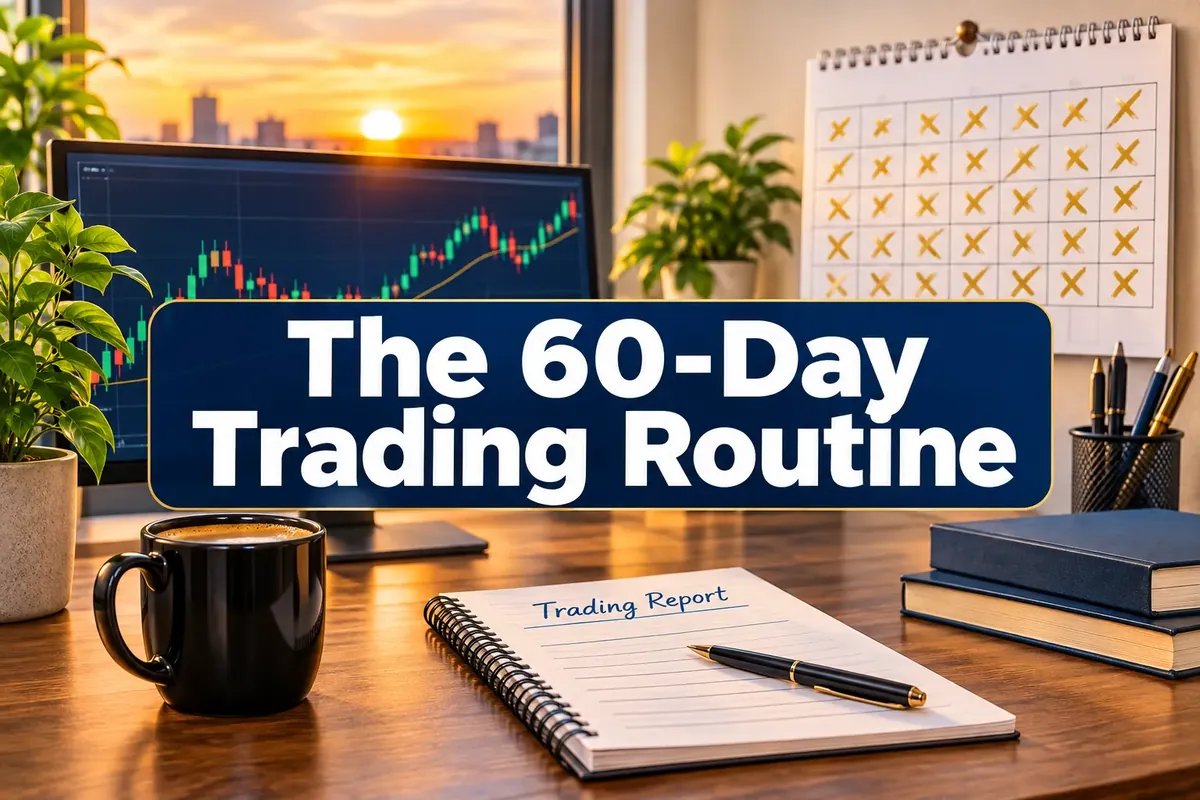
The 60-day challenge in this video is a legitimate trading routine for beginners and break-even traders, and our call is Flex with one condition: the routine is real, the receipts for the headline number are not shown on screen. Lance Breitstein, formerly of proprietary trading firm Trillium, lays out six daily and weekly rules and openly says they won't guarantee profits. That honesty is rarer than a clean breakout.
Here's the hook. He borrowed the idea from 75 Hard, the fitness challenge where people grind through a strict daily list for 75 days straight. Nobody had built the trading version. So he built it, ran it publicly for September and October 2026, and dared the internet to keep up. Most people won't make it past day nine.
What Does TheOneLanceB Actually Claim?
The claim is simple and the number is big: Breitstein says that work ethic is "a large part of what led me make over $100 million on Wall Street" (1:00). He says it while describing his decade-plus at Trillium Trading, a proprietary firm where traders trade the firm's capital. On screen you get him talking, some music, and a short animated rundown of the rules. You do not get a brokerage statement, a firm P&L export, or an audited track record.
So what's verifiable and what isn't?
- Verifiable: The video exists, was uploaded September 12, 2026, and has roughly 140,000 views and 3,300 likes as of mid-November 2026. He promoted the same challenge on X the day it went live. A podcast episode on October 20, 2026 frames it as the "Level Up 60 Day Trading Challenge." His site publishes a curriculum, a six-stages-of-a-trader framework, and a daily routine breakdown.
- Not verifiable from the video: The $100 million figure. Prop-firm P&L is almost never published, and nothing on screen confirms it.
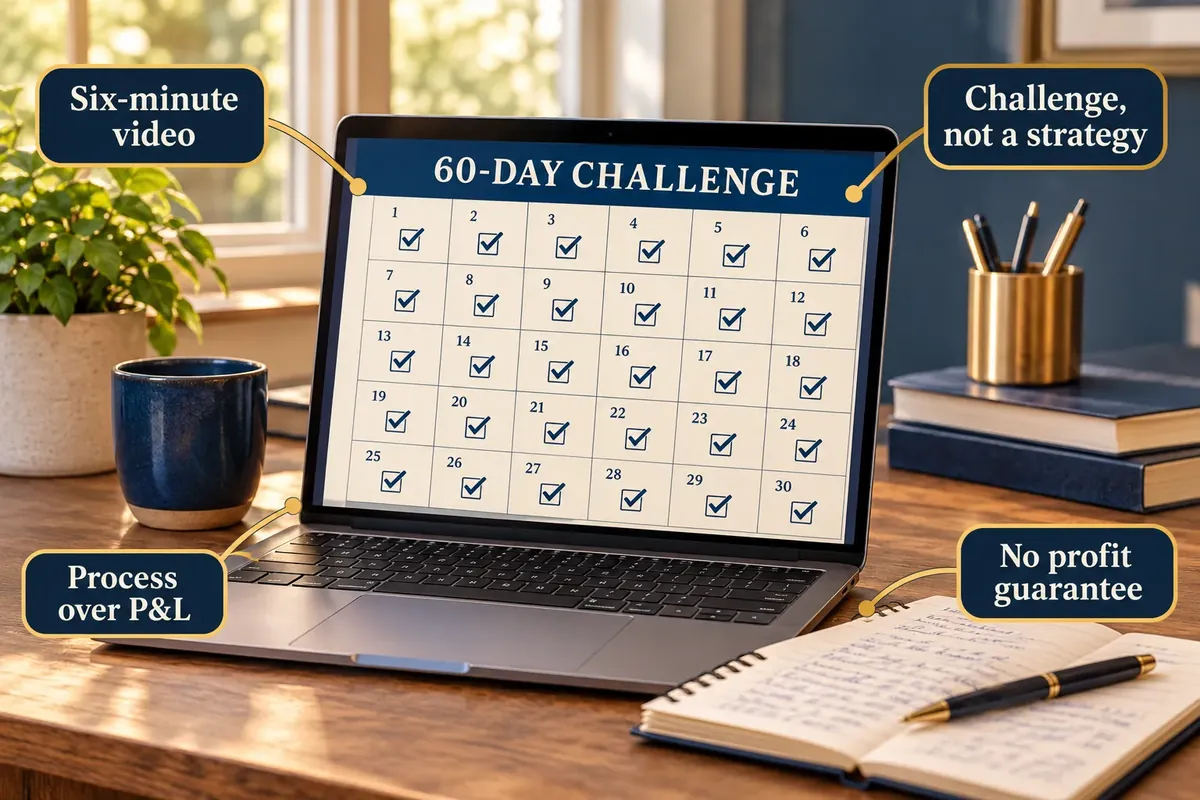
- Explicitly disclaimed: He says the challenge "will not guarantee profits" (5:38). His own FAQ says the course is not a shortcut and is wrong for people hunting signals.
The second claim matters more than the first: "your P&L is often noisy over short periods, but your process is not" (1:33). That's the actual thesis. Judge the work, not the scoreboard.
Watch the original: The 60-Day Trading Routine to Becoming Profitable
What Is the 60-Day Trading Routine for Beginners?
It's a 60-day commitment to six non-negotiable habits, run daily and weekly, with your scorecard being the work you completed rather than the money you made. Think of it as a diet plan for your attention span. You're not promised abs in two months. You're promised that if you eat the same clean meals 60 days running, you'll stop asking whether oat milk is the problem.
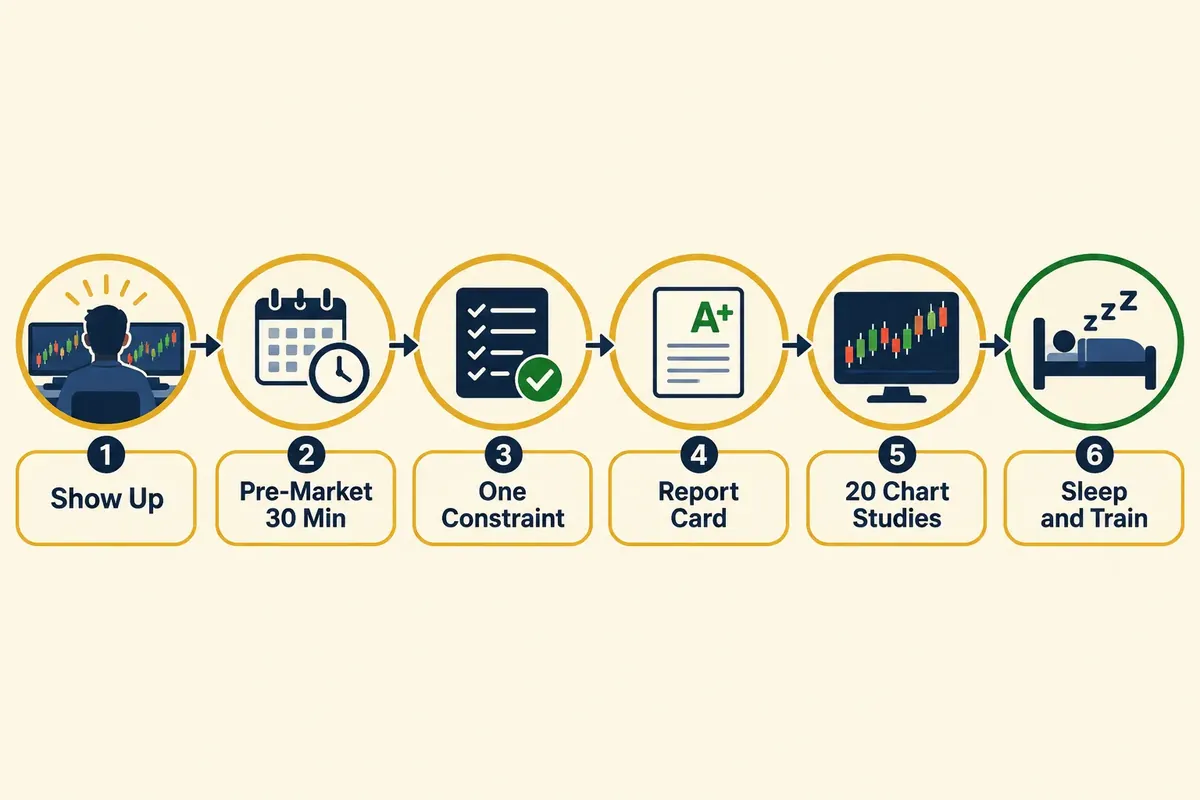
The Level Up 60-day challenge
The six rules, as described publicly across the video and his posts:
- Show up for every single market day. All of them. Holidays off, obviously.
- Complete a daily report card. Grade the process, not the profit.
- Thirty minutes of intentional pre-market preparation. News, earnings, gaps, levels, watchlist.
- Three uninterrupted hours of weekend deep work. Replay, review, study.
- Twenty written chart studies per week. Written analysis, not screenshots.
- Seven hours of sleep, clean eating, daily exercise, zero alcohol.
Rule six is the one people laugh at and then quit over. Your execution quality is downstream of your sleep. Tired traders chase. Hungover traders revenge trade. That's not motivational poster talk, it's the same reason surgeons don't operate on four hours of sleep.
The goal: become the trader who deserves to make money
This is the part worth tattooing on your mouse pad. The target isn't a dollar figure for 60 days. It's becoming the kind of operator whose results eventually match their inputs. He puts it plainly: if you execute the process, you won the day no matter where the P&L landed.
Any trading routine for beginners that scores you on daily profit is training you to gamble. A green day from a reckless size-up is a loss in disguise. A red day where you followed every rule is tuition.
The daily report card and the one constraint you fix
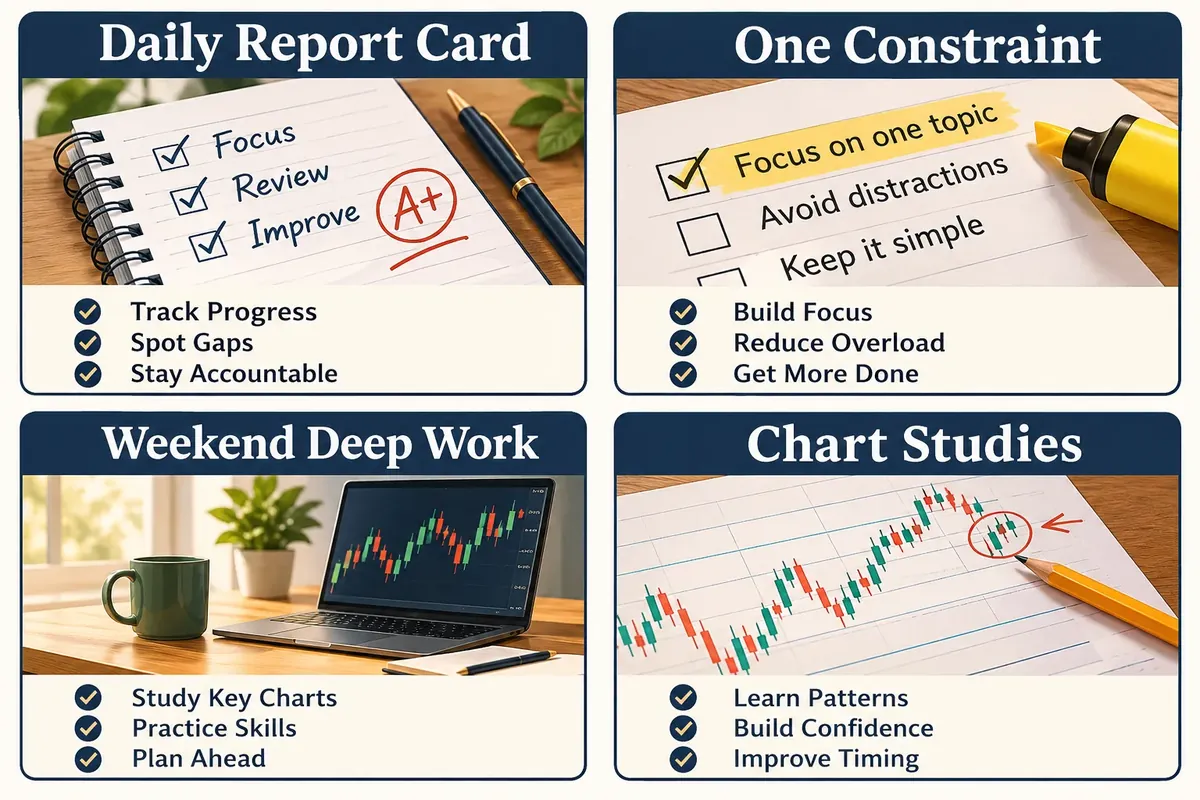
The report card is the engine of the whole thing. It's a short written grade at the close covering: did you prep, did you follow your rules, did you size correctly, did you hold winners, did you cut losers fast, and did you journal it.
Then the part most people skip. You pick one constraint at a time, the single biggest leak in your trading, and attack only that until it's fixed. He credits this habit with changing his career: concentrated effort on one prioritized problem beats shallow effort on ten (2:33).
Common first constraints, pick one:
- Cutting winners at +0.3R because green feels safe
- Adding to losers (averaging down into an earnings miss, the classic)
- Trading before the plan exists
- Overtrading after 11am when the tape goes choppy
- Position sizing by vibes instead of by a fixed percentage of account risk
Write it at the top of your journal. One line. Every day for two weeks. If you're building a trading journal from a proven template, put the constraint in the header row, not buried in notes.
The focused hours outside market time
The weekend block is where the compounding happens, because you're not distracted by a live tape or fried from four hours of decisions (4:06). Three uninterrupted hours. Phone in another room.
What goes in those hours:
- Replay two sessions from the week on a chart platform with bar-by-bar replay
- Review every trade you took with the benefit of hindsight, marked up
- Study your 20 written chart studies, which means describing the setup, the context, the trigger, the risk-reward, and what invalidated it
Twenty written chart studies a week is roughly three a day. Each one should take 10 to 15 minutes and produce actual sentences. "Tight consolidation under the prior day high, volume dried up, broke on a volume expansion, stop below the base, 1:3 risk-reward" is a study. A screenshot with an arrow on it is a souvenir.
Preparation, discipline and review
His published pre-market checklist covers overnight news, earnings, IPOs, analyst upgrades and downgrades, macro events, unusual volume, and unusual volatility. Then you build the watchlist, mark support and resistance, and set alerts so you're not hunting mid-session.
He also treats your physical state as a risk input. Slept badly, stressed, distracted? Cut size or sit out. That single rule probably saves more accounts than any indicator.
Thirty minutes is enough if you have a process. If you're still scrolling five scanners at 9:25, the problem is tool sprawl, not effort. A stock screener built for swing setups or a focused day trading tool stack does the filtering so your 30 minutes goes to thinking, not clicking.
A 60-day calendar you can copy
| Phase | Days | Focus | Live risk |
|---|---|---|---|
| Foundation | 1-14 | Mechanics, order types, one setup only, daily report card | Paper or 1 share |
| Calibration | 15-30 | Same setup, live but tiny. First constraint identified | 0.25% of account per trade |
| Execution | 31-45 | Second constraint. Hold-time and exit discipline | 0.5% per trade max |
| Pressure test | 46-60 | Full routine under normal size. Weekly process score | 0.5%,1% per trade max |
Keep the 20 chart studies and the three weekend hours constant across all four phases. Those don't scale up or down.
⭐ Top 5 Features We Love
The best parts of this trading routine for beginners are the parts that cost nothing and can't be sold back to you as a subscription. Five stand out.
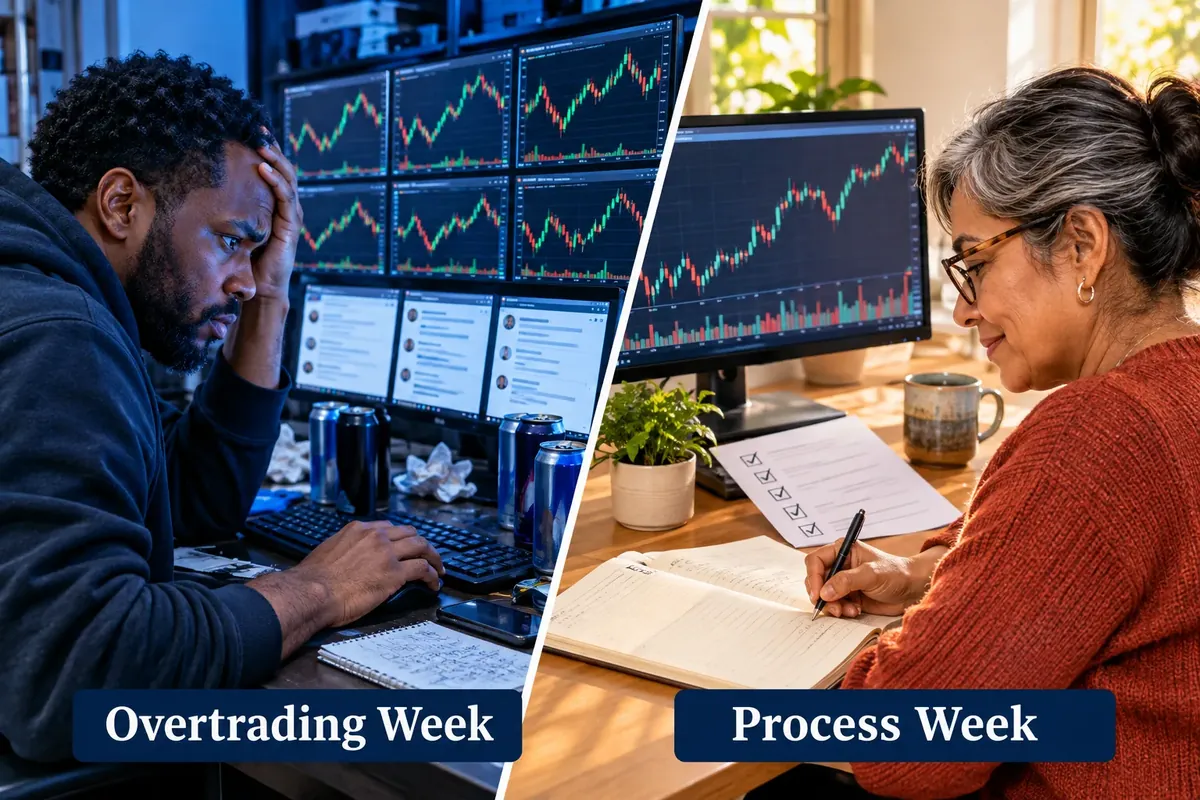
1. It scores process, not P&L. Short-run profit is mostly variance. Grading yourself on execution removes the incentive to gamble on Friday afternoon to turn the week green. This is the single most useful idea in the video and it's free.
2. One constraint at a time. Trying to fix entries, exits, sizing, and psychology in the same week means fixing none of them. Pick the biggest leak, work it to death, move on. Elite performers don't improve ten things at once (2:33).
3. Twenty written chart studies a week. Writing forces you to name what you see. "I like this chart" collapses under a pen. You either describe the base, the volume, the level, and the invalidation, or you discover you had nothing.
4. The weekend deep work block. Three hours with the market closed is worth more than ten hours of staring at a live tape you can't control. That's where pattern recognition actually gets built.
5. The physical rules are treated as risk management. Sleep, food, training, no alcohol. He tells traders to cut size when mentally compromised. Most educators sell indicators; almost none tell you your edge dies at 5 hours of sleep.
And the understated one: he says plainly that markets reward preparation and repetition more often than brilliance (5:38). That's the opposite of the "secret setup" pitch you're used to.
⚠️ Things to Look Out For
The routine is sound. The framing around it carries real risk for anyone who reads "becoming profitable" as a promise. Here's where it breaks.
- The $100 million claim has no on-screen receipts. Prop-firm P&L is private. Treat it as a stated background, not a verified fact, and never as a forecast for your account.
- Sixty days of effort does not create an edge. Routine is the container. You still need a setup with positive expectancy. Doing 1,200 chart studies on a strategy that doesn't work makes you fast at being wrong. Figure out how to find a trading edge before risking a dollar.
- The challenge can be read as permission to trade live, daily, for 60 days. His own six-stages framework contradicts that. Stage 1 says a total beginner should not be trading live. Stage 2 allows light live trading, possibly one share, with repetition as the goal, not profit.
- The regulators are blunt about the odds. The SEC warns that day traders typically suffer severe losses early and many never become profitable. FINRA says be prepared to lose everything you fund a day-trading account with, and that margin can cost you more than you deposited.
- The PDT rule changed, the risk didn't. FINRA's new intraday margin standards took effect June 4, 2026, replacing the old pattern-day-trader framework and the $25,000 minimum equity rule, with firms transitioning through October 20, 2027. Firms must still monitor intraday margin deficits and can restrict accounts for up to 90 days when they aren't resolved. An open gate is not a safe road.
- There's a funnel behind the free content. His site sells tiers with 230-plus and nearly 300 videos, community access, templates, and archived report cards. Not a scam, but know that the free challenge is the top of a paid path.
Who this is not for: anyone who wants someone to tell them what to buy, anyone who can't commit the hours, and anyone funding the account with money they need in six months.
What Does a Full Day Look Like in This Trading Routine for Beginners?
Most of it happens away from the screen. That's the part people skip when they copy a trading routine for beginners. Here's a sample weekday built on Breitstein's rules: preparation, focused trading, a report card and outside study.
| Time (ET) | Task |
|---|---|
| 8:00 to 9:00 | Scan gappers, read news, mark levels, pick three names |
| 9:30 to 11:00 | Trade your plan only. No new tickers after 10:30. |
| 11:00 to 11:30 | Report card: grade each trade A to F on process, not P&L |
| Evening, 30 minutes | Fix one constraint: replay, reading or journal review |
The report card is the piece that makes a trading routine for beginners work. You pick the one constraint holding you back, like late entries or oversized positions, and spend the next week fixing only that. After 60 days, you've fixed eight problems instead of thinking about forty.
Flex or Cap? Our Verdict
Flex, with a receipts footnote. Scored across four questions:
| Test | Grade | Why |
|---|---|---|
| Receipts shown on screen | Weak | No statements or audited track record for the $100M claim |
| What can be verified | Strong | Dates, posts, podcast episode, published curriculum and routine all check out |
| Risk disclosed | Strong | Says outright it won't guarantee profits; his FAQ rejects "plug-and-play" |
| Repeatable by retail | Strong | Costs nothing but time. A notebook and a charting platform covers it |
Three strong, one weak. The weak one is the headline number, and the headline number is the least important part. Nothing in this trading routine for beginners depends on whether he made $100 million or $10 million. Report cards work either way.
Call it a Flex. If he published a verified track record it'd be an easy one.
A free routine that tells you it can't promise profits is more honest than most paid courses that promise everything.
What You Should Know Before You Try It
Start here before day one, and your 60 days will be worth more than someone else's 120.
1. Paper trade it first, or go absurdly small. Weeks one and two should be simulated or one-share live. You're building the habit loop, not the P&L. Prove you can complete the report card 10 days running before you add risk.
2. Fix position sizing before anything else. Risk a fixed percentage of your account per trade, 0.25% to 1%, with a hard stop loss defined before entry. Position sizing is the only variable that guarantees you survive the learning curve.
3. Know your real costs. Commissions, data fees, borrow costs on hard-to-borrow shorts, and slippage on low float names all eat the edge. A strategy that's profitable on paper can be negative after fills. Run the numbers on your actual broker, and if your platform is the bottleneck, compare the best stock apps for day trading.
4. Short-term trading is taxed as ordinary income. Positions held under a year are short-term capital gains in the US, taxed at your income rate. Wash sale rules can disallow losses when you rebuy the same security within 30 days. Set money aside as you go.
5. Verify the rules with your own broker. The PDT framework changed in 2026, but buying power, margin calls, short locates, and account restrictions vary by firm. Check FINRA's intraday margin guidance and your broker's own policy page before you assume you can day trade freely.
6. Don't stack ten tools on top of a new routine. One charting platform, one scanner, one journal. If you want AI help for the screening half, read what you actually pay for with AI trading software before subscribing to anything.
Keep reading on FullStack Alpha: our AI stock tool reviews, how traders automate rules like these, day trading tools compared side by side, and more Flex or Cap breakdowns.
Frequently Asked Questions
What are some good day trading strategies for beginners?
Pick one setup and run it for 60 days: a breakout from tight consolidation, a pullback to a moving average in a trending stock, or an opening-range break on high relative volume. One setup, written rules, fixed risk per trade. Beginners fail from running five strategies badly, not from picking the wrong one.
Can I trade with 100 rupees?
Not meaningfully. Roughly $1.20 won't cover a single share of most liquid names or one round-trip in commissions and slippage. Use a free paper trading account instead and save real capital until you have 60 days of completed report cards behind you.
Can I make $200 a day trading?
Possible, not expected. Making $200 a day consistently on a $5,000 account means a 4% daily return, which is far outside what professionals produce. The SEC warns that most day traders suffer significant losses early and many never turn profitable. Target process points, not daily dollar goals.
Which trading strategy is most successful?
There's no single winner. Trend-following and breakout strategies have the longest documented history across markets, but success depends on execution, risk management, and fit with your schedule and temperament. The strategy you follow consistently beats the better strategy you abandon in week three.
How to earn $1000 per day in trading?
Honest answer: that figure requires substantial capital, a tested edge, and years of execution, and it's still not reliable income. Chasing it with a small account usually means oversized positions and a blown account. No legitimate educator, including Breitstein, promises a daily dollar number.
Is it true that 97% of day traders lose money?
The exact 97% figure is widely repeated online and not from a single authoritative US source. What regulators do say is firm: the SEC warns day traders commonly suffer severe losses and many never become profitable, and FINRA says you should be prepared to lose all the funds you day trade with.
Where did Lance Breitstein work?
Lance Breitstein spent over a decade as a proprietary trader at Trillium Trading, a US prop firm where traders deploy the firm's capital. He now publishes trading education through TheOneLanceB, including the Level Up 60 Day Trading Challenge, a published daily routine, and a six-stages-of-a-trader framework.
How long should a trading routine for beginners take each day?
About two to three hours for most people: an hour of prep, 90 minutes of trading, and a short review. Breitstein adds focused study outside market hours, which is the part of a trading routine for beginners that compounds fastest.
What should a weekend trading routine for beginners include?
Review the week's report cards, pick next week's one constraint and replay your best and worst trades. A weekend trading routine for beginners should take an hour or two, not the whole weekend.
Conclusion: Your First Three Moves
Sixty days won't make you profitable. It will make you the kind of trader who can tell the difference between a bad outcome and a bad decision, and that distinction is the entire job.
Do these three things this week:
- Open a blank document and write your one constraint. The single biggest leak in your trading. One sentence.
- Build a 30-minute pre-market checklist and a five-row report card. Use the tracker above. Run it for 10 market days before you change a thing.
- Write three chart studies a day in full sentences. Setup, context, trigger, risk-reward, invalidation.
No new strategy. No new indicator. Systems over hacks.
One method examined here. There are 200+ AI stock tools catalogued in the FullStack Alpha directory, filterable by category, price and what they actually do.
Browse the directory → aistockpickerapps.com
Your market edge starts with the right tool. Stay alpha.