
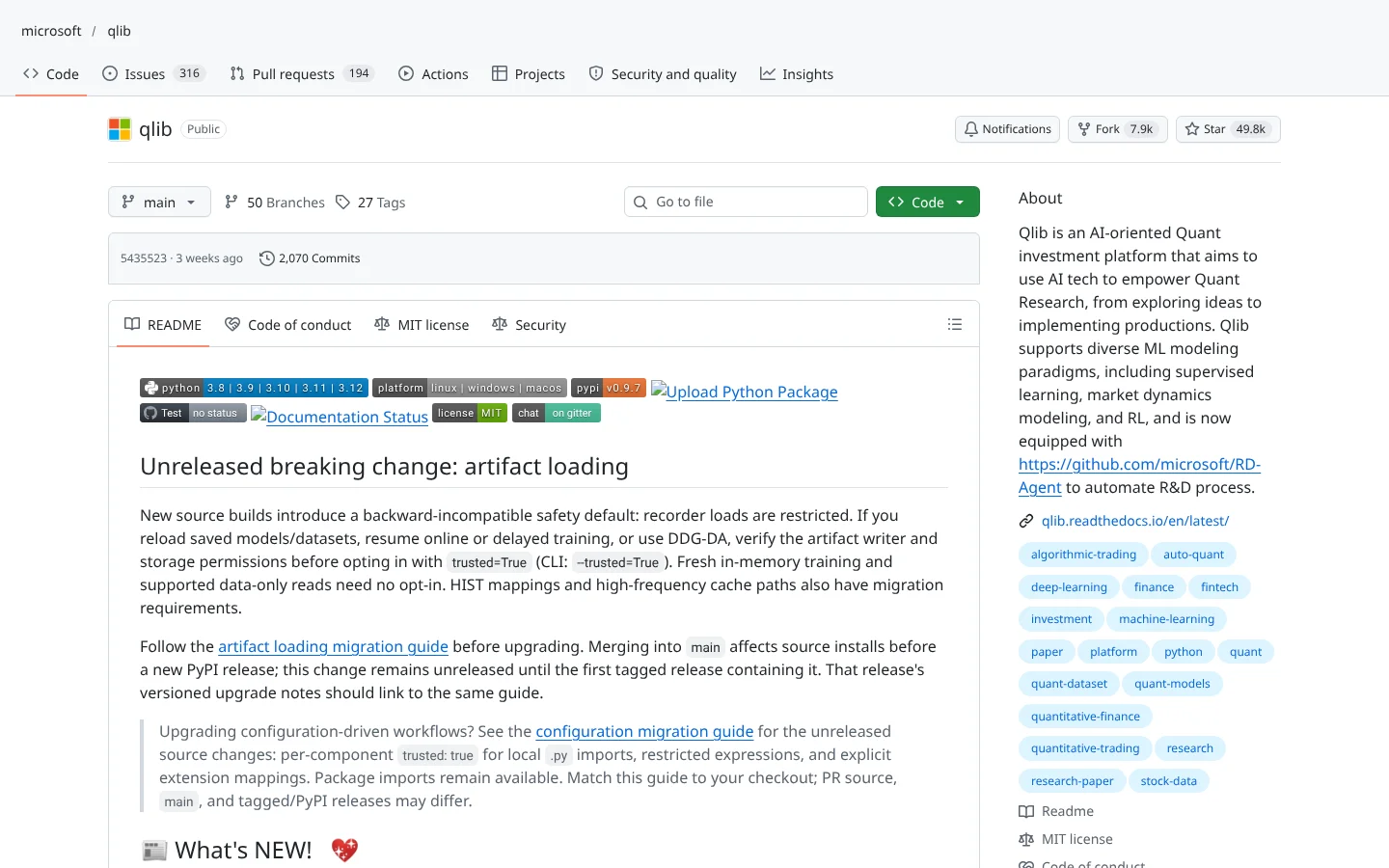
 90Score
 Qlibmicrosoft/qlib
Microsoft Research's quant platform: data pipeline, factor library and model training in one place.
★ 50k stars · Advanced · updated 2026-10

Quant and ML deep dive
 Machine Learning for Tradingstefan-jansen/machine-learning-for-trading
Machine Learning for Trading is the free, open-source code companion to Stefan Jansen's book, with notebooks covering everything from raw market data to machine learning models and live broker connections. For years it was the go-to self-study path for machine learning for algorithmic trading. The catch: the new third edition is drawing sharp criticism from quants, and a notebook course is not a trading system.
Think of it as a giant cookbook with every recipe pre-measured on the counter: you learn fast by cooking along, but nobody promises the dishes will sell.
For years, this was the free textbook for learning AI trading. Then the new edition dropped, and quants started arguing. Here's what you need to know.
Machine Learning for Trading is the free code companion to Stefan Jansen's book. Think of a giant cookbook with every ingredient pre-measured. You learn fast by cooking along. Nobody promises the dishes will sell.
Why's it popular? It covers the whole path in one place.
Five things we like. One, a huge set of free notebooks. Two, it goes from raw data to models to backtests. Three, live trading chapters connect to brokers. Four, earlier editions were widely recommended. Five, an MIT license on the code.
Live chapters work with Interactive Brokers, Alpaca and QuantConnect, and it runs in Docker.
Here's the debate. In a fresh Reddit thread, some quants call the third edition AI-written and overpriced. That's their view, not a verdict, but read samples before you buy.
Treat it like a course, one chapter a week, and you'll understand what most AI trading tools are doing under the hood.
Two cautions. Learning isn't an edge. Finishing the notebooks won't make a strategy profitable. And the setup is heavy, with big downloads.
Best for coders who want a structured self-study path. Scroll down for the scorecard and alternatives.
This is education, not financial advice. Your market edge starts with the right tool. Stay alpha.
FullStack Alpha Editorial Team
Reviewed by Jay Rocco, Chief Editor
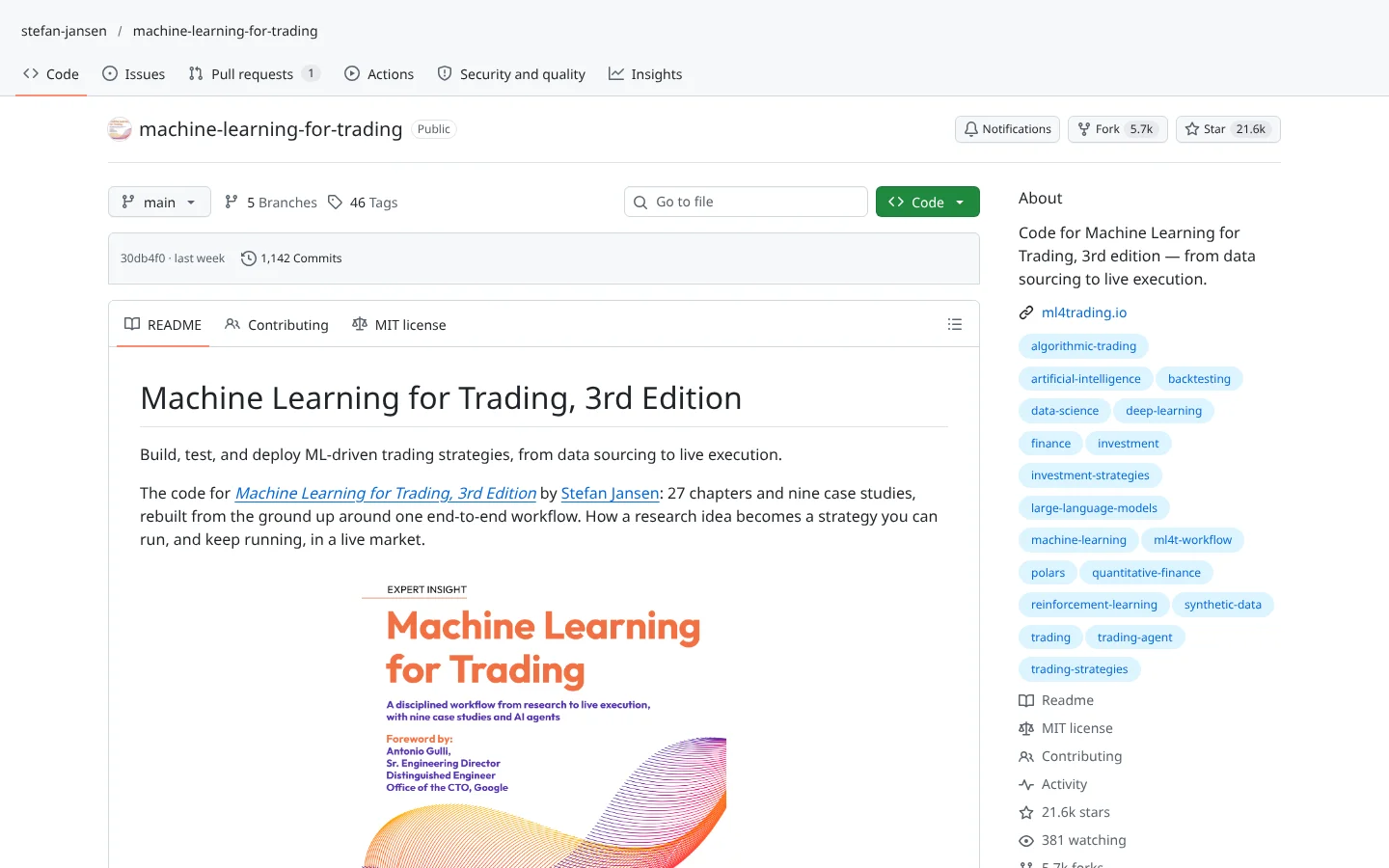
This is a repo (a project's folder of code on  GitHub) with more than 21,000 stars, built by author Stefan Jansen. It holds the code for his book on applying machine learning to markets. The current version is the third edition, with 27 chapters each in their own folder, and the older second edition is preserved on a separate branch for anyone who preferred it.
The code arrives as Jupyter notebooks, which are documents that mix plain-English explanation, runnable code and charts in one scrollable page. Topics span market microstructure (how orders actually meet), feature engineering, gradient boosting, deep time-series models, causal machine learning, reinforcement learning, and newer material on retrieval-augmented generation, knowledge graphs and autonomous AI agents. Nine case studies cover ETFs, crypto perpetual futures, NASDAQ-100 intraday data, S&P 500 options, FX and CME futures.
The third edition also goes further than most courses. It compares fast and realistic backtesting engines (tests that replay a strategy on old prices), and chapter 25 covers live trading through  Interactive Brokers,
 Alpaca and
 QuantConnect, with later chapters on drift detection and circuit breakers that stop a misbehaving model. A download script grabs about 4 GB of free data with no API keys, including AlgoSeek daily bars shared with permission.
Community Score
87 / 100
GitHub data checked 2026. Community read: mixed.
Works with
Good fit if you are
Skip it if you are
The reputation of this project is split by edition. Earlier editions and their notebooks were long recommended across  Hacker News and r/quant as a solid starting point for machine learning in trading, mostly because of the sheer amount of working code.
The third edition has met a cold reception. In a recent r/quant thread, commenters criticized the new text and notebooks as appearing AI-written, questioned the price, and pointed out the author does not come from a systematic trading firm. One reader's verdict after a quick look was blunt. Is that fair to years of free code? Partly not. But it is a fair warning about the new material.
“Took a quick look, don't recommend”
 scchess, r/quant, 2026
What they like
What they complain about
 docker compose pull ml4t, which needs no compiler. Plan for roughly 16 GB of disk space.
 AlgoSeek files.
Docker or a Python setup with uv
Docker avoids compiler headaches; the local uv route needs a C or C++ compiler.
DockerDisk space and a solid computer
The README suggests about 16 GB of disk, and deep learning chapters run faster with more memory.
A broker account with an API (only for live chapters)
Chapter 25 connects strategies to brokers for live or paper trading.
The book (optional)
The notebooks follow the book's chapters. The code is free; the book is sold separately.
 Amazon
Working Python knowledge
You will read, run and edit code constantly. This is not a video course.
Quality concerns in the third edition
Community reviewers say the new text and notebooks read as AI-written. Cross-check key ideas against other sources before trusting them.
Learning is not an edge
Every reader gets the same notebooks and the same free data. Strategies copied straight from a popular book are the most crowded ones on earth.
Overfitting temptation
Machine learning makes it easy to find patterns in noise. A model that shines on the book's data can fail on fresh prices.
Heavy setup
Large environments, compilers and gigabytes of data can stall beginners before chapter one.
Live trading risk
The live chapter connects to real brokers. A notebook bug with a live account can place real orders, so stay in paper mode until you understand every line.

Keep reading across FullStack Alpha
Not ready to run code yourself? Our hands-on AI stock tool reviews on AIStockPickerApp.com score finished products on five pillars, the AI stock tools directory at AIStockPickerApps.com sorts 200+ tools by the job they do, and AIStockTradingBots.com walks through broker APIs, bot setup and backtesting step by step. Or head back to the Trading Workflows home page to match tools to your own routine and budget.
90ScoreQlibmicrosoft/qlibMicrosoft Research's quant platform: data pipeline, factor library and model training in one place.
★ 50k stars · Advanced · updated 2026-10
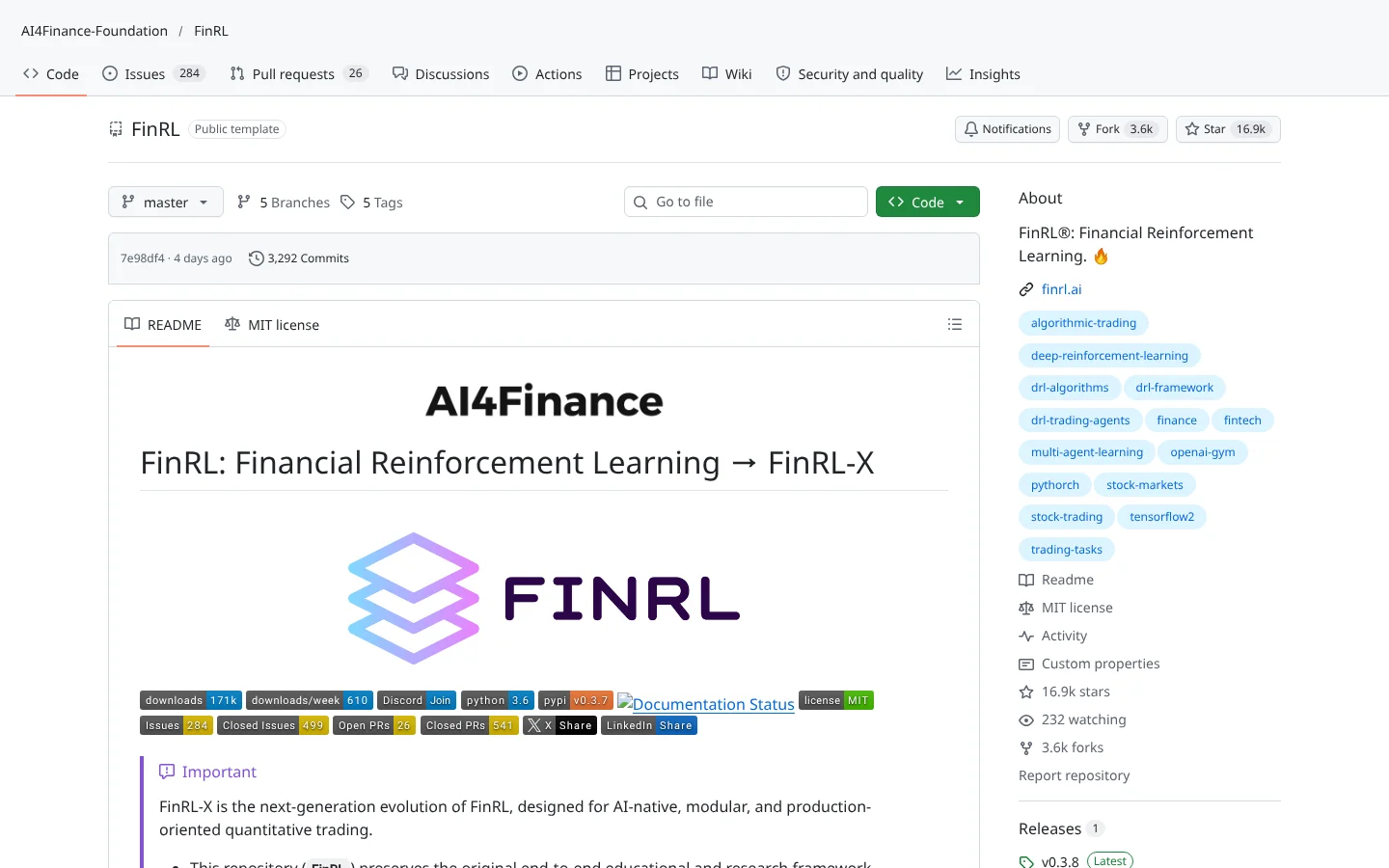 78Score
 FinRLAI4Finance-Foundation/FinRL
Deep reinforcement learning for trading, with ready-made market environments.
★ 17k stars · Advanced · updated 2026-10
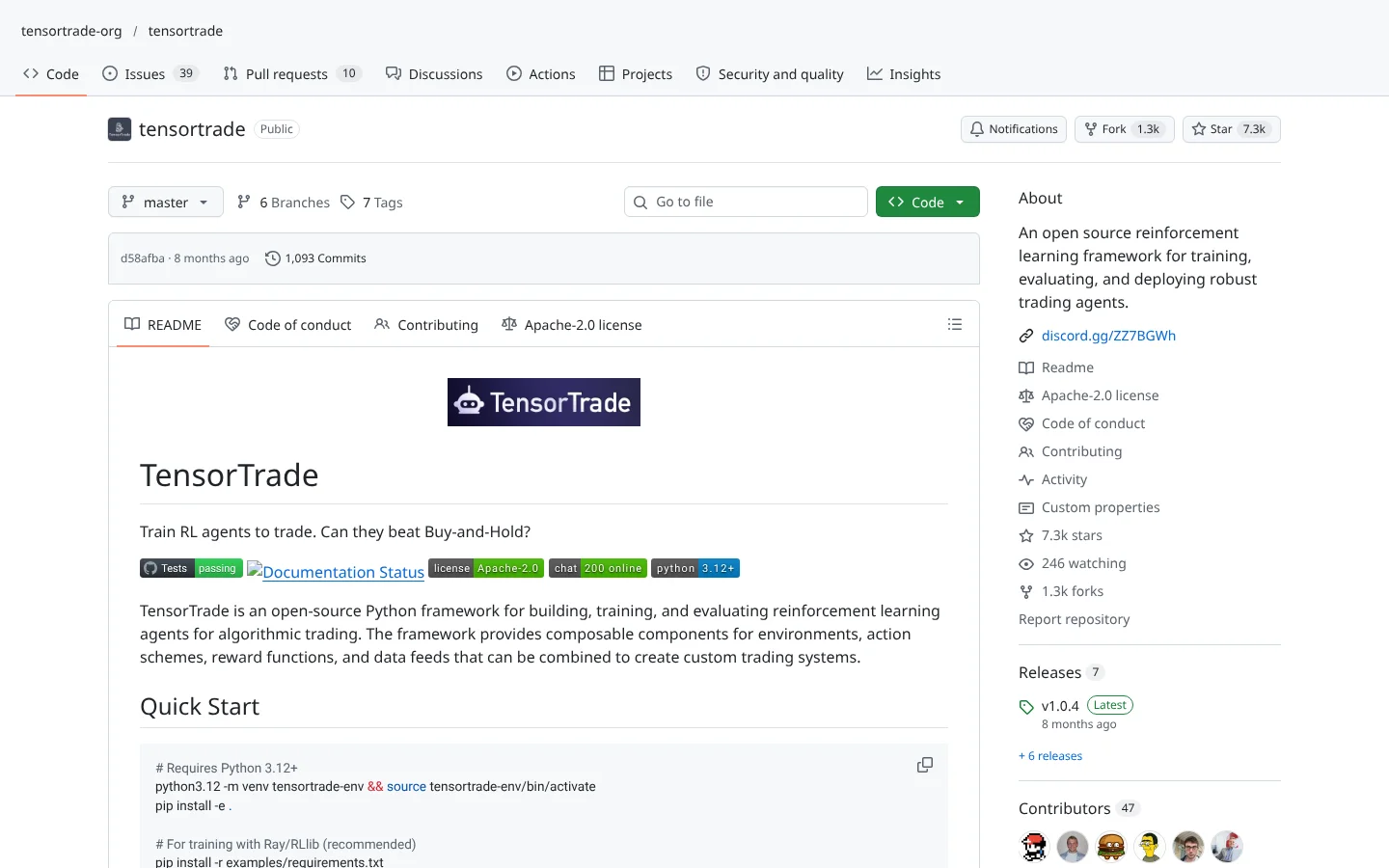 60Score
 TensorTradetensortrade-org/tensortrade
A reinforcement learning framework for building and training trading agents.
★ 7.3k stars · Advanced · updated 2026-02
Machine Learning for Trading earns its Community Score of 87 on adoption, maintenance and an MIT license, with mixed sentiment pulled down by reaction to the third edition. As a free, organized tour from raw data to live execution, it is still one of the most complete resources on machine learning for algorithmic trading anywhere.
Use it as a curriculum, not a strategy source. If the new edition's quality worries you, the second-edition branch is still there. Run the notebooks, break them, rebuild them on your own data, and paper trade anything that survives. Skills compound. Copied strategies do not. The repo's real value is the habit it builds: test, measure, doubt, repeat.
The free code is worth exploring for its breadth. The third edition book has drawn harsh reviews on r/quant over quality and price, so read reviews before buying, or start with the free notebooks and the second-edition branch.
Yes. The notebooks are free on GitHub under the MIT license. The book text is copyrighted and sold separately.
Learn by building and testing, not by reading alone. Repos like this one give you working notebooks to modify, and paper trading tests whether ideas survive real prices. Keep a written log of what you tried and why.
You can learn the pieces. The third edition covers live trading through Interactive Brokers, Alpaca and QuantConnect, but turning a notebook into a safe, always-on bot takes extra engineering and long paper trading.
Yes. The third edition adds chapters on retrieval-augmented generation, knowledge graphs and autonomous agents alongside classic models like gradient boosting and deep time-series networks.
Incoming transmission | Free weekly newsletter
FullStack Alpha has tested 200 AI stock tools. Be honest: how many of yours do the same job, and which one did you forget you signed up for?
One email a week fixes that: which tools are worth the money, what they cost right now, and how the traders on this site wire them into a routine. Five minutes to read. Zero noise.
Inside every issue
5 MIN READ
The Verdict
One AI trading tool tested and scored. What it does well, what it costs, and the catch the sales page leaves out.
Price Watch
Price changes and live promos on the tools traders actually use, monthly and annual side by side, so you stop overpaying.
Workflow Teardown
One educator's routine taken apart: the scan, the chart, the tools, and the free swap for every paid one.
Scan of the Week
Exact scanner settings you can copy, pulled from the educator's own lesson with the timestamp.
Process beats prediction. This is the email that keeps your process honest.
FullStack Alpha Network
BestAITradingTools.com
Trading workflows, the tool matchmaker and the GitHub repo directory.