Quick Answer
This one's a Flex, with an asterisk. Ross Cameron's "Max Loss Red Day" video is an honest, unflattering look at daily loss limit day trading working exactly as designed: he took one bad setup in a cold market, hit his ceiling, and stopped. The hook is that the lesson isn't the loss. It's that he was down in two accounts at once, on day 43 of a $2,000 small account challenge, and still walked away instead of trying to trade his way back.
Most traders don't blow up on their worst setup. They blow up on the fourth trade after it.
What Happened, According to Ross Cameron - Warrior Trading
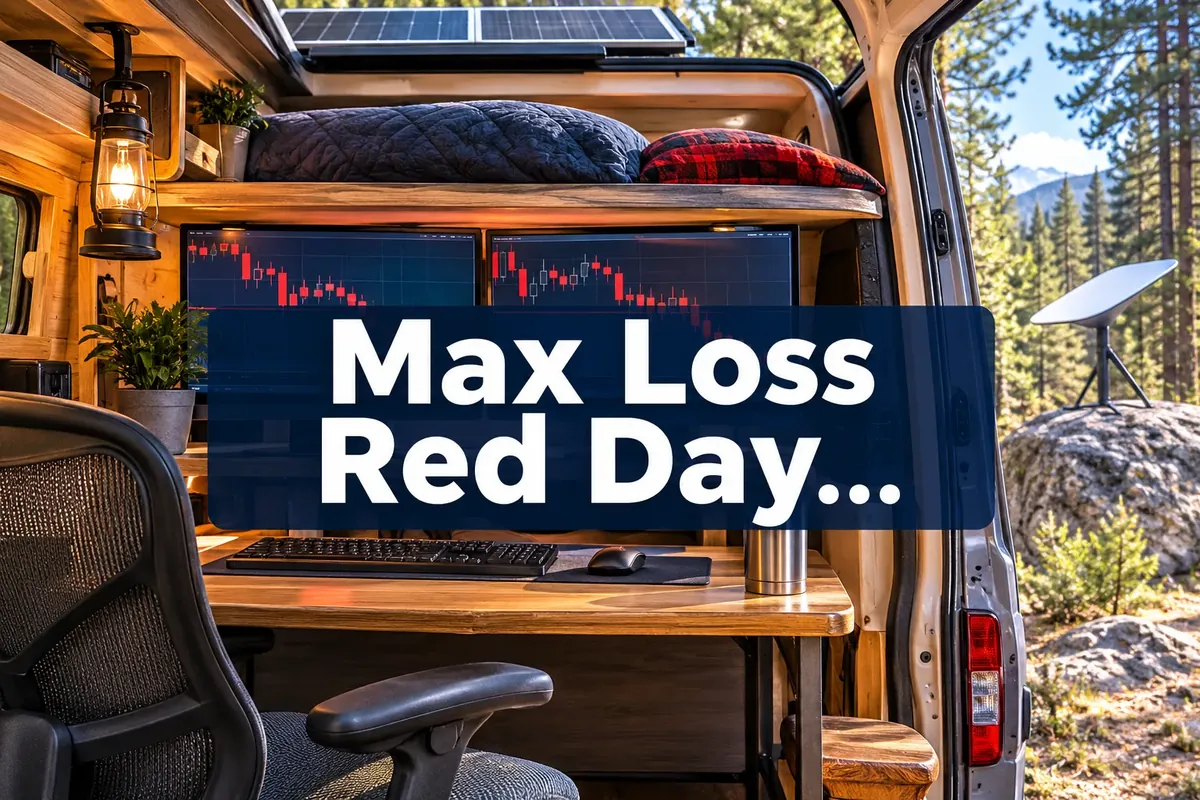
Cameron opened the September 3, 2026 recap by telling on himself. Day 43 of his small account challenge, trading a $2,000 account through Charles Schwab, and the headline is a red day at max loss. He's filming from a 4x4 Sprinter van parked off-grid in northern Canada with Starlink on the roof, solar panels, a battery bank under the bench, and two 24-inch monitors hanging under the bed.
The setup he questioned out loud in the first minute: "why did I take a trade today? Well, I'm asking myself that same question" (0:38). The market had been soft. He'd been sitting on his hands most of the week.
The trade logic was recency, not edge. The day before, around 9:15, BIAF popped from roughly $7 to $11 (3:36). So he watched for a repeat the next morning. One candidate showed up, met his stock-selection filters on percentage gain and relative volume, but had no news behind it. He took it. It didn't work.
By the recap he was red in both books: the main account and the small one. His words on the small account were blunt (5:39), a four-figure setback that he framed as recoverable, not catastrophic.
Receipts shown on screen:
- A title card confirming the account reset to $2,000 and the Day 43 marker (0:26)
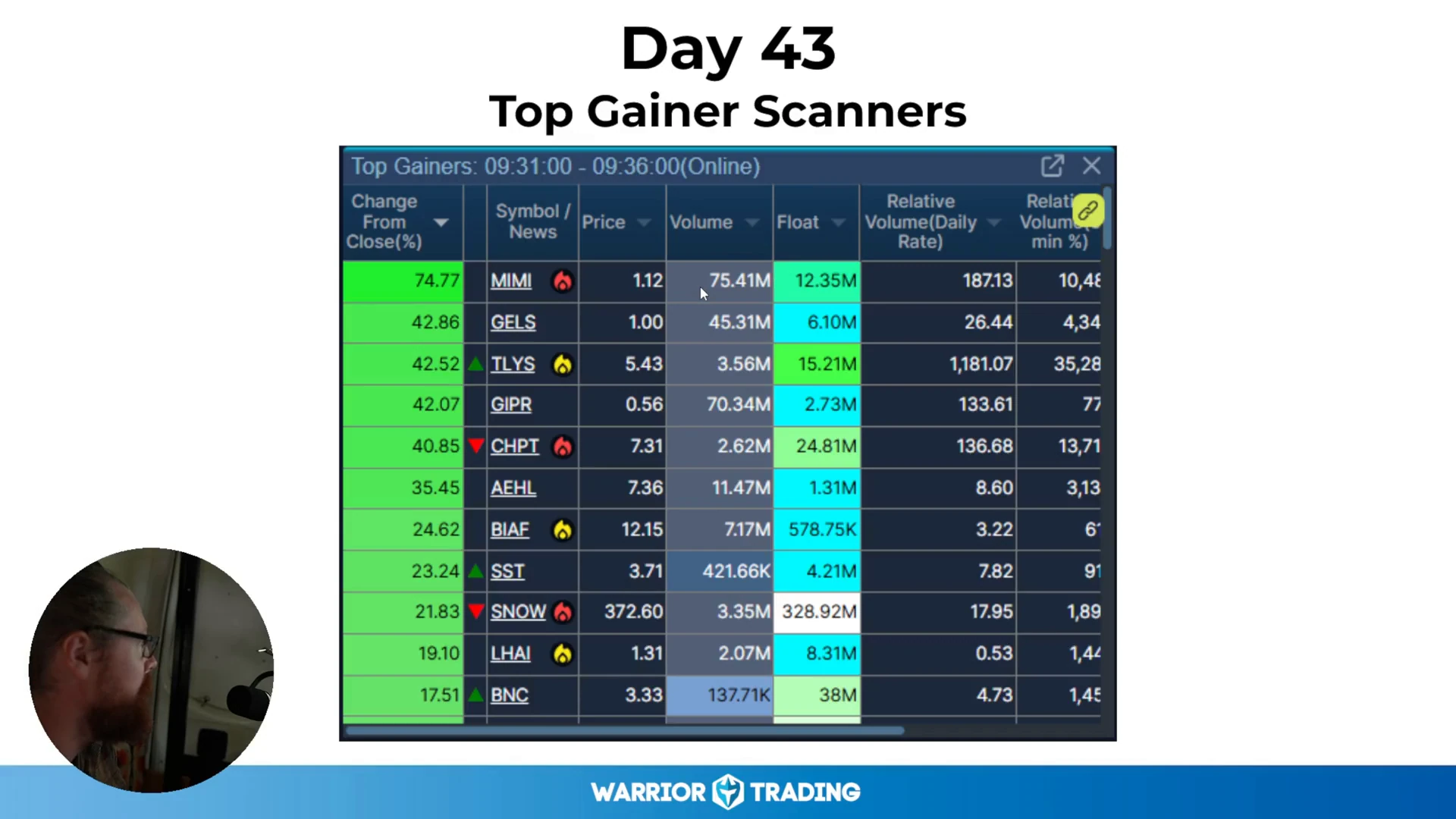
- The top gainer scanner for the session (2:31)
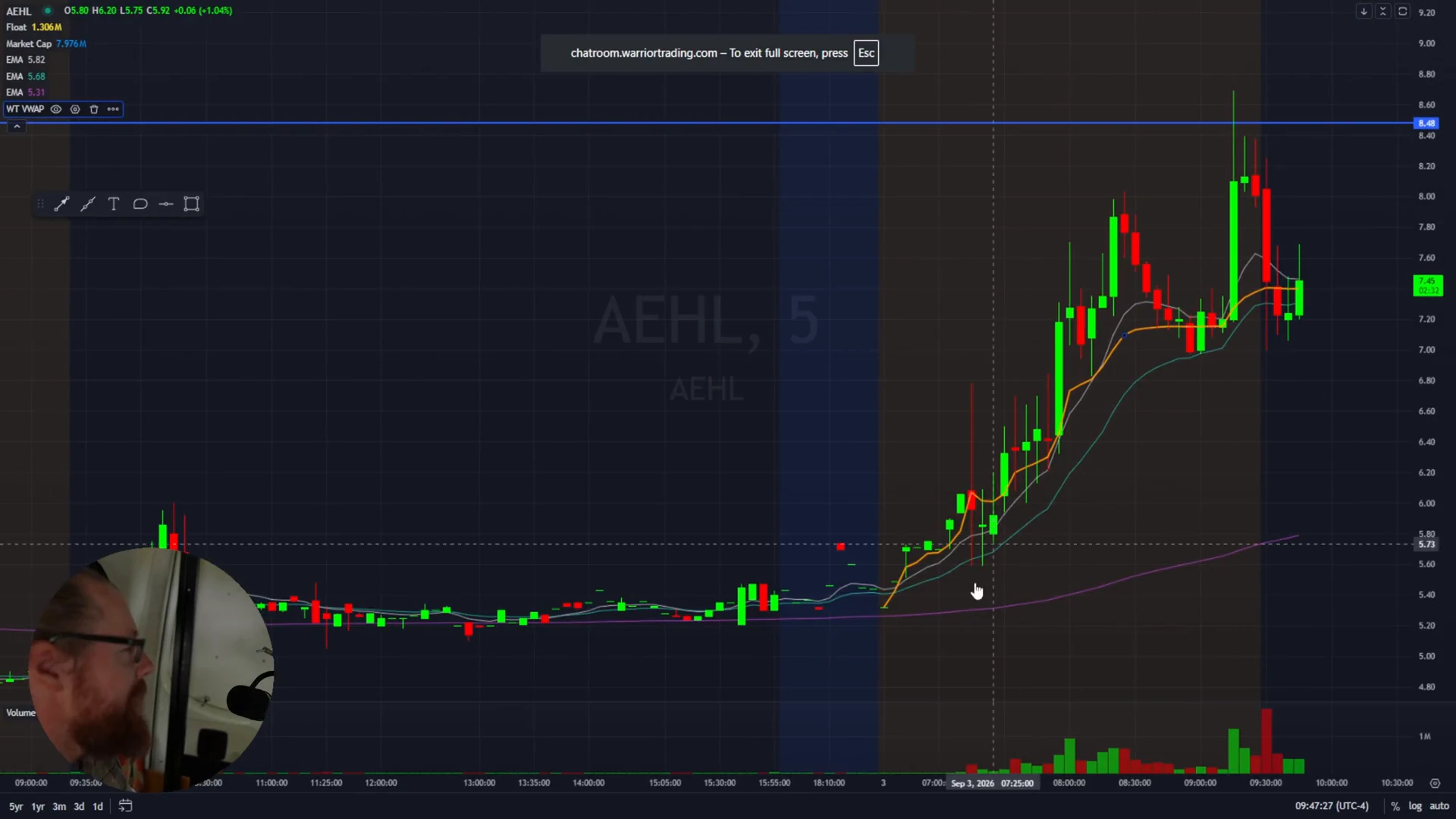
- A 5-minute chart of the ticker he traded, AEHL (3:36)
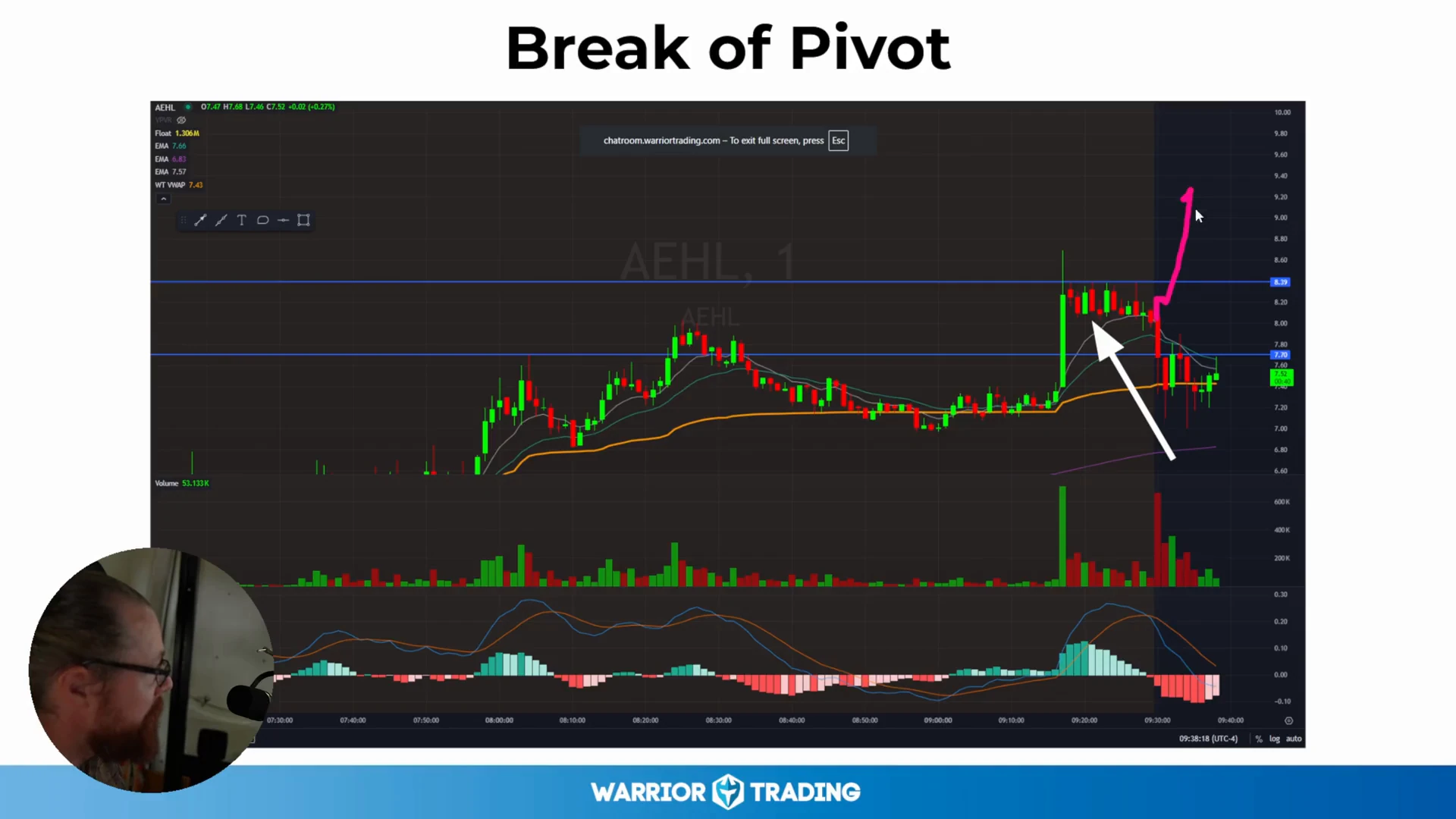
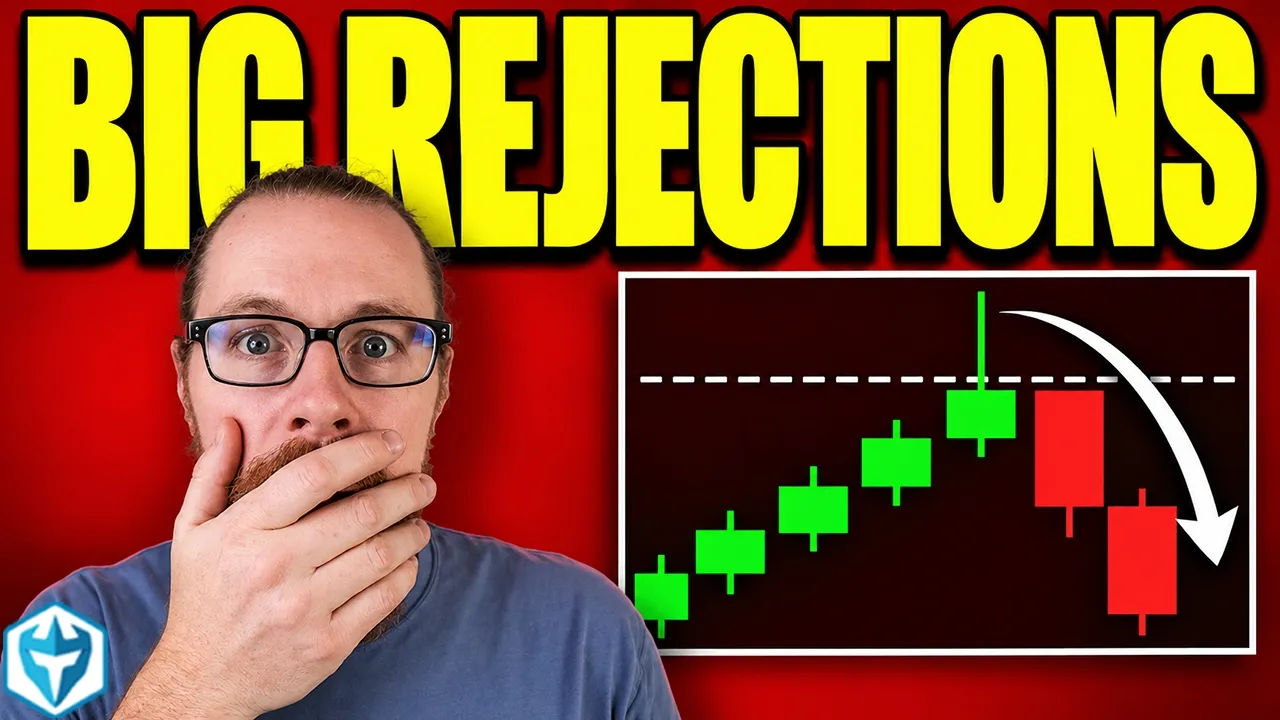
- The pivot break marked with arrows where the trade went against him (5:26)
Watch it yourself before trusting anyone's summary, including this one: Max Loss Red Day... by Ross Cameron - Warrior Trading. Uploaded September 3, 2026. 55,647 views and 2,095 likes as of November 18, 2026.
Why Does a Daily Loss Limit Day Trading Rule Matter?
A daily loss limit is a dollar amount you set before the open that ends your trading session the moment cumulative losses hit it. Not a suggestion. A hard stop. It matters because the first loss rarely does the damage... the five trades you take trying to erase it do.
Warrior Trading's own loss-limit explainer describes Cameron hitting a $7,500 red day before 10:00 a.m. and getting locked out of his account. The lockout wasn't predicting anything about the market. It existed to stop him from trading.
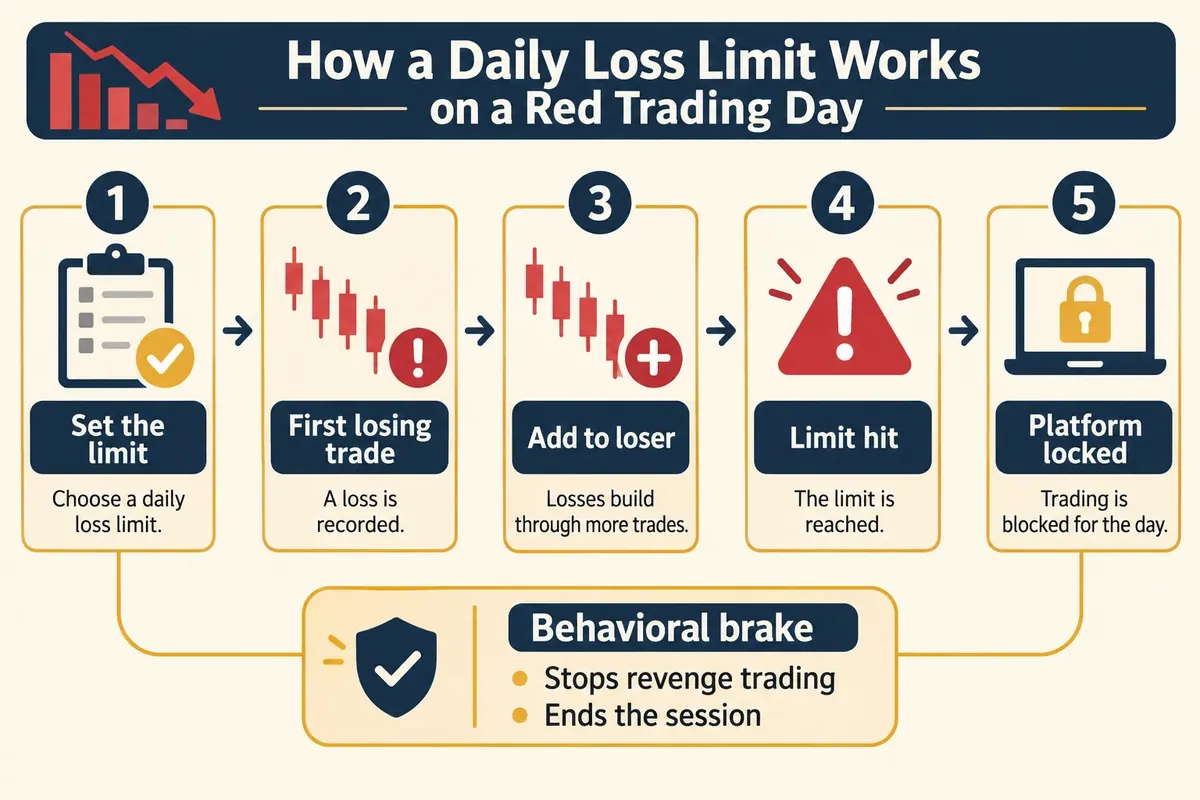
That's the whole point of daily loss limit day trading. It's a circuit breaker for your judgment, not your analysis.
Day 43 of the $2,000 small account challenge on Schwab
The small account challenge format matters here. Cameron publicly resets to $2,000 and trades it forward, which means the drawdowns get filmed alongside the green days. Day 43 is far enough in that the novelty is gone and the real test, can you follow rules when the market gives you nothing, is in full effect.
Schwab is the broker in this run. Worth knowing: not every broker offers an account-level daily loss stop. Interactive Brokers, for example, says plainly in its FAQ that customers can't set a cumulative daily portfolio stop loss through the standard interface, though its pre-trade compliance tools can block orders past a daily loss threshold. If your broker won't enforce it, you enforce it. Written rule, phone timer, platform logout. Something mechanical.
If you're still choosing a platform, our breakdown of the best stock apps for day trading covers which ones give you real risk controls versus a pretty chart.
Trading from a Sprinter van with Starlink on the roof
The van is content, and Cameron knows it. But there's a buried technical point: he's trading momentum setups on satellite internet from northern Canada. Latency on a fast-moving low float stock is not a rounding error. A fill a second late on a $5 stock moving 40 cents a minute is a real cost.
If your connection is your weakest link, trade slower setups. We looked at the measurable gap in wifi versus ethernet latency and the difference shows up fastest on exactly this kind of trade.
Not his first red day, not his biggest
He says it directly: "first red day and it's not my biggest red day either" (1:33), noting he's had several that each stung in their own way. Double red that day, main account and small account.
This is the most useful sentence in the video. A trader with a public track record and nearly two decades of screen time still has routine red days and still finds them discouraging. The emotional reaction doesn't disappear with skill. The rule is what keeps the reaction from writing checks.
BIAF at 9:15 and the one setup that showed up
Here's the honest diagnosis of the trade. BIAF ran from about $7 to $11 the previous session. Cameron watched for a copy of that move, got something that passed his percentage-gained and relative-volume filters, noted it had no news catalyst, and took it anyway.
Then: "We didn't get any more opportunities than that" (4:37). One setup. Choppy tape. No second chance to make it back.
A setup that checks four boxes out of five isn't a clean setup. It's a clean setup minus the reason the stock should move. No news on a low float gapper means no fresh buyers... just yesterday's pattern memory, which is yours, not the market's. That's recency bias with a scanner attached.
The scanner results he showed at (2:31) looked thin by his own description. If you want to see how modern scanners filter for catalysts rather than just movers, our review of Trade Ideas Holly AI walks through where the automation actually helps and where it doesn't.
Down $8,400 in the small account
The figure he cites in the recap (5:39) is a loss in the small account alongside a larger one in the main book. Set against a $2,000 starting balance, that number only makes sense because the account had grown substantially by day 43, a reminder that a "small account challenge" stops being small quickly when the sizing scales with equity.
The sizing scaled. The emotional stakes scaled with it. That's the part nobody budgets for.
His own framing was measured: a setback, not a crisis, and something a single good day could cover. True for him. Not automatically true for a trader with a $3,000 account and a job to get back to.
Living on hot-market profits in a cold market
Cameron's explanation of the cold market stretch is the most transferable idea in the whole recap. Profits made when the market was hot carry you through when it isn't. During the cold stretch he trades very small, mostly to stay mentally engaged, and accepts that this still produces frustration (7:47).
Think of it like a restaurant in a tourist town. You don't fire the staff in February. You run lean, keep the lights on, and wait for July. Traders who refuse to shrink in February are the ones who don't make it to July.
Adjusting when the market shifts
His closing thought is that adapting to market shifts is one of the hardest skills there is (8:52), and that he's grateful his risk stayed in check even though he's still not happy with the result.
That's the whole system in one line. You don't control whether the tape gives you setups. You control how much the tape can take from you when it doesn't. Discipline beats prediction.
Plug your own numbers in below and find out how many losers your rules actually allow before you're done for the day.
⚠️ Things to Look Out For
Daily loss limit day trading reduces one category of risk: your own continued discretionary trading after a bad start. It does nothing about gaps, leverage, liquidity, halts, or a platform going down at 9:31. Treat it as one control, not armor.
The specific gaps in this video and in the method generally:
- The loss number isn't independently audited. Warrior Trading publishes Cameron's cumulative gains through December 2025 as $18,810,638, and its verification page says the audit period ending December 2026 lands in Q1 2027. Company-published figures. Not typical results, and not a benchmark for you.
- A max loss rule can be defeated by position sizing. Warrior Trading's own write-up of a $7,500 red day describes entering CO around $4.44, adding near $4.89 and $5.00, then adding again around $8.94 after a reversal. The limit was the backstop. The damage came from adding to a deteriorating position. A daily ceiling with no per-trade stop is a speed limit with no brakes.
- His limits have moved a lot. A 2019 Warrior recap listed a $1,000 max loss per trade, $2,000 daily max, and a stop-after-three-losers rule. A February 2026 video referenced a much larger reference point, with Cameron saying he didn't want to lose more than a typical good day makes and citing an average around $23,000 per day. Self-reported commentary, not audited. The point: the percentage logic travels, the dollar figures do not.
- The van is survivorship bias in 4K. Starlink, solar, and a Sprinter are the output of a profitable career plus an education business. They are not the method.
- Broker enforcement varies. Some platforms let you hard-lock. Many don't. Check before you assume the rule is automatic.
- Who this is not for: anyone trading rent money, anyone without a written per-trade stop, and anyone who treats a low float gapper with no news as a setup because it worked yesterday.
Regulators are considerably less upbeat than trading content. FINRA Rule 2270 states day trading can be extremely risky, may be unsuitable for people with limited resources or experience, and can result in losing every dollar committed. The SEC's day-trading study describes it as a stressful, expensive, full-time activity where leverage, volatility, and execution failures can create losses beyond initial capital.
Daily Loss Limit Day Trading Rules: How Do You Set Yours?
Pick a number before the bell, and pick it while you're calm. A daily loss limit day trading rule only works if it's decided when you're not already losing, because a red trader always finds a reason to move the line.
A simple way to set it:
- Start with risk per trade. If you risk 1% per trade, a daily cap of 2% to 3% means two or three full losers ends the day.
- Write it as dollars, not percent. "$60" is harder to argue with than "about 3%."
- Make the broker enforce it if your platform offers a max-loss setting. Willpower is a weak stop.
- Set a give-back rule too. If you were up and hand back half the gains, stop. That's the trap Cameron describes in other red-day videos.
What happens after you hit it matters as much as the number. Close the platform. Write two sentences on what went wrong. Then do nothing. A daily loss limit is day trading's promise to your future self that one bad morning won't become a bad month.
Flex or Cap? Our Verdict
Verdict: Flex. Not because of the trade. Because of the stop.
Scored on four questions:
| Question | Result |
|---|---|
| Receipts shown | Strong. Scanner (2:31), AEHL 5-min chart (3:36), pivot break marked (5:26), account title card (0:26) |
| What can be verified | Partial. Charts and timestamps are visible; P&L figures are self-reported. Warrior's cumulative numbers are company-published, audit for 2026 pending Q1 2027 |
| Risk disclosed | Yes. Double red day, admits he questioned the entry, closes by telling viewers to practice in a simulator first |
| Repeatable by retail | The rule, yes. The sizing, no. A $2,000 account cannot absorb a four-figure day |
The thing that earns the Flex rating is that he filmed the loss at all, named the bad reasoning out loud, and didn't manufacture a redemption arc out of it. He took one setup, it failed, the market offered nothing else, and he closed the laptop.
That's daily loss limit day trading doing its only job.
The cap-adjacent part: the dollar amounts are entertainment, not a template. Anyone copying the size instead of the system is reading the wrong half of the video. And the "good day covers it" framing works for an account with that history behind it. For a trader with $5,000, an $8,400 loss isn't a setback. It's the end.
What You Should Know Before You Try It
Set your number before the open, in dollars, and write it somewhere you'll see it. A limit you calculate mid-drawdown is not a limit.
Six practical points:
- Paper trade the rule, not just the setup. Cameron ends the video telling viewers to practice in a simulator before risking real money. Run 20 sessions in sim where the only metric you score is "did I stop when I hit the limit." Not P&L. Compliance.
- Size first, limit second. Warrior's educational material suggests roughly 1-2% of account equity at risk per trade with a 2:1 reward-to-risk target. If your average loss is 5% of the account, no daily limit saves you. Run the calculator above and check the "risk per trade" line.
- Pair it with a per-trade stop and a no-adding rule. The CO example above is the cautionary tale. Adding to a loser is how a 1% risk becomes a 6% loss before the daily limit even fires.
- Know the rules that now apply to you. FINRA's intraday margin standard became effective June 4, 2026, with firms transitioning through October 20, 2027. It changes how brokers handle intraday risk and liquidation, so read your broker's margin and liquidation policy, not a forum post about it.
- Taxes aren't a footnote. Day trading gains are short-term and taxed as ordinary income. Capital losses offset capital gains, with up to $3,000 of net loss deductible against ordinary income per year and the rest carried forward. Wash sale rules will wreck your mental math if you ignore them. Talk to a CPA, not a Discord.
- Verify everything. Check Warrior Trading's own disclosures and verification pages, read the SEC's day-trading material and FINRA Rule 2270, and look up any term you don't know in our stock market terms glossary before you trade it.
If the day-trading pace doesn't fit your schedule or temperament, slower setups carry different math. Our swing trading tools section covers the alternative without the intraday pressure.
Keep reading on FullStack Alpha: our AI stock tool reviews, how traders automate rules like these, day trading tools compared side by side, and more Flex or Cap breakdowns.
Frequently Asked Questions
How much money to use for day trading?
Only money you can lose completely without it changing your life. The regulatory floor for a margin account is $2,000, and Cameron's challenge uses exactly that. A realistic working range for a beginner is $2,000 to $10,000, sized so a 2% daily loss limit still leaves room for a meaningful trade.
Is there still a $25,000 minimum for day trading?
The $25,000 pattern day trader threshold was the long-standing standard for unlimited day trades in a margin account, and 2026 brought significant changes to intraday margin rules. Confirm current requirements directly with your broker and with FINRA before assuming either way, because the enforcement is broker-level.
Is margin required for day trading?
For unlimited day trading, yes, you need a margin account. You can day trade in a cash account, but you're limited by settlement timing on your funds. Margin adds leverage, and leverage is how a $500 mistake becomes a $2,000 one.
Can you claim losses from day trading?
Yes. Trading losses are capital losses. They offset capital gains first, then up to $3,000 of ordinary income per year, with the remainder carried forward to future years. Wash sale rules can disallow losses on repurchased positions within 30 days, which trips up active traders constantly.
How much do day traders with $100,000 accounts make per day on average?
There is no reliable average, and any specific number you see quoted is marketing. Independent research consistently finds most active day traders lose money over time. A $100,000 account does not produce a predictable daily income, and treating it like a salary is the fastest route to a drawdown you can't recover.
How much trading loss can you write off?
Net capital losses are deductible against ordinary income up to $3,000 per year for most filers, with unlimited carryforward. Traders who qualify for trader tax status with a mark-to-market election face different rules. Get a CPA who has handled active traders before filing.
How much is Warrior Trading monthly?
Warrior Trading's pricing changes and is tiered across courses, chat room access, and bundles, so check the current rates on their site directly rather than relying on a figure in an article. Compare the cost against what free and low-cost tools already provide before subscribing.
What is a good daily loss limit for day trading?
Many traders cap the day at two to three times their normal risk per trade. On a $2,000 account risking $20 a trade, that's a $40 to $60 daily loss limit. Day trading pros set the number before the open and stop immediately when they reach it, the way Cameron does in this video.
Should daily loss limit day trading rules change in cold markets?
Shrinking it is reasonable. Cameron's point is that cold markets offer fewer good setups, so he cuts size and the daily loss limit. Day trading less in a slow tape protects profits made in hot markets.
The Takeaway
The loss isn't the lesson. The stop is.
Cameron took a trade he admitted he shouldn't have, on a pattern that worked yesterday, in a market that had nothing to offer. Then he hit his ceiling and quit for the day instead of chasing it. Day 44 started fresh. That's the entire mechanism of daily loss limit day trading, and it's worth more than any scanner setting in the video.
Do this today, before the next open:
- Write one number on a sticky note: your daily loss limit (day trading pros often use 2-3% of account equity), written in dollars.
- Write a second number: your per-trade stop, at 1% or less.
- Divide the first by the second. That's how many losers you get. Usually two or three. That's the real constraint, and most traders have never counted it.
- Check whether your broker can enforce the lockout. If not, set a phone alarm and close the platform.
- Run it for 30 sessions in a simulator and score yourself only on whether you stopped on time.
Fewer tabs, fewer trades, one rule you actually follow. Your market edge starts with the right tool. Stay alpha.
One video dissected here. 200+ AI stock tools and scanners are catalogued in the FullStack Alpha directory, filterable by category, price and what they actually do.
Browse the directory → aistockpickerapps.com