Quick Answer
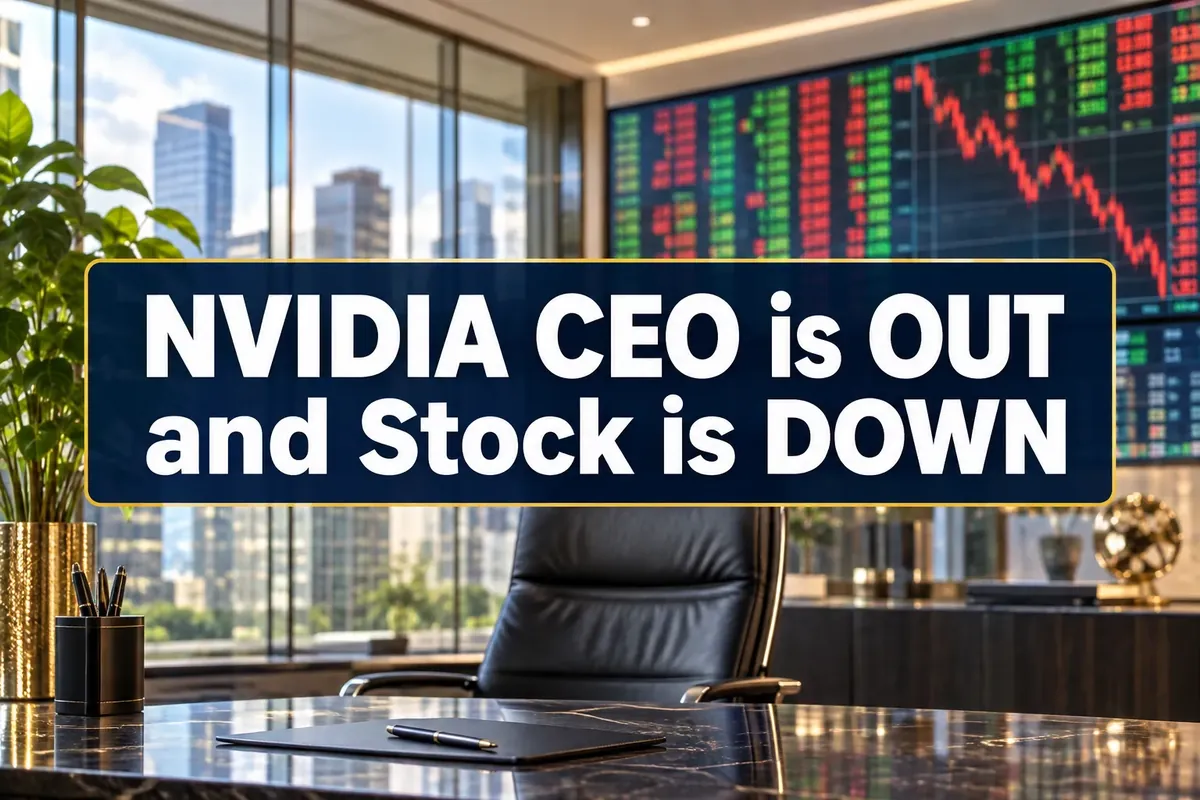
The Nvidia stock drop was real, the CEO exit was real, and Ross Cameron's red day was real. The video title is mostly a flex on the news, not on his trading, because he finished down about $16,000 chasing the small caps that moved in sympathy. Jensen Huang resigned on November 12, 2026, shares opened roughly 13% lower, and the stock closed down about 4.34% that day while falling around 13% across the full week. Verdict: Need More Receipts on the trading, Flex on the news read.
The Nvidia stock drop that headlines this video is verifiable, and so is the loss the creator posts on camera, which is why this lands closer to honest than buzz. Where it gets slippery is the title: "down another 13%" describes an opening print and a weekly decline, not a one-day close. That gap between what a thumbnail says and what the tape actually printed is the whole lesson.
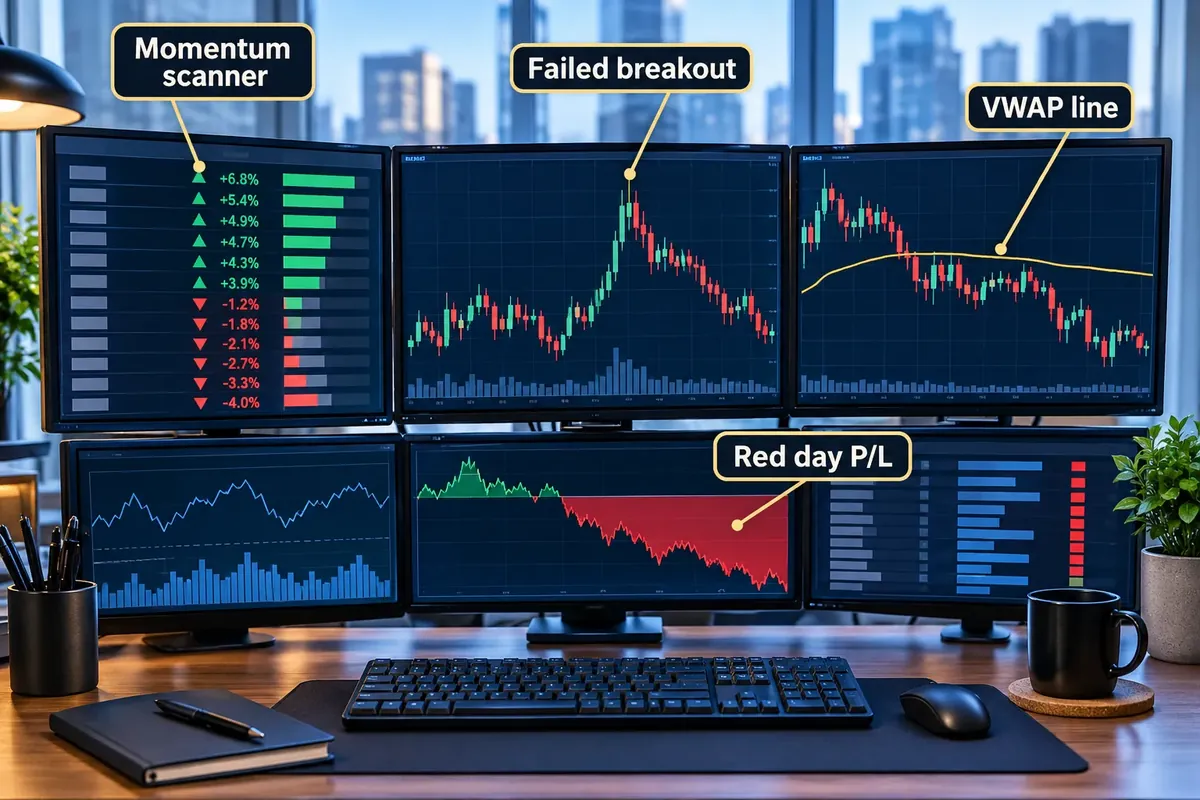
A 33-year CEO resigns before the bell. The most important stock in the AI trade gaps down double digits. Thirty seconds later, a dozen unrelated low-float tickers are green 200%, and retail traders are buying them with no idea why. One of the most experienced day traders on YouTube sat in front of that tape and still finished the session down five figures.
That's not a story about Nvidia. That's a story about what news shocks do to your judgment.
What Happened, According to Ross Cameron - Warrior Trading
Cameron opened the November 12 stream with Nvidia down 10% in the pre-market and the CEO resignation already confirmed, then spent most of the session trading the small caps that popped in sympathy rather than Nvidia itself. He ended the day red.
His framing in the first minute was careful, and that's worth noting. He separated the two reported relationships and said the one involving the alleged Chinese intelligence connection was the material one, because a personal matter inside the company is a governance headache while a counterintelligence question is a national-security headline. Reported, not proven. He said as much (0:00) about how hard it is to know what's true this early.
Then he made the point most of the panic coverage skipped:
"This doesn't change the fact that they've got a great business model with great profit margins." (1:15)
That held up. Six days later, Nvidia reported fiscal Q3 2027 revenue of $115.8 billion, up 103% year over year, with Data Center revenue of $107.6 billion, up 110%. The business accelerated while the stock got cut.
The receipts he actually put on screen
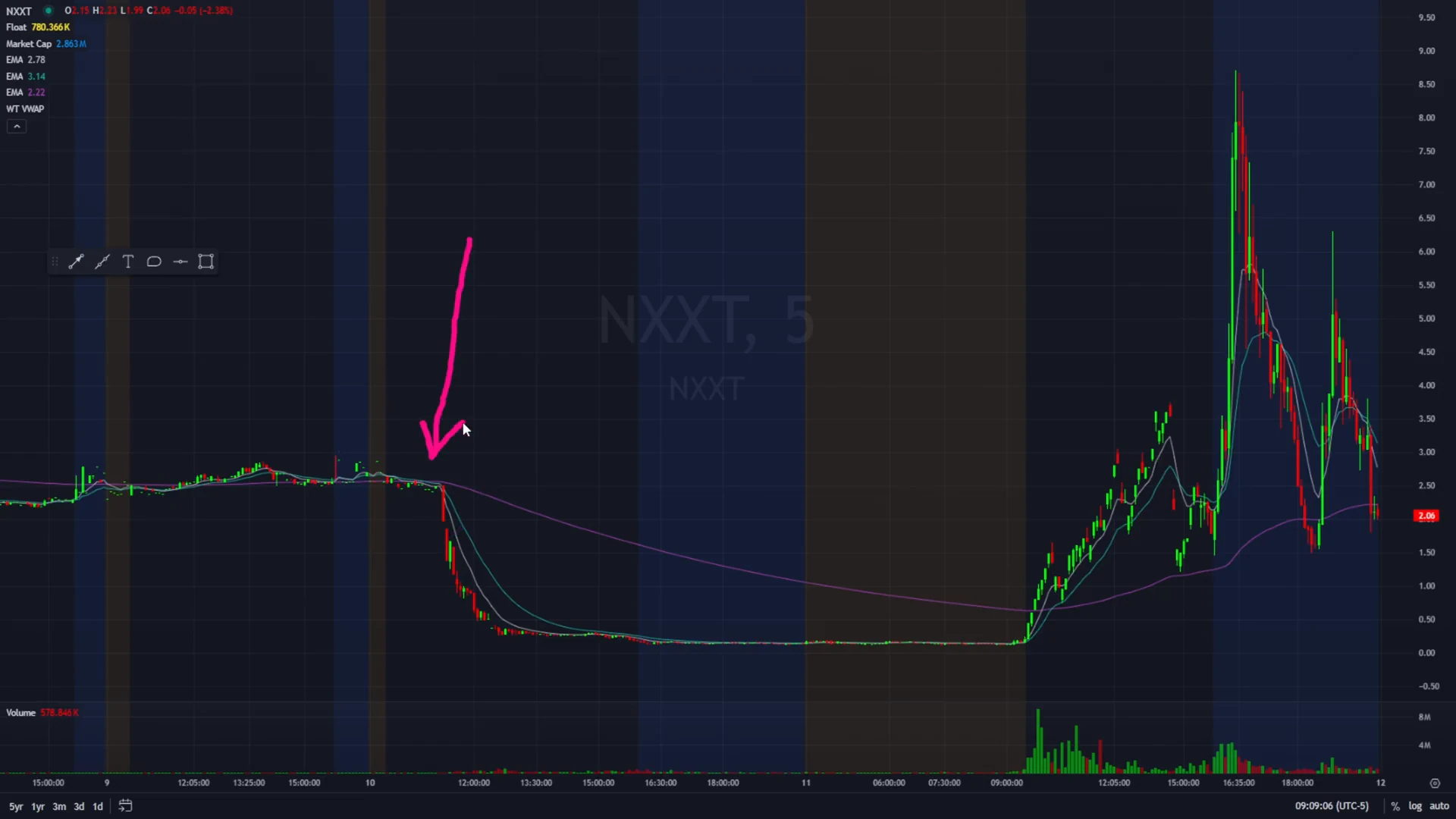
- (2:52) An NXXT 5-minute chart with his entry arrow marked, used to walk through a prior delisting-confusion squeeze.
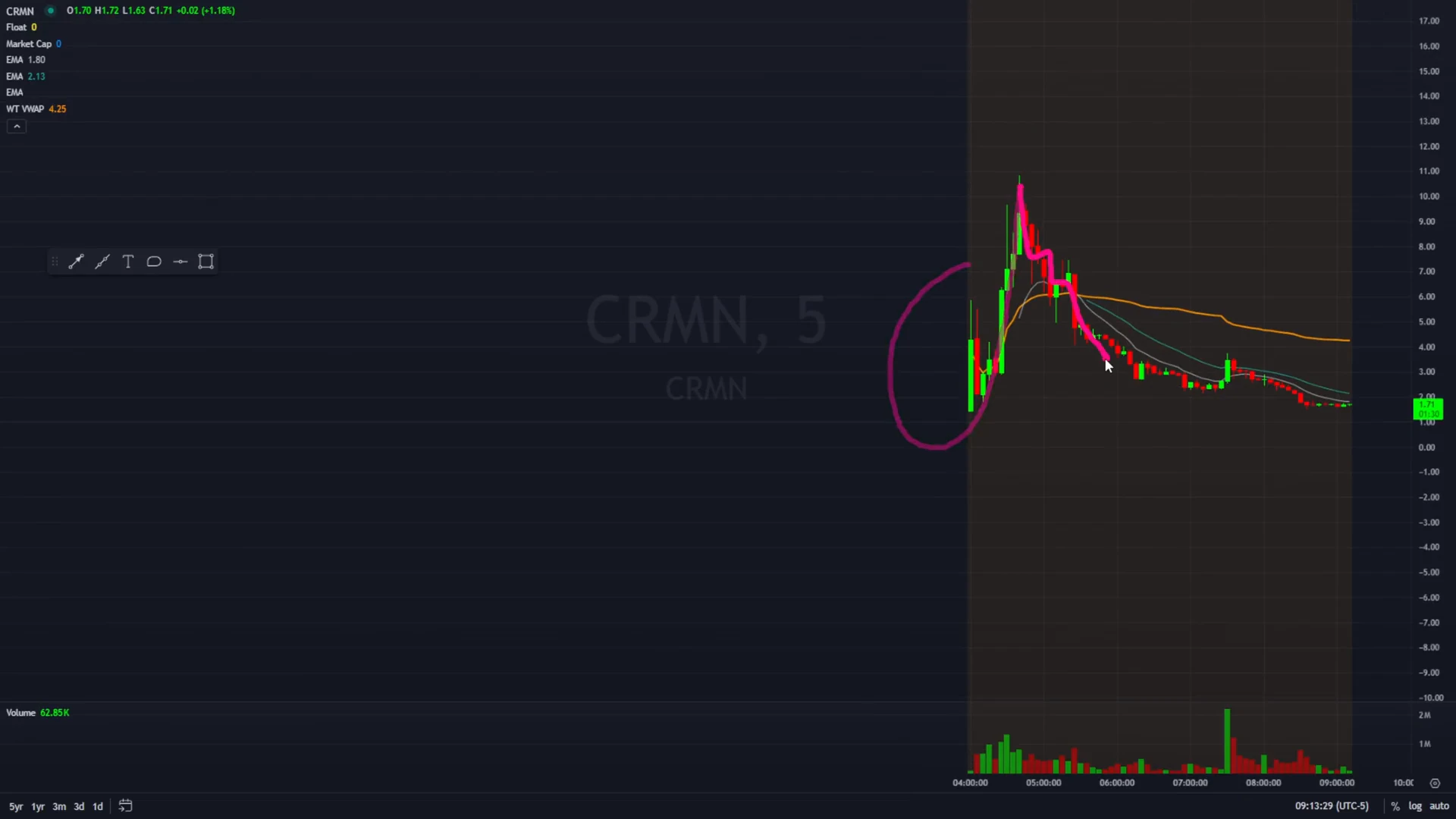
- (7:15) The CRMN chart with the spike circled, the one setup he said he genuinely liked.
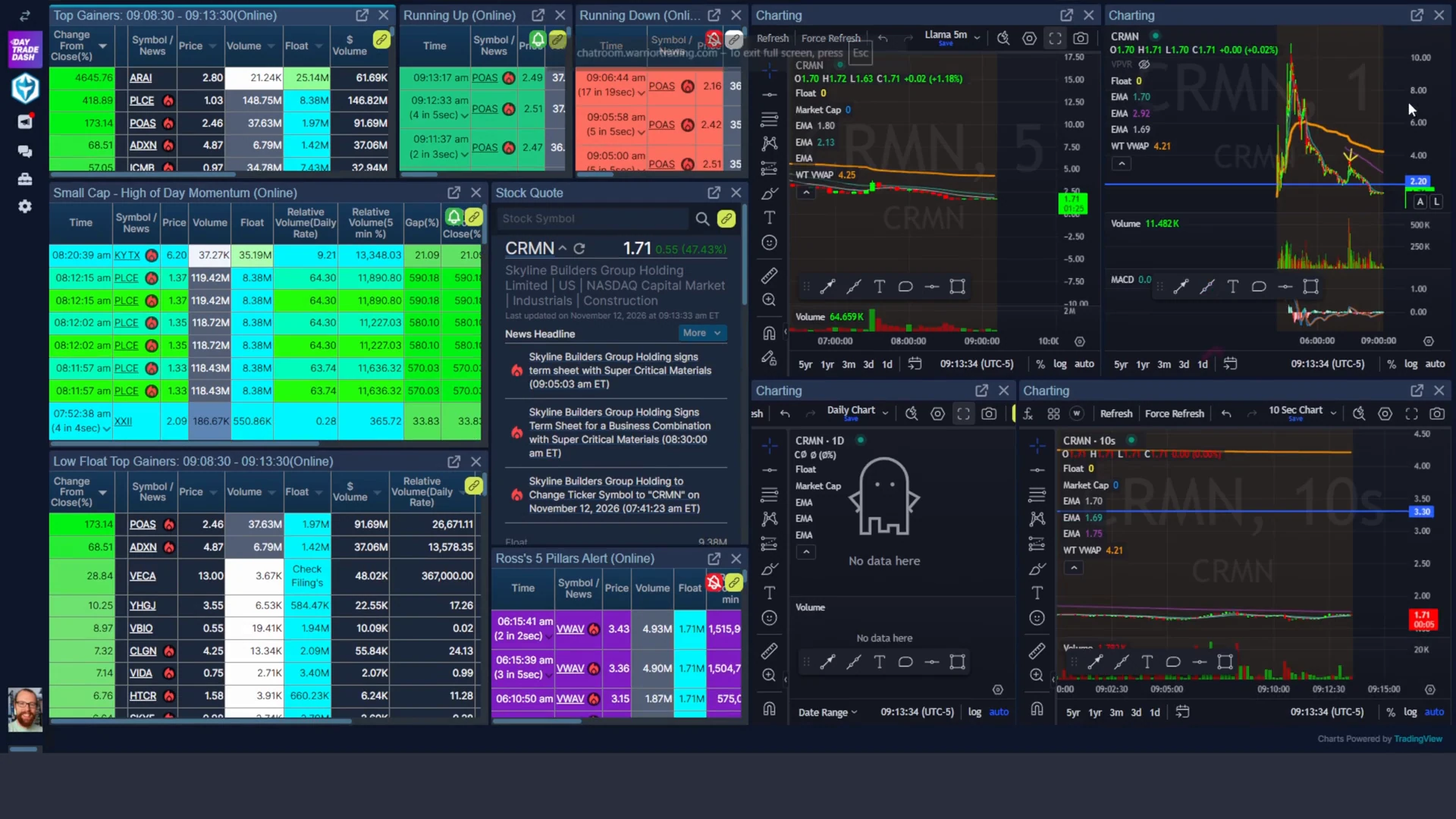
- (7:20) His full scanner and charting workstation, so you can see what he was reading in real time.
- (8:18) The POAS 1-minute chart, up 174%, with the VWAP break he watched and skipped.
- (9:27) The number: down roughly $16,000 on the day.
Showing the losing chart is the part most creators skip. He didn't.
The headline claim is a 13% Nvidia stock drop; the personal claim is a $16,000 red day. Both are stated plainly, one is partially imprecise, and the second is backed by on-screen charts rather than a screenshot of a P/L you can't verify.
| Claim in the video | What the record shows | Holds up? |
|---|---|---|
| CEO resigned effective immediately | Jensen Huang stepped down November 12, 2026 after 33 years; CFO Colette Kress named interim CEO | Yes |
| Nvidia "down 10%" in the morning | Opened roughly 13% lower, hit about 14% down intraday | Yes, understated if anything |
| "Down another 13%" | That's the opening gap and the weekly decline; the November 12 close was about 4.34% lower | Partly |
| Sympathy names ran 174% to 400% | He named POAS and PLCE on screen with live charts | Shown, not independently audited here |
| Down about $16,000 | Stated on camera at (9:27), charts of the trades shown | Self-reported |
The week was worse than the day. The Nvidia stock drop came to roughly 13% in the week ending November 13, its largest weekly decline since April 2025, and had already dropped more than 20% over the prior month before the resignation. By November 16, shares were down close to 35% from the early-October peak. Market cap went from about $5.8 trillion in early October to roughly $3.9 trillion on November 13, per Reuters data.
The resignation didn't start the Nvidia stock drop. It poured gasoline on a fire that was already lit.
What the board said next
On the November 17 earnings call, board chair Harvey C. Jones said Huang resigned voluntarily and that the board "does not intend" to reinstate him. Huang had said publicly that he'd be honored to return if the board judged it in shareholders' interests. The board closed that door. The company also hired Wachtell, Lipton, Rosen & Katz to run an independent inquiry, and an FBI investigation was reported to be underway.
Watch it yourself before you take anyone's summary, including this one. Ross Cameron's November 12 recap runs about 14 minutes, had 65,219 views and 1,543 likes as of November 18, 2026, and the value is in the trades he explains skipping, not the ones he took.
Three things to watch for on a rewatch:
- (7:20) His workstation layout. Scanner on one side, charts on the other, nothing else. No Discord, no Twitter feed. On a news day, every extra tab is a worse decision waiting to happen.
- (8:09 to 8:18) The POAS setup he passed on because of descending resistance. He explains his no. Most videos only explain the yes.
- (13:02) The risk comment. He suggests sizing down in a choppy tape, then admits he should have taken his own advice.
If you want the news-reaction habit without the YouTube comment section, a tool that explains why a stock just moved does more for your process than another opinion feed.
Why Did the Nvidia Stock Drop and What Did Traders Do?
The Nvidia stock drop happened because a governance shock hit a stock that was already extended and already selling off. Traders then did what they always do on a shock: they bought everything that looked related, and most of it had nothing to do with anything.
Nvidia down 10%, then 13%: what happened
Pre-market, Nvidia printed around 10% lower. The open was worse, roughly 13% down, with an intraday low near 14% off. Then the dip buyers showed up and the close landed at about 4.34% lower. Anyone who shorted the open and held to the bell gave back most of it.
A gap is a price, not a prediction. That's the mechanic beginners miss. The opening print on a news day is a crowd guessing in the dark with thin liquidity. The first 15 minutes often get repriced hard.
Nvidia as the AI leader and why the whole group shook
Nvidia isn't one holding, it's the load-bearing wall of the entire AI trade. Chips, data centers, the index weighting, the sentiment. When the company at the center loses its founder-CEO overnight, every AI-adjacent name reprices on fear even though none of their fundamentals changed that morning.
Decision rule: if you own AI stocks and you can't name the specific revenue line that got worse, you're reacting to a headline, not a change in the business. Nvidia's Q3 numbers made that painfully clear six days later.
The delisting confusion
Cameron used an older example (2:52) of a stock that fell toward delisting, somehow kept trading, confused everyone, and then squeezed from around 12 cents to $1.50 as shorts covered and longs piled in. Confusion is a catalyst all by itself.
Forced buying moves price harder than informed buying. A short squeeze is just shorts being forced to buy back at any price to close out, which pushes the stock higher, which forces more of them out. It has nothing to do with the company being good.
A true black swan
He called the Nvidia situation what it was (5:04): an anomaly that almost never happens. A founder-CEO resigning immediately over reported counterintelligence allegations isn't a scenario anyone had modeled. That wasn't on anybody's 2026 bingo card.
Black swan matters for one practical reason: your historical pattern library doesn't apply. The setups that work on an ordinary Tuesday have no sample size here.
Sympathy momentum: why the pop stocks can't be trusted
Sympathy momentum is when traders buy stock B because stock A had news, assuming the move spreads. Sometimes it's legitimate, like two lithium miners after a supply announcement. On November 12, it mostly wasn't.
His read (6:55) was that these names lacked a shared catalyst and had no reason to hold. PLCE was up around 400%. POAS was up 174%. None of them had a CEO resign. None of them had a government inquiry. They moved because the scanner lit up and momentum traders chase light.
No shared catalyst means no theme. No theme means no second day.
POAS up 174% and the VWAP break
He watched POAS for a break above VWAP and passed. VWAP, volume weighted average price, is the average price paid for every share traded that day, weighted by volume. Traders treat it as the line between buyers and sellers in control.
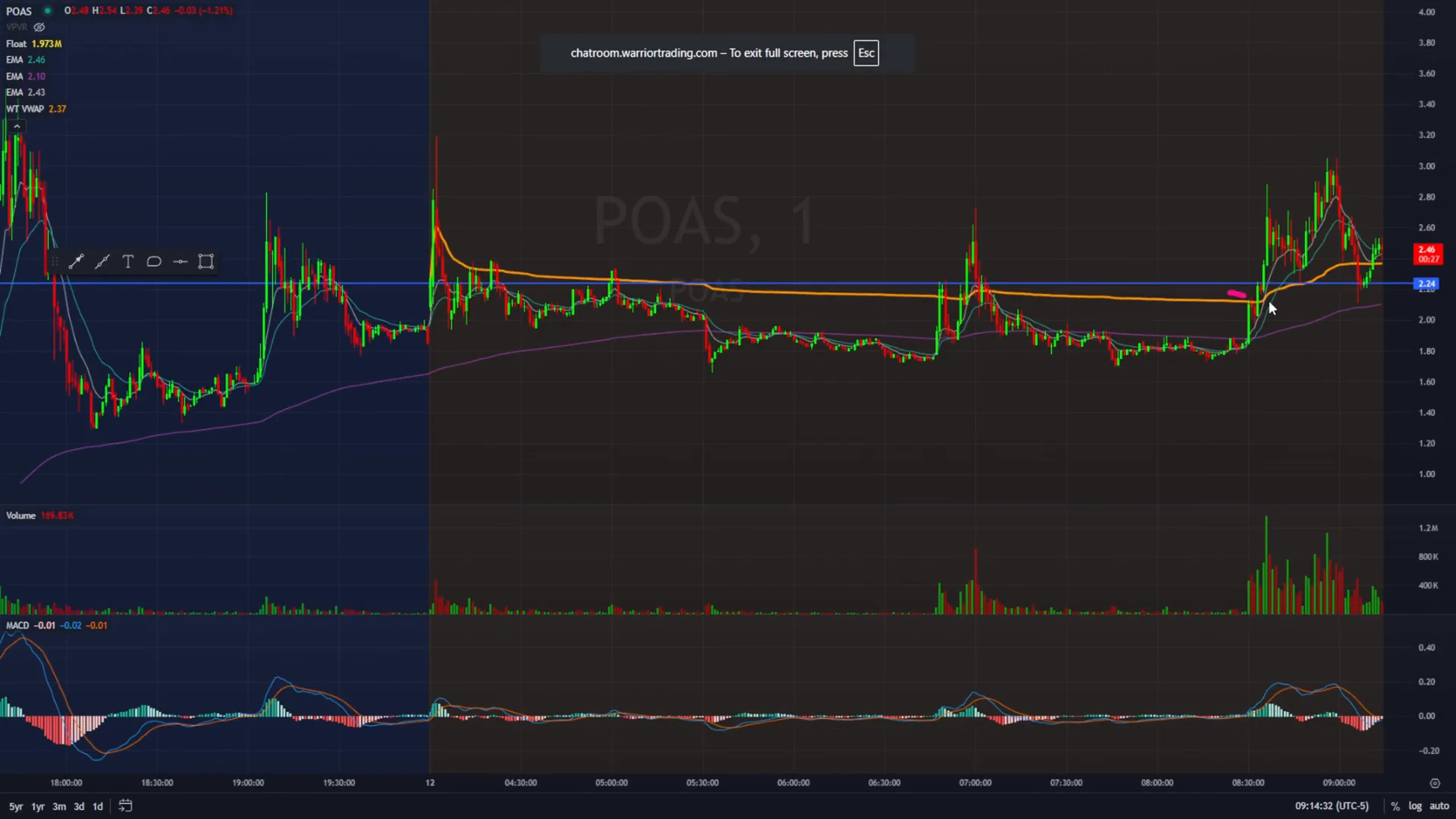
His reason for skipping was descending resistance (8:09): each bounce was topping out lower than the last. A breakout into a falling ceiling usually fails. That's a clean no, and the willingness to say no out loud is the most useful 40 seconds of the video.
Why he lost: a sudden shift of attention
The loss wasn't a bad chart read. It was liquidity evaporating. He was in a position and the Nvidia headline pulled the entire market's attention away (9:27). The volume that was supposed to carry his trade went somewhere else. The bid thinned, the stock faded, he got stopped out.
On news days, attention is the fuel. When the fuel moves to a different ticker, your setup dies mid-sentence regardless of how good the chart looked thirty seconds ago.
Size down in roller-coaster markets
His advice at (13:02) was to manage risk and consider trading smaller. He then admitted he hadn't. He was up $6,000 Monday and red Tuesday and Wednesday.
Halving your size on a shock day costs you nothing if you're wrong and only a little if you're right. That's the trade with the best risk-reward on the whole board, and almost nobody takes it.
Run the checklist below before you touch a sympathy play.
The checklist above exists because the fastest way to lose money on a news day is to skip step one. If there's no real, linked news on the ticker you're buying, you're not trading a catalyst, you're trading other people's confusion.
Use it on paper for two weeks before you use it with money. If you want a repeatable scan behind it rather than a hot ticker list, start with free AI stock screeners and build from there.
⚠️ Things to Look Out For
The biggest risk in this video isn't anything Cameron says. It's what a newer trader hears: "CEO gone, stock down 13%, small caps up 400%, let's go." That's a recipe for a blown account.
The missing receipts
- No broker statement. The $16,000 loss is self-reported on camera. Charts were shown, fills weren't. Treat it as credible and unaudited.
- No account size given in the clip. A $16,000 red day means one thing on a $1 million account and something very different on a $40,000 one. Without the denominator, you can't judge whether the risk was sane.
- The title overstates the day. The Nvidia stock drop closed at about 4.34% on November 12. "Down another 13%" is the gap and the week. Accurate-ish, framed for the click.
- Sympathy names aren't itemized. PLCE at 400% and POAS at 174% are named, but there's no log of what he traded, at what price, for how much.
The costs nobody mentions
Day trading these moves means commissions, locate fees on hard-to-borrow shorts, platform and data subscriptions, and brutal slippage. On a 174% mover, the spread can eat 2% of your entry before the trade even starts. Those costs don't appear in a chart replay.
Who this is not for
- Long-term investors. If your Nvidia position is a five-year hold, an intraday gap is noise you should probably ignore. Day-trade tactics on a retirement account is how people turn a drawdown into a permanent loss.
- Anyone trading news without a stop. Catching a falling knife on a stock under federal investigation isn't a value play, it's a coin flip with legal risk attached.
- Brand-new traders. The person in this video has traded for well over a decade and still had a red week. That's the honest signal.
Play stupid games with a 400% mover and no stop, and the prizes arrive on schedule.
The legal overhang
Wachtell, Lipton, Rosen & Katz is running an independent inquiry and an FBI investigation was reported. Headline risk is open-ended here. A single filing can reprice this stock overnight in either direction. The SEC's EDGAR database is where the actual disclosures land, not a YouTube thumbnail.
Flex or Cap? Our Verdict
Scored on four questions, this is a Flex on the market read and Need More Receipts on the trading results. Not a cap, because he showed the losses and skipped the easy brag.
| Question | Score | Why |
|---|---|---|
| Receipts shown? | Partial | Live charts at 2:52, 7:15, 7:20 and 8:18. No broker statement, no account size. |
| What can be verified? | Mostly yes | The CEO resignation, the interim CEO, the opening gap, the weekly 13% decline and the Q3 revenue are all on the public record. |
| Risk disclosed? | Yes | He states the loss, suggests sizing down, and closes (13:42) with a plain no-guarantees line and a nudge toward a simulator. |
| Repeatable by a regular retail trader? | No, not day one | Reading a scanner, judging VWAP breaks and passing on a 174% mover takes years. Nothing here is a copy-paste setup. |
Verdict on the trading: Need More Receipts. Verdict on the Nvidia stock drop analysis: Flex.
The call that aged best was the boring one: the governance mess didn't touch the business model. Six days later the company posted 103% revenue growth. The stock still fell nearly 35% from its October peak. Both things were true at once, and that's the actual lesson about the Nvidia stock drop.
What keeps it out of cap territory is the absence of a sales pitch for a signal service after a losing day. If you want to compare how other services handle their losing weeks, the honest AI stock tool reviews based on real user feedback are a better benchmark than any one creator's recap.
What You Should Know Before You Try It
Before you trade the next shock, five things worth getting straight. None of them involve picking a ticker.
1. Paper trade it first, specifically on news days. Simulated trading is weak for building emotional discipline but strong for testing mechanics. Run the checklist above on three separate gap-down headlines and record what would have happened. If you can't be profitable on paper during chaos, live money won't fix it.
2. Cut your size before you cut your opinion. The rule that would have saved most traders on November 12 was trading half-size. Position sizing, meaning how many shares you take relative to your account, is the only variable fully under your control. Volatility doubles, size halves. Write it down.
3. Know what the move actually costs you. A 2% slippage on entry plus a wide stop on a low-float runner can mean risking 8% of your position to make 10%. That's not a trade, it's a donation. Calculate the risk-reward before entry, not after.
4. Day trading access changed, the math didn't. The old $25,000 pattern day trader minimum ended June 4, 2026, so small accounts can now trade actively against the standard $2,000 margin floor. More access is not more edge. Review the rules at FINRA and understand that short-term gains are taxed as ordinary income in the US, which quietly eats a chunk of an active year.
5. Verify the news before you trade the news. Press releases hit the company's investor relations page and the SEC filings hit EDGAR. Everything else is a repeat with a delay. If your source is a Discord screenshot, you're already late. The best stock apps for day trading breakdown covers which platforms actually deliver news fast enough to matter.
6. Separate your investing account from your trading account. If you want exposure to Nvidia as a business, that's a different decision, a different timeframe, and probably a different login. Mixing them is how a day trade becomes a bag you hold for two years. Swing traders can start with a stock screener built for swing setups instead of chasing intraday headlines.
Keep reading on FullStack Alpha: our AI stock tool reviews, how traders automate rules like these, day trading tools compared side by side, and more Flex or Cap breakdowns.
Frequently Asked Questions
Why is Nvidia stock dropping?
The November 2026 Nvidia stock drop had two layers. Shares were already down more than 20% over the prior month on AI valuation concerns before any news broke. Then CEO Jensen Huang resigned on November 12 after reports of an alleged relationship with a woman accused of Chinese intelligence ties, plus a reported relationship with an employee. The stock opened roughly 13% lower and fell about 13% for the week, its worst week since April 2025.
Who is running Nvidia now?
CFO Colette Kress is serving as interim CEO following Jensen Huang's resignation on November 12, 2026. Harvey C. Jones, the former Synopsys CEO, is board chair. On the November 17 earnings call, Jones said Huang resigned voluntarily and the board "does not intend" to reinstate him, even though Huang said publicly he'd be honored to return if asked.
Should you buy the dip in Nvidia stock?
Nobody can answer that for you, and anyone who does with confidence is selling something. The facts: fiscal Q3 2027 revenue came in at $115.8 billion, up 103% year over year, while the stock sat nearly 35% below its early-October peak. Against that, there's an independent inquiry by Wachtell Lipton, a reported FBI investigation, and no permanent CEO. Strong business, open legal and governance risk. Size any position so a further 20% decline doesn't change your life.
What are sympathy plays in stocks?
A sympathy play is buying stock B because stock A had news, on the theory the move spreads to related names. It works when there's a genuine shared catalyst, like two suppliers after an industry-wide contract announcement. It fails when traders just chase whatever the scanner shows green. On November 12, names like PLCE and POAS ran 174% to 400% with no connection to Nvidia's governance problem, and most gave the move back.
How do day traders handle big news days?
Experienced traders usually reduce size, widen their patience, and skip more setups than they take. The practical sequence: confirm the news is real and ticker-specific, check relative volume, check whether price is already extended, set a stop before entry, then take a smaller position than normal. On a shock day, attention moves fast and liquidity disappears mid-trade, which is exactly how Ross Cameron described losing roughly $16,000.
Does Ross Cameron own Warrior Trading?
Yes. Ross Cameron is the founder of Warrior Trading, a day-trading education company, and runs the Warrior Trading YouTube channel where he posts daily recaps including losing days. He closes the November 12 video with a plain disclaimer that there's no guarantee of success and recommends practicing in a simulator before risking real money.
Conclusion: What to Actually Do Next
The Nvidia stock drop gave retail traders a perfect case study, and most of them learned the wrong thing from it. The lesson wasn't "buy the small caps that pop on a mega-cap headline." It was that a 13% gap, a 400% sympathy runner and a $16,000 loss can all happen in the same four hours, and the only thing standing between you and the worst version of that is a written process.
Three moves for this week:
- Write your news-day rules on one page. Max size, max loss, and the one condition that makes you skip the day entirely. One page, not ten.
- Run the checklist above on the next gap-down headline, on paper. Log the result. Do it five times before any real money touches it.
- Separate your news reaction from your investing thesis. If Nvidia belongs in your long-term portfolio, a bad week shouldn't change that. If you're trading it intraday, your thesis is the chart, not the company.
Fewer tabs, smaller size, one written process. Your market edge starts with the right tool. Stay alpha.
One video examined in depth here. There are 200+ AI stock tools catalogued in the FullStack Alpha directory, filterable by category, price and what they actually do.
Browse the directory → aistockpickerapps.com