Quick Answer
The hunt for stocks that invested in Anthropic produced a real 500% premarket squeeze, and Ross Cameron's November 16 video documents it honestly enough to call it a Flex with caveats. He shows the trade, shows the number, and spends more time on the float questions he couldn't answer than on the profit. What he doesn't do is make it look repeatable for someone who just opened a brokerage account three weeks ago.
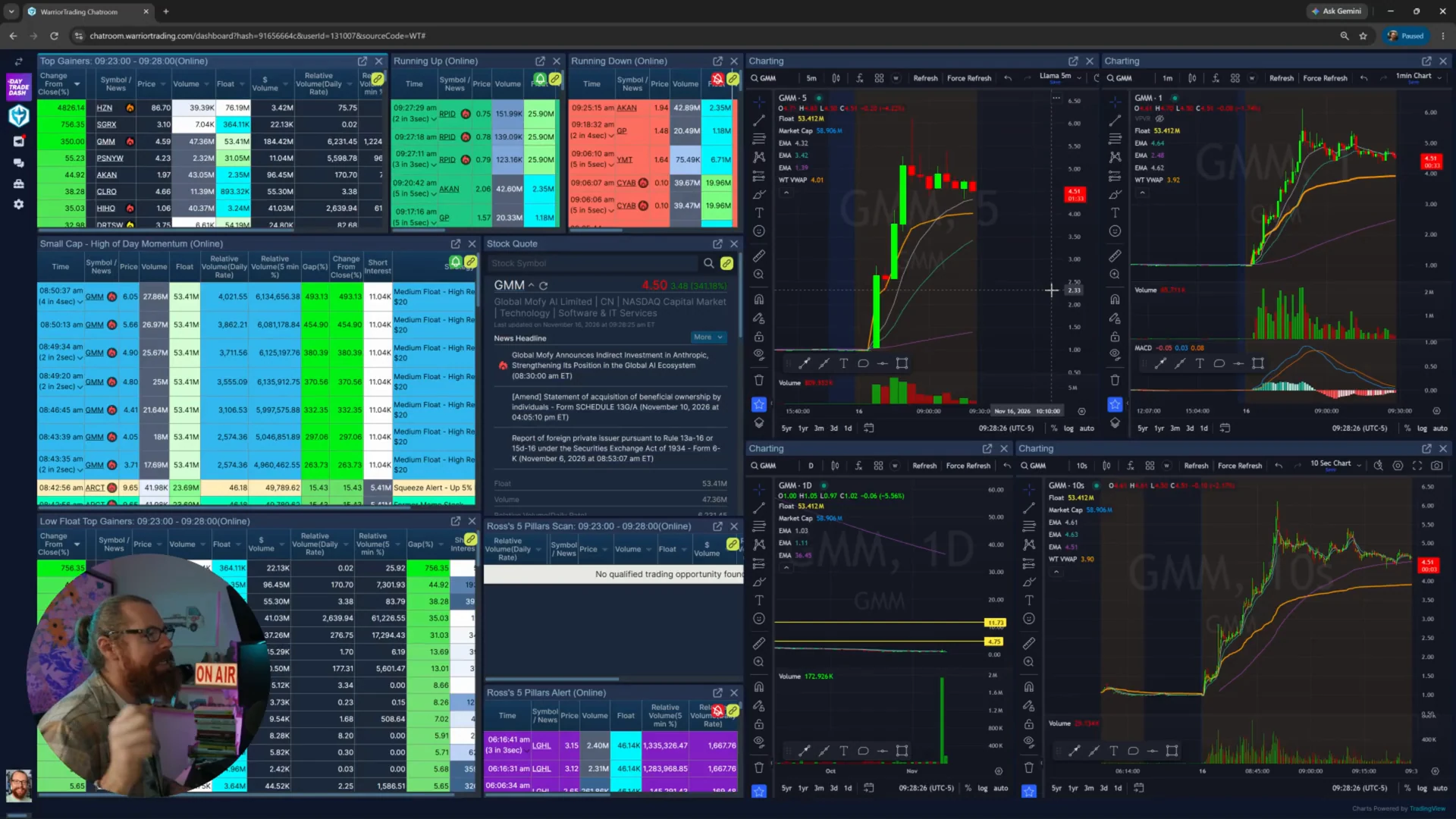
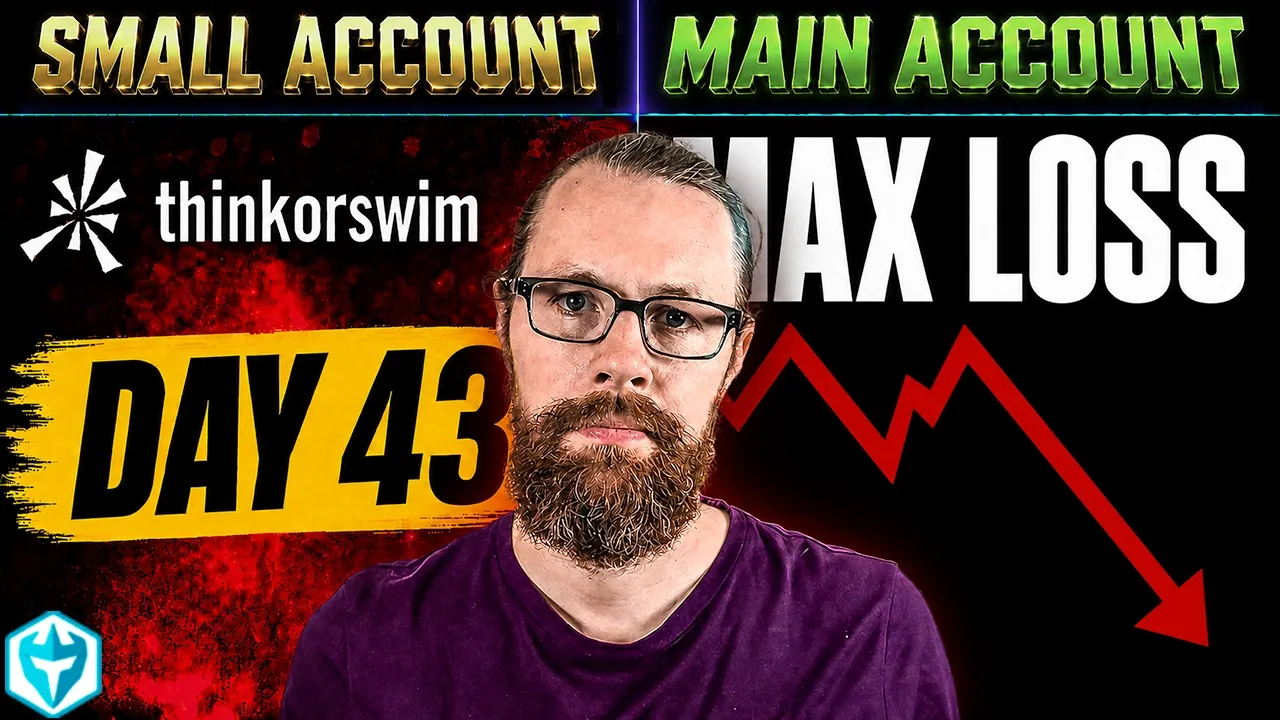
A sub-$2 small cap put out a press release saying it had invested in Anthropic. No dollar amount. No share count. The stock went from $1.50 to $6 before most people finished their coffee, then gave back a third of that and still closed up nearly 400% on 47 million shares. Cameron booked just under $6,000. That gap, between the chart and the actual payout, is the whole lesson.
What Does Ross Cameron - Warrior Trading Actually Claim?
Cameron claims one thing with a number attached: he made just under $6,000 trading GMM on November 16, 2026, and it was the only trade he took all day. Everything else in the video is commentary on a stock he says squeezed over 500% premarket on an Anthropic investment headline.
The receipts, in his own words and timestamps:
- (0:00-1:15) He frames it as the leading gainer of the morning, says the stock ran $1.50 to $6, and notes 47 million shares of volume with the name still holding a roughly 400% gain intraday.
- (1:15) The profit number: "today on GMM, I locked up just under $6,000 of profit." He calls it "a decent day," not a life-changer.
- (3:01) He flags the headline himself: no dollar amount, which he describes as typical of a Chinese small-cap release. He also says the float "shows" 53 million shares and admits that felt high.
- (4:21) He admits hesitation on the first pop because of a false breakout.
- (5:37) The actual entry: the break through the high plus a micro pullback. His own description of the exit window is brutal... up, then flat, almost instantly.
- (6:53) His read on timing: with the Anthropic IPO, Nvidia earnings and the midterms in the same week, he thought the company picked a poor moment.
- (8:02) A detour into Polestar warrants (PSNYW) moving without the underlying.
- (9:56) The disclaimer: no guarantee of success, manage risk, practice in a simulator first.
The video runs about ten minutes, went up November 16, 2026, and had roughly 43,000 views by November 18. There's also a Warrior Trading promo email from November 17 using the same 500% headline to push a $10 Open House. That's not a scandal... it's an ad, and he says so on camera. Just know the video is doing two jobs at once.
Watch the original: This Stock Made an Anthropic Investment and Went Up 500%
Which Stocks Invested in Anthropic, and Why Did One Squeeze 500%?
The stocks that invested in Anthropic with verified, disclosed stakes are large caps, not penny stocks. Anthropic priced its IPO at $83 per share on November 18, 2026, raising roughly $81.3 billion at a fully diluted valuation near $1.5 trillion, listing on Nasdaq under ANT. The real list of stocks that invested in Anthropic reads like a semiconductor conference guest list.
| Company | Disclosed involvement |
|---|---|
| Amazon (AMZN) | Roughly 14.7% post-IPO ownership; earlier convertibles priced near $2.09 and $5.05 per share |
| Alphabet (GOOGL) | Roughly 13.7% post-IPO; $10B in the concurrent private placement |
| Nvidia (NVDA) | $10B private placement commitment |
| AMD | $2.5B |
| Broadcom (AVGO) | $1B |
| Micron (MU) | $1B |
| Microsoft (MSFT) | $1B |
| TSMC Partners | $500M |
Amazon also has a reported commitment from Anthropic to spend more than $100 billion on AWS over the next decade. That's revenue, not just a mark-to-market gain. TechCrunch reported Amazon could have converted up to about 23.8% but chose partial conversion at the IPO.
Notice what's missing from that table: a $1.50 stock. Which brings us to the squeeze.
The 500% premarket squeeze on Anthropic news
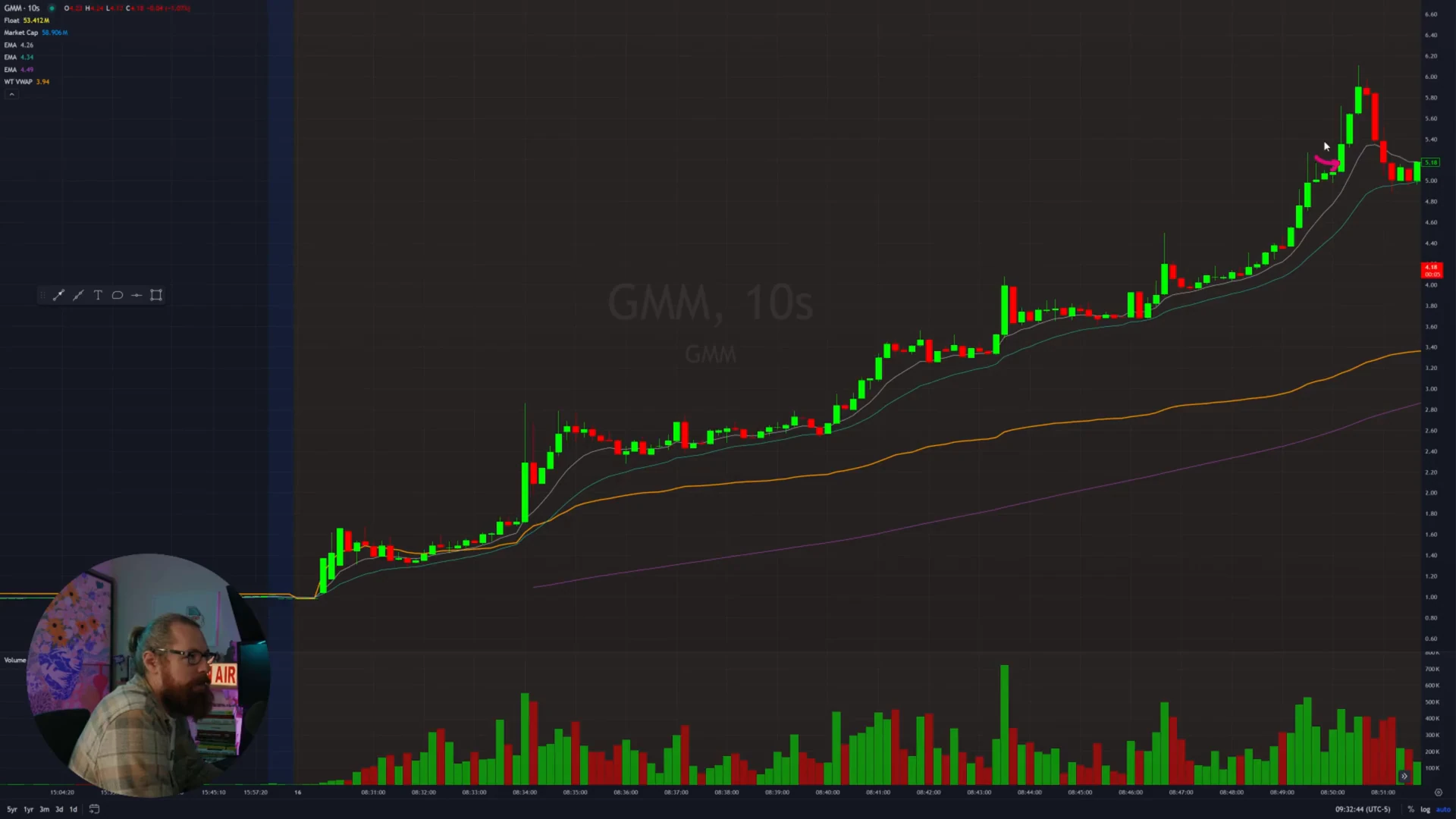
A headline doesn't need to be large to be loud. GMM, trading around $1.50, announced an Anthropic investment and ran to $6 before the opening bell. Cameron logs 47 million shares of volume on a name that normally trades a fraction of that.
Why does this happen? Premarket liquidity is thin. A low-priced stock with an AI headline attached to the hottest IPO of the year draws every momentum scanner in the country at the same second. Buyers stack on top of each other with no natural seller until the price is four times higher.
The move was real. The ability to capture it was not evenly distributed.
Why a headline without a dollar amount is a warning
Cameron says it himself around (3:01): the release gave no figure. That's the single biggest tell in the whole setup.
An investment with no disclosed size could be $50 million or $25,000. Both are technically "an investment in Anthropic." Compare that to Nvidia's $10 billion, which came with a number, a counterparty, and regulatory paperwork. When a company announces a stake in a $1.5 trillion private business and declines to say how much, treat the omission as information.
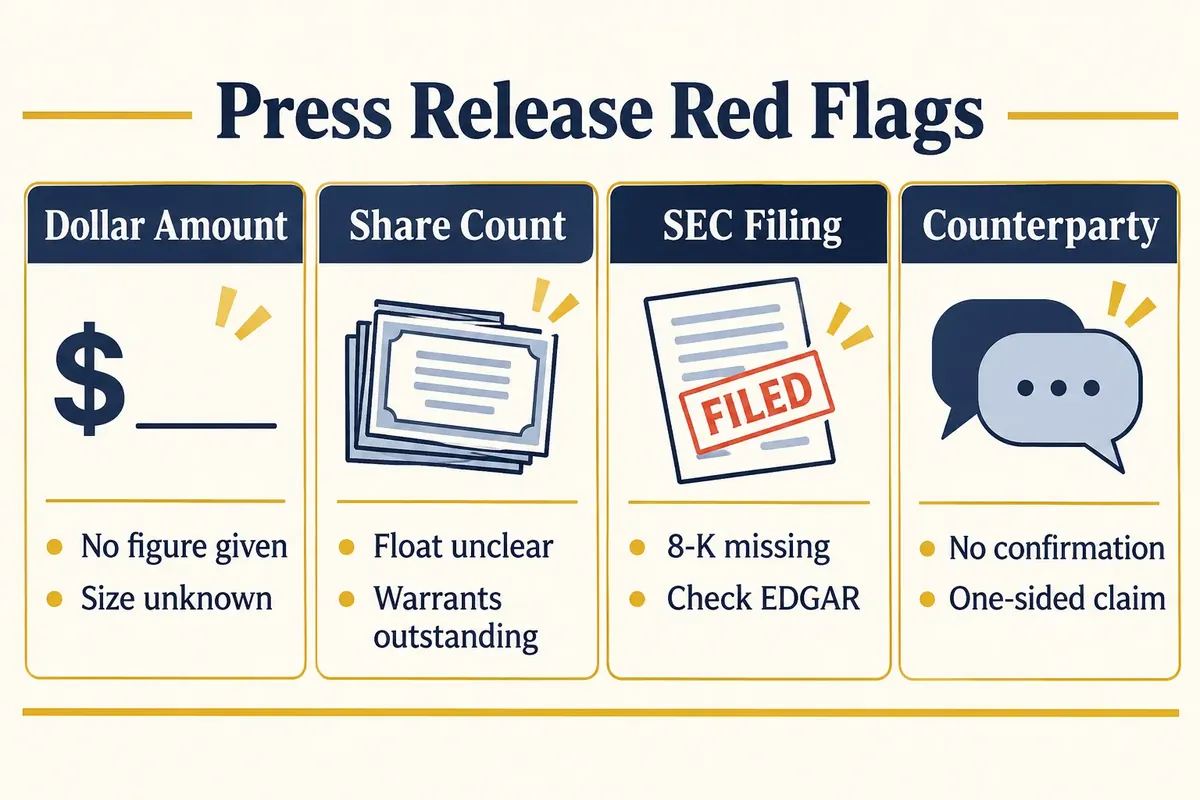
Three questions to run on any AI-adjacent press release:
- Is there a dollar amount?
- Is there an SEC filing on EDGAR within a day or two?
- Did the counterparty say anything at all?
If the answer is no three times, you're trading sentiment, not substance. That's allowed. Just name it.
Float questions nobody could answer
Float means the number of shares actually available to trade, excluding insider and restricted stock. Low float plus high volume equals violent moves, because there isn't enough supply to absorb the buying.
Cameron saw a reported float of 53 million shares and said it looked high for a move like this. He then asked the question most people skip: has anything changed the float recently? Offerings, warrant conversions and reverse splits all rewrite that number, and free data providers lag badly on small caps.
His conclusion was "a little bit unclear." That's the honest answer, and it should make you size smaller, not bigger.
His trade: the break of the high and a micro pullback
The setup was mechanical. Price pushed through the premarket high, pulled back slightly without breaking structure, and he entered on the continuation. A micro pullback is just a short pause inside a strong move... two or three red candles that hold above a prior support level before the next leg.
The part worth underlining is what came after. At (5:37) he describes being up and then back to flat almost instantly. On a stock printing a 10-second range wider than most names move in a month, the exit matters more than the entry.
A clean setup with a sloppy exit is a losing trade with good manners.
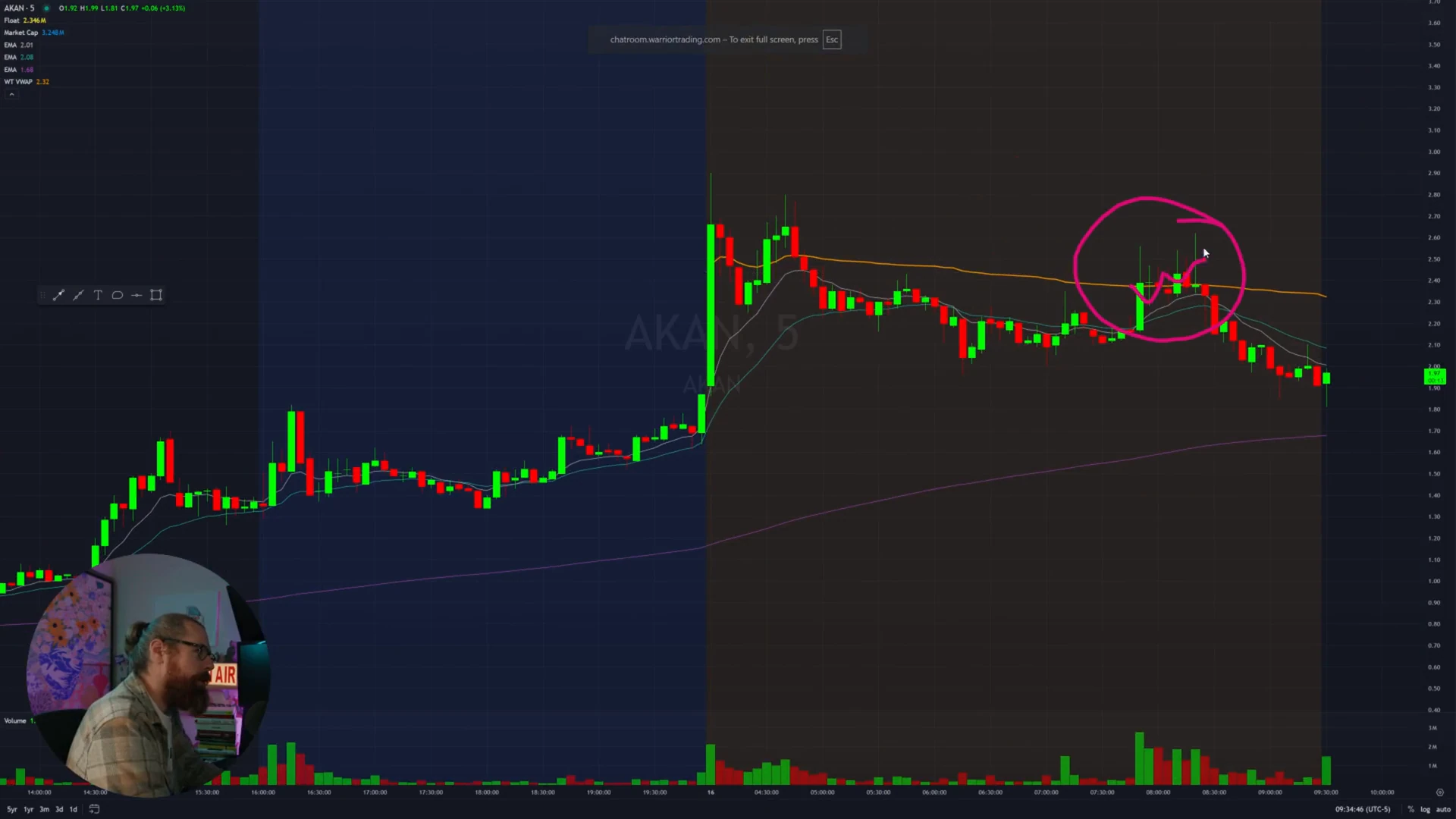
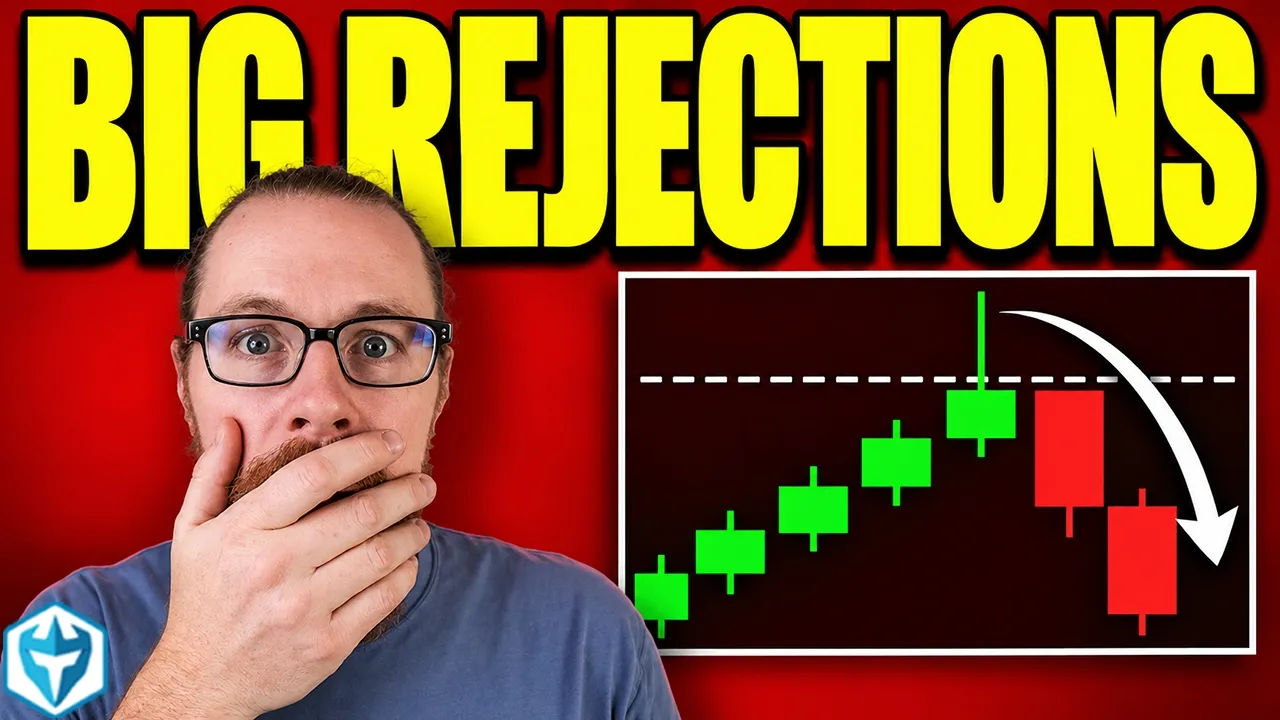
Cameron also notes he hesitated on the first pop because of a false breakout, a move that clears resistance and immediately fails. The chart later shows AKAN doing exactly that... breakout, no follow-through, straight back down.
Timing: the Anthropic IPO, Nvidia and the midterms
Around (6:53) he argues the company picked a bad week. Anthropic filed its S-1 on October 26 and priced on November 18. Nvidia earnings and the midterm elections landed in the same stretch.
He's right about the attention split, and wrong about it being bad for the stock. Crowded news weeks are exactly when a thin small cap gets the most reflexive buying, because scanners are already running hot and retail attention is pointed at AI. The release didn't get buried. It got amplified.
If you want to see which headlines are moving which tickers in real time, that's what an AI stock news tool that explains why your stock just moved is built for.
Warrants, explained
At (8:02) he shifts to Polestar warrants under PSNYW. A warrant is a contract from the company giving you the right to buy stock at a set price before an expiration date. Think of it as an option for a stock that doesn't have a listed options chain.
Warrants are derivatives, so their value tracks the underlying share... PSNY in this case. Cameron flags it as unusual when the warrant moves hard and the common doesn't. That disconnect usually means thin volume, a squeeze in a tiny instrument, or someone positioning ahead of news. For most retail traders, warrants are a wider-spread, lower-liquidity version of a trade they could do more cleanly elsewhere.
Practice in a simulator first
He says it at (1:15) and repeats it at (9:56): paper trade it first. That's not legal boilerplate on a stock that moved 300% in ten seconds... it's the only sane on-ramp.
Simulators won't teach you the emotional cost of real money, but they will teach you whether you can even click fast enough. Test yourself with a trader reaction time test before deciding you'd have caught a $1.50 to $6 move.
⚠️ Things to Look Out For
The risks here aren't hypothetical, and they're mostly invisible on a chart screenshot. A 500% move attracts people who have never traded a halt.
Volatility halts. Nasdaq pauses trading when a stock moves too far too fast. You can be in a position, unable to exit, watching nothing for five minutes. Then it reopens 30% lower.
Slippage. Your $4.00 order fills at $4.42 when 47 million shares are churning. On a 25% stop, that's half your risk budget gone before the trade starts.
Shorting is worse. Borrow on these names is expensive, scarce, and can be recalled. Cameron didn't short it. Neither should you, at least not early.
The promo layer. The same squeeze was used in a November 17 marketing email for a $10 Open House. The trade was real. The video also has a sales job stapled to it. Both things are true.
The missing receipt. No brokerage statement or trade log appears on screen for the $6,000. He says the number; he doesn't document it. For an experienced trader on a liquid mover, that's plausible. It isn't verified.
Who this is not for: anyone with an account under about $2,000, anyone without Level 2 and direct routing, anyone who has never used a hard stop, and anyone trading from a phone on a 15-minute delayed feed. Play stupid games.
And the tax bill. Every one of these is a short-term gain taxed as ordinary income, and wash sale rules will tangle your records if you scalp the same ticker all week.
How Do You Check Claims About Stocks That Invested in Anthropic?
Start with the filing, not the headline. Stocks that invested in Anthropic became a hot search the moment small caps started announcing stakes, and Cameron's video shows why: a headline with no dollar amount sent a stock up 500% before anyone knew how big the investment was.
Before you trade or buy, run four checks:
- Find the primary source. Look for an 8-K or press release on the company's investor page. A social post is not a source.
- Look for the dollar amount. "Strategic investment" with no number often means a small stake. Cameron flags this as a warning.
- Check how the stake was bought. Many small companies buy exposure through funds or secondary shares, not directly from Anthropic.
- Check the float and dilution. A company that announces a stake and an offering in the same week is raising money on the headline.
The big, documented stocks that invested in Anthropic are large-cap tech names with stakes reported in their filings. The small caps riding the headline are a different trade. They're news-momentum plays where the investment itself may matter less than the attention it brings.
So treat stocks that invested in Anthropic as two separate lists: long-term holdings with disclosed stakes, and day-trade movers with fuzzy ones. Mixing the two is how people buy a squeeze top thinking they bought AI exposure.
Flex or Cap? Our Verdict
Verdict: Flex, with a loud asterisk. Among the hunt-for-stocks-that-invested-in-Anthropic content flooding YouTube this month, this is one of the more honest entries. It scores well on three of four questions.
| Test | Result |
|---|---|
| Receipts shown | Partial. Charts, volume and timestamps shown on screen. No P&L statement for the $6,000. |
| What can be verified | The Anthropic IPO facts check out independently. The 500% move is confirmable on any chart. The profit figure is his word. |
| Risk disclosed | Strong. False breakout admitted, float uncertainty admitted, disclaimer at (9:56), simulator advice twice. |
| Repeatable by retail | Weak. Requires premarket access, fast routing, and an exit measured in seconds. |
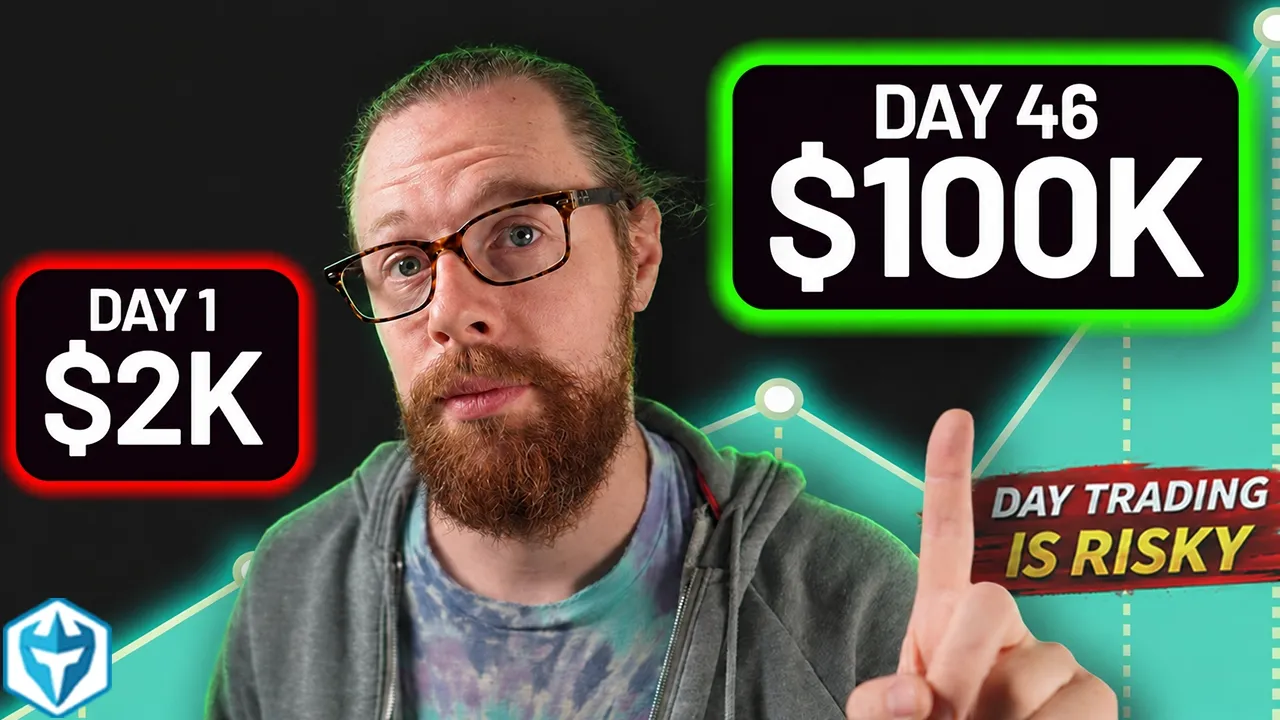
What keeps it out of Cap territory: he leads with the uncertainty instead of hiding it, and his profit on a 500% mover was under $6,000, which is a far more honest number than the thumbnail implies. A fake guru would have claimed $60,000.
What keeps it from being a clean Flex: no documented fill, and the whole thing funnels toward a paid Open House.
A 500% chart and a $6,000 day in the same video is the most useful thing in it. That ratio is the real education.
What You Should Know Before You Try It
If you plan to trade the next headline about stocks that invested in Anthropic, do these five things first.
- Paper trade the exact setup for 20 sessions. Break of premarket high plus micro pullback. Log every entry, exit and the time of day. If you can't execute it in a simulator, real money won't help.
- Fix your position size before the open. Risk a set percentage of the account per trade, not a dollar amount you feel like. On a stock that can gap 30% against you intraday, size is the only control you have.
- Price in the costs. Slippage, borrow fees if you ever short, and short-term capital gains taxed at your ordinary income rate. A $6,000 gross day is not a $6,000 net day.
- Know the rules that apply to you. The PDT minimum changed in June 2026, but margin requirements, halt mechanics and settlement still bite. FINRA publishes the plain-English versions.
- Verify the headline yourself. Search the ticker on EDGAR. If a material investment exists, there's usually a filing. No filing, no number, no counterparty comment... size accordingly.
- Use one scanner, not six. Analysis paralysis kills more small accounts than bad picks. Compare options in our rundown of the best AI stock screeners and pick one.
If news-driven momentum isn't your style, slower setups are a legitimate answer. How to find stocks for swing trading before everyone else does covers the patient version of the same skill.
Keep reading on FullStack Alpha: our AI stock tool reviews, how traders automate rules like these, day trading tools compared side by side, and more Flex or Cap breakdowns.
Frequently Asked Questions
How much Anthropic does Google own?
Alphabet is expected to own roughly 13.7% of Anthropic after the November 2026 IPO, and it committed $10 billion in the concurrent private placement. Amazon holds the larger position at approximately 14.7%, putting the two together near 30%.
What is one of the best AI stocks to buy right now?
FullStack Alpha doesn't make buy recommendations or price predictions. What's documented is that Nvidia, AMD, Broadcom, Micron, Microsoft and TSMC Partners all took positions in the Anthropic placement, which is a factual starting point for your own research, not a signal.
Who are the founders of Anthropic?
Anthropic was founded in 2021 by a group of former OpenAI staff, including siblings Dario Amodei (CEO) and Daniela Amodei (President), along with co-founders such as Jack Clark, Jared Kaplan, Sam McCandlish, Tom Brown and Chris Olah.
Which listed companies have invested in Anthropic?
The publicly disclosed stocks that invested in Anthropic include Amazon, Alphabet, Nvidia, AMD, Broadcom, Micron, Microsoft and TSMC-related entities. Reported placement commitments were $10 billion each for Google and Nvidia, $2.5 billion for AMD, $1 billion each for Broadcom, Micron and Microsoft, and $500 million for TSMC Partners.
Is there a stock to invest in Anthropic?
Yes, directly. Anthropic listed on Nasdaq under the ticker ANT after pricing its IPO at $83 per share on November 18, 2026. Before that listing, indirect exposure came through large holders like Amazon and Alphabet rather than through micro-cap press releases.
What are the 3 AI stocks to soar?
Nobody can tell you that, and anyone who claims to is selling something. Price targets on AI names are guesses with confidence attached. Build a process for evaluating setups instead... our breakdown of AI stock prediction tools shows which ones publish their methodology and which ones just publish a dashboard.
Does Ross Cameron own Warrior Trading?
Ross Cameron is the founder of Warrior Trading, a day trading education company he launched in 2012. The videos on the Day Trade Warrior channel double as marketing for Warrior Trading's courses, software and events, which is worth keeping in mind when a trade recap ends with an offer.
Are small-cap stocks that invested in Anthropic a good way to get Anthropic exposure?
Usually not. A small company's stake is often tiny relative to its own size, and the price can swing on attention more than value. Stocks that invested in Anthropic with large, disclosed stakes in their filings give clearer exposure, though none of them is a pure Anthropic investment.
Why did stocks that invested in Anthropic spike so fast?
Headlines tied to Anthropic draw heavy retail attention, and small floats move hard on that attention. Cameron's 500% premarket squeeze happened before the size of the investment was even clear, which is why he treats it as momentum, not value.
Conclusion
A $1.50 stock said the word "Anthropic" and quadrupled before 9:30 a.m. Everything after that is execution, and execution is where almost everyone gives the money back.
Three things to do this week:
- Build a one-page checklist for AI headline trades: dollar amount, SEC filing, counterparty confirmation, verified float. Trade nothing that fails three.
- Paper trade the break-of-high-plus-micro-pullback setup for 20 sessions and log every result.
- Cut your scanner stack to one tool and run it for 30 days before adding anything.
The squeeze was real. The lesson is that a 500% chart produced a $6,000 day for a professional with 10 years of reps. Price that honestly before you chase the next one. Your market edge starts with the right tool. Stay alpha.
One video, examined four ways. There are 200+ AI stock tools catalogued in the FullStack Alpha directory, filterable by category, price and what they actually do.
Browse the directory → aistockpickerapps.com